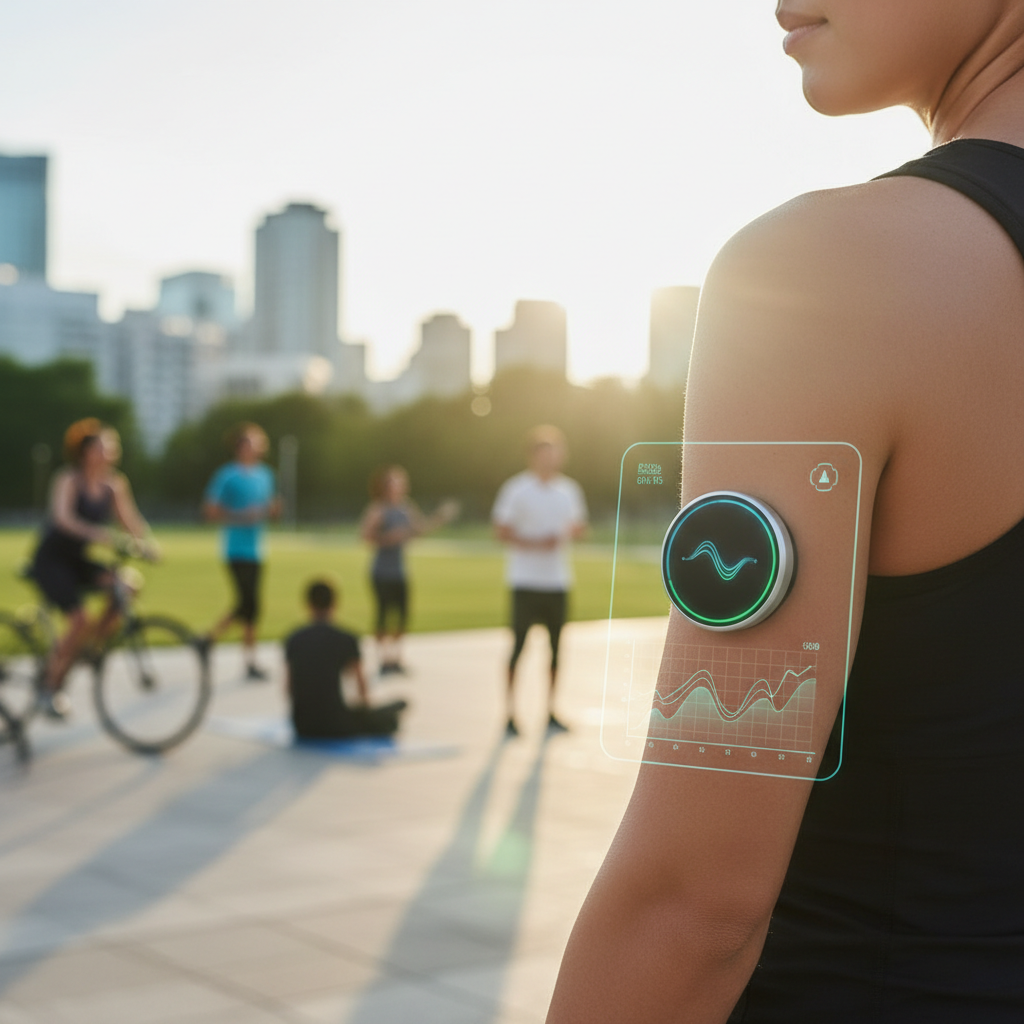
At biMoola.net, we constantly track the pulse of innovation in AI & Productivity, Health Technologies, and Sustainable Living. Few product lines encapsulate this convergence as compellingly as Garmin's Enduro series. So, when a whisper of 'Enduro 3' surfaces, it's not just another product launch; it's a potential harbinger for the future of extreme performance monitoring.
The Garmin Enduro line has always stood apart, not merely for its robust build or comprehensive feature set, but for its singular focus on endurance – specifically, its legendary battery life. For ultra-runners, multi-day adventurers, and extreme athletes, the Enduro isn't just a gadget; it's a critical piece of gear, a lifeline for data that informs training, recovery, and safety. This article will delve into what we can anticipate from the Garmin Enduro 3, exploring how it will likely push boundaries in health technology, leverage AI for performance insights, and potentially set new benchmarks for sustainable design in consumer electronics. We'll analyze its potential impact on athletes, adventurers, and the broader wearable technology landscape, offering an expert perspective on its expected features and what they mean for you.
The Evolution of Endurance Wearables: A Race for Longevity and Precision
The journey of wearables from simple pedometers to sophisticated multi-sport computers has been rapid, driven by advancements in sensor technology, miniaturization, and computational power. However, the unique demands of ultra-endurance sports presented a persistent challenge: battery life. Traditional smartwatches, with their vibrant displays and power-hungry GPS, often struggled to last a single long training day, let alone a multi-day expedition.
Garmin recognized this gap with the original Enduro, launched in early 2021, and its successor, the Enduro 2, which arrived in mid-2022. These devices weren't just about packing more features; they were about rethinking power efficiency. The Enduro 2, for instance, boasted up to 150 hours in GPS mode with solar charging – a figure that utterly redefined expectations for a performance GPS watch. This wasn't merely a convenience; it was a game-changer for athletes navigating remote trails or competing in events spanning multiple sunrises and sunsets, where a dead watch means lost navigation, critical health data, and motivation.
The relentless pursuit of battery longevity, coupled with increasingly accurate biometric sensors and advanced navigation capabilities, has transformed endurance wearables into essential tools. They now provide not just real-time metrics but also predictive analytics for training load, recovery needs, and even acclimatization, leveraging complex algorithms that border on artificial intelligence. This evolution isn't just about bigger numbers on a spec sheet; it's about enabling athletes to push their limits more safely and effectively, armed with data-driven insights previously only available in a lab setting.
Anticipating the Enduro 3: Key Innovations on the Horizon
Drawing from Garmin's typical product cycles and industry trends, we can speculate on several critical areas where the Enduro 3 is likely to bring significant advancements. These aren't just incremental upgrades but represent a strategic push to solidify its position at the apex of endurance sports technology.
Unprecedented Battery Life: A Solar Power Revolution
The hallmark of the Enduro series is its battery life, and the Enduro 3 will undoubtedly aim to push this boundary further. We anticipate an even more efficient power management system and, critically, an enhanced solar charging capability. The Enduro 2's Power Glass was already impressive, but future iterations could integrate more advanced photovoltaic materials or increase the surface area for solar collection without compromising screen clarity.
- Material Science Improvements: Expect advancements in the efficiency of the solar lens itself, potentially offering a higher power output per unit area or better performance in varied light conditions.
- Low-Power Chipsets: Integration of next-generation low-power microprocessors and GNSS chipsets will significantly reduce energy consumption across all functionalities, extending battery life even without direct solar input.
- Intelligent Power Modes: More granular, AI-driven power management modes that dynamically adjust sensor sampling rates and display brightness based on activity, environment, and user preferences could also contribute to record-breaking endurance.
Advanced Biometrics & AI-Driven Insights
Beyond basic heart rate, modern wearables now monitor an array of physiological markers. The Enduro 3 is likely to expand on this, leveraging AI to transform raw data into actionable insights for performance, recovery, and overall health.
- Next-Gen Optical HR & SpO2: Expect more accurate and faster-responding optical heart rate sensors, potentially incorporating multi-wavelength LEDs for improved performance across diverse skin tones and under various environmental conditions. Enhanced SpO2 (blood oxygen saturation) tracking, critical for altitude adaptation, will also likely see improvements.
- HRV and Training Readiness 2.0: Garmin's current Training Readiness metric, which synthesizes sleep, recovery time, HRV status, and acute load, is already powerful. The Enduro 3 could introduce an even more sophisticated algorithm, perhaps incorporating additional data points like skin temperature trends or even advanced sleep stage analysis, offering hyper-personalized recommendations. A 2023 study published in the Journal of Applied Physiology highlighted the growing importance of continuous HRV monitoring for optimizing athlete training load and preventing overtraining.
- AI for Performance Prediction: Imagine a watch that doesn't just record your workouts but predicts your race performance based on current fitness, fatigue levels, and even environmental factors. AI models trained on vast datasets of athlete performance could offer highly personalized pacing strategies and real-time adjustments during events.
Navigation & Durability for the Extremes
For athletes venturing into the wilderness, accurate navigation and an indestructible device are paramount. The Enduro 3 will likely continue to lead in these areas.
- Multi-Band GNSS with Enhanced Accuracy: While the Enduro 2 already features multi-band GNSS (tapping into L1 and L5 frequencies), the Enduro 3 could offer even faster satellite acquisition and superior accuracy in challenging environments like deep canyons or dense urban areas, where satellite signals can be obstructed.
- Rugged Design & Materials: Expect military-grade durability (MIL-STD-810G), scratch-resistant Sapphire lenses, and perhaps even lighter, more robust case materials like Grade 5 titanium or advanced composites. The focus will be on maintaining a lightweight profile while ensuring it can withstand brutal conditions.
- Expanded Offline Mapping: More detailed preloaded topographical maps, along with enhanced routing and point-of-interest navigation capabilities, will be critical for adventurers.
Beyond the Data: Health & Performance Implications
The impact of a device like the Enduro 3 extends far beyond merely tracking steps or heart rate. It represents a convergence of technology that empowers individuals to take unprecedented control over their health and athletic endeavors.
For elite and amateur athletes alike, the Enduro 3's enhanced data granularity and AI-driven insights could revolutionize training methodologies. Imagine real-time feedback on your hydration status, personalized recovery protocols based on your unique physiological responses, or even early warnings of impending illness detected through subtle shifts in your baseline biometrics. Harvard Health Publishing frequently emphasizes the importance of objective data for informed health decisions, and devices like the Enduro 3 put this power directly on the wrist. (Harvard Health Publishing)
The mental fortitude required for endurance sports is immense, and the psychological boost of having a reliable, intelligent companion on your wrist cannot be overstated. Knowing your device won't die midway through an ultramarathon, that it's accurately guiding you, and providing actionable insights into your body's state, reduces mental load and fosters a deeper connection with your performance data. This, in turn, can lead to more consistent training, fewer injuries, and ultimately, greater achievements.
The Enduro 3 and Sustainable Tech
At biMoola.net, we believe that technology should not only enhance our lives but also respect our planet. The Enduro 3, by its very nature, leans into several aspects of sustainable living, even if not explicitly marketed as such.
The core concept of extreme battery life, particularly through solar charging, is inherently sustainable. By reducing the frequency of electrical charging, the device lessens its reliance on grid power, however small that impact might be on an individual level. This design philosophy emphasizes longevity and self-sufficiency, aligning with principles of reduced energy consumption.
Furthermore, the rugged durability of the Enduro series contributes to sustainability by extending the product's lifespan. A watch built to withstand extreme conditions is less likely to break or become obsolete quickly, reducing electronic waste. Garmin's general approach to software updates, providing long-term support for its devices, also plays a role in promoting product longevity. As consumers, investing in durable, long-lasting tech is a critical step towards more sustainable consumption patterns. We also hope to see more transparent reporting on recycled materials in the device's construction or efforts towards circular economy principles in manufacturing, reflecting a growing consumer demand for eco-conscious products, as highlighted by a 2024 report by the MIT Technology Review on sustainable electronics. (MIT Technology Review)
Competitive Landscape & Market Positioning
The market for high-end sports watches is competitive, with strong offerings from brands like COROS, Suunto, and Apple (with its Ultra series). However, the Enduro 3 is poised to reinforce Garmin's unique niche at the extreme end of endurance performance.
Endurance Wearable Benchmarks: Enduro 2 vs. Anticipated Enduro 3
| Feature | Garmin Enduro 2 (Released 2022) | Garmin Enduro 3 (Anticipated) |
|---|---|---|
| Max Battery Life (GPS, Solar) | Up to 150 hours | Potentially 175+ hours |
| Max Battery Life (Smartwatch, Solar) | Up to 46 days | Potentially 60+ days |
| GNSS Technology | Multi-band (L1/L5) GPS, GLONASS, Galileo | Enhanced Multi-band, Faster acquisition, Improved accuracy |
| Health Sensors | Gen 4 Optical HR, Pulse Ox, HRV Status | Gen 5+ Optical HR, Enhanced Pulse Ox, Skin Temperature, Advanced HRV/Recovery AI |
| Display Technology | Memory-in-Pixel (MIP), Solar Power Glass | Improved MIP or Hybrid MIP/AMOLED, Enhanced Solar Efficiency |
| AI-driven Metrics | Training Readiness, Stamina, PacePro | More sophisticated predictive analytics, Hyper-personalized recovery, Adaptive pacing |
| Case Material | Titanium bezel, fiber-reinforced polymer | Lighter, more durable aerospace-grade composites or Grade 5 titanium |
Note: 'Anticipated' features are based on industry trends, Garmin's product evolution, and expert speculation.
The Enduro 3's strength will lie in its unwavering commitment to battery life and ruggedness, differentiating it from more generalist smartwatches. While the Apple Watch Ultra offers a vibrant AMOLED display and deep integration with the iOS ecosystem, its battery life, even with improvements, cannot compete with the Enduro's projected endurance for multi-day events. The Enduro 3 will appeal to a specific demographic: those who prioritize uptime, extreme durability, and highly specialized outdoor/training metrics above all else. Its continued leadership in solar charging and advanced mapping will likely keep it a step ahead for true adventurers. (Garmin Enduro 2 official page for reference)
Key Takeaways
- The Garmin Enduro 3 is poised to redefine ultra-endurance wearables with even greater battery life, likely exceeding 175 hours in GPS mode with enhanced solar charging.
- Expect significant advancements in biometric tracking, including next-gen optical HR, improved Pulse Ox, and potentially new sensors like skin temperature, integrated with sophisticated AI for personalized recovery and training insights.
- Enhanced multi-band GNSS accuracy and robust, lightweight materials will ensure reliable performance and navigation in the most extreme environments.
- The device embodies sustainable tech principles through its extreme longevity, reduced charging frequency, and durable design, minimizing electronic waste.
- It will maintain Garmin's leadership in a niche market, appealing to serious endurance athletes and adventurers who prioritize uptime, durability, and specialized metrics over general smartwatch features.
Expert Analysis: The Enduro 3's Broader Significance
From our vantage point at biMoola.net, the rumored Enduro 3 represents more than just a new iteration of a popular device; it's a testament to the relentless pursuit of human limits, augmented by intelligent technology. The focus on extreme battery life isn't just a technical achievement; it's a philosophical statement. It signals a move away from the constant tether of charging cables, fostering a sense of self-reliance and encouraging longer, more immersive engagements with the natural world – a core tenet of sustainable living.
The integration of advanced AI into health and performance metrics is particularly exciting. We're moving beyond simple data collection to true personalized coaching. The Enduro 3, if it delivers on these expectations, won't just tell you what happened; it will help you understand why and what to do next. This level of predictive analytics, leveraging complex algorithms, has profound implications not just for elite athletes but for anyone looking to optimize their health and well-being. It democratizes insights once exclusive to professional sports science labs.
Moreover, the Enduro 3 serves as a prime example of how health technologies and sustainable living can intersect. A device designed for extreme longevity and self-sufficiency combats the planned obsolescence prevalent in much of consumer tech. It's about buying better, buying once, and using a product that truly supports a lifestyle of exploration and personal growth without contributing unduly to environmental burdens. This aligns perfectly with biMoola's vision for a future where technology empowers us in a responsible and intelligent way.
Q: How will the Enduro 3's battery life compare to other smartwatches like the Apple Watch Ultra?
A: While the Apple Watch Ultra significantly improved battery life for Apple users, the Garmin Enduro 3 is expected to maintain its dominant lead for ultra-endurance athletes. The Enduro series prioritizes multi-day performance, likely offering over 175 hours in GPS mode with solar charging, compared to the Apple Watch Ultra's typical 12-36 hours in GPS mode (depending on settings and activities), even with its expanded Low Power Mode. The Enduro 3’s Memory-in-Pixel (MIP) display and hyper-efficient power management are key to this difference.
Q: Will the Enduro 3 feature an AMOLED screen?
A: It's unlikely that the Enduro 3 will fully transition to an AMOLED screen if its primary focus remains extreme battery life. AMOLED displays, while vibrant and crisp, are significantly more power-hungry than the Memory-in-Pixel (MIP) transflective displays traditionally used by Garmin for their endurance lines. Garmin might explore a hybrid MIP/AMOLED approach, similar to some of its higher-end Forerunner models, to offer improved visuals when desired while retaining power efficiency for extended use. However, the core Enduro philosophy strongly favors MIP for its always-on visibility in direct sunlight and minimal power draw.
Q: How accurate are the AI-driven recovery insights?
A: Garmin's current AI-driven recovery insights, such as Training Readiness and HRV Status, are already highly respected and validated by athletes and sports scientists. These metrics synthesize data from multiple sensors (heart rate, heart rate variability, sleep tracking, activity history) through complex algorithms. The Enduro 3 is expected to feature even more refined algorithms, potentially incorporating additional physiological data like skin temperature, to provide more personalized and accurate recommendations. While no AI is perfect, these tools offer invaluable objective data to guide training and prevent overtraining, making them highly reliable for most users when combined with personal perceived effort.
Q: Is the Enduro 3 suitable for casual fitness users, or only extreme athletes?
A: While the Enduro 3 is undeniably engineered for extreme athletes due to its unparalleled battery life, ruggedness, and advanced training metrics, it's also perfectly suitable for dedicated casual fitness users or those who appreciate robust, long-lasting technology. Its comprehensive health monitoring, smart features, and detailed activity tracking provide immense value for anyone committed to an active lifestyle. However, its premium price point and specialized feature set might be overkill for someone just looking for basic step counting or casual gym workouts. For those prioritizing a premium, feature-rich device they won't need to charge constantly, it's an excellent choice.
Sources & Further Reading
Disclaimer: For informational purposes only. Consult a healthcare professional.
Comments (0)
To comment, please login or register.
No comments yet. Be the first to comment!