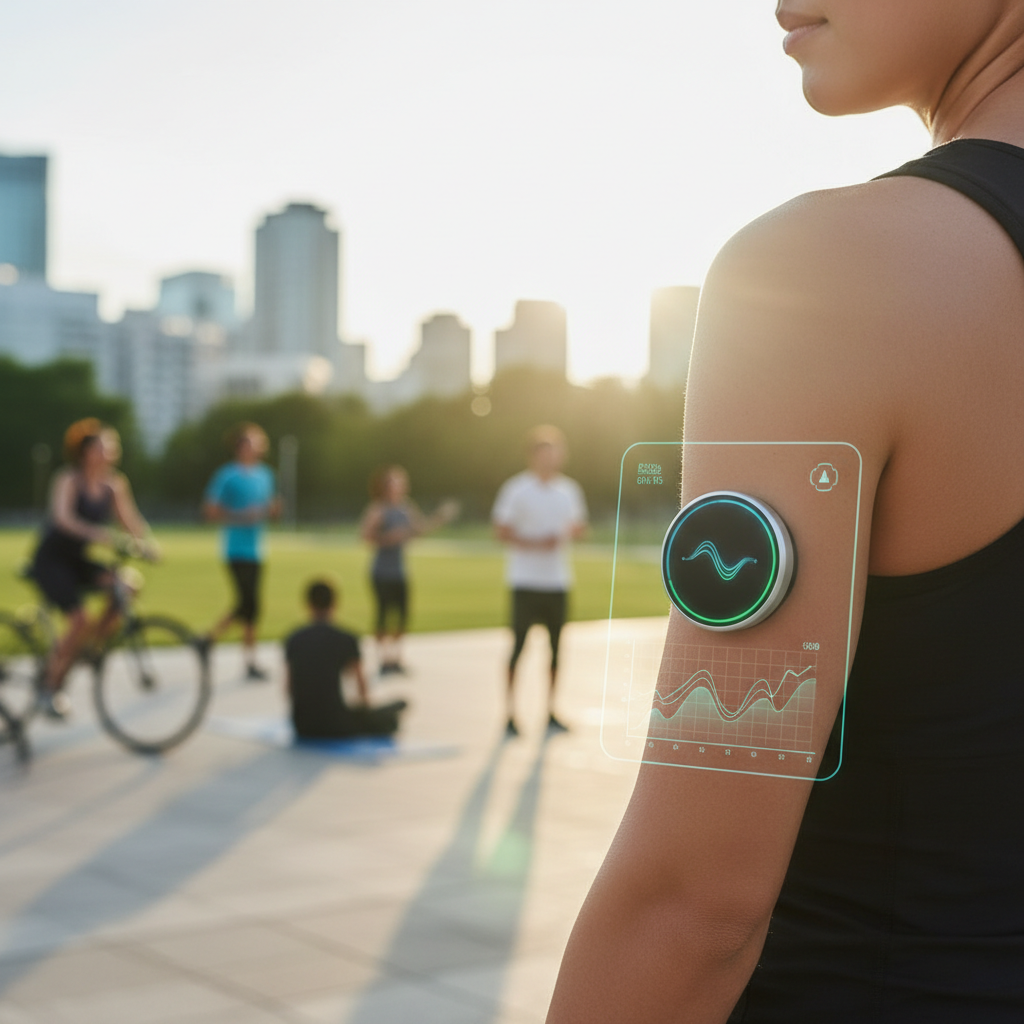
In the rapidly evolving landscape of artificial intelligence and wearable technology, whispers from inside Meta suggest a groundbreaking new device: an AI-powered pendant. While still firmly in the realm of rumor and early development, the mere mention of such a product from a tech giant like Meta signals a pivotal shift in how we might interact with AI in our daily lives. At biMoola.net, where we dissect the convergence of AI, productivity, and health technologies, this news isn't just an interesting tidbit – it's a potential harbinger of the next computing paradigm.
This article will delve deep into the strategic implications of Meta's potential AI pendant, exploring its anticipated functionalities, the complex ethical considerations it raises, and its place within an increasingly crowded market of AI-first devices. We'll examine how such a discreet wearable could redefine personal productivity, offer unique health insights, and challenge our notions of privacy and constant connectivity. Join us as we unpack the possibilities and pitfalls of Meta's bold move into the future of ubiquitous intelligence.
The Dawn of Discreet AI: Beyond the Screen
For decades, our primary interface with digital intelligence has been through screens – first desktops, then laptops, and most ubiquitously, smartphones. These devices, while powerful, inherently demand our visual attention, often pulling us away from the physical world. However, a growing trend in technology aims to integrate AI more seamlessly and less intrusively into our lives, a movement often dubbed 'ubiquitous computing' or 'ambient intelligence'. The rumored Meta AI pendant stands as a prominent example of this shift.
The push for discreet AI wearables isn't new. From early Bluetooth earpieces to modern smartwatches and smart glasses, the industry has been inching towards more integrated, 'invisible' technology. The core idea is to move beyond the phone as the central hub, allowing users to access information, control devices, and interact with AI assistants without needing to pull out a screen. This promises a future where technology is always present but rarely intrusive, augmenting our reality rather than distracting from it.
From Smartphones to 'Smart Objects'
The smartphone, for all its revolutionary impact, has become a source of digital fatigue for many. Its constant demands on our attention – notifications, app interfaces, the compulsion to check – have spurred a desire for more balanced human-computer interaction. This is where 'smart objects' like an AI pendant come in. They represent a fundamental rethinking of how AI can serve us. Instead of being an app on a phone, AI becomes an embedded, always-available assistant that blends into the background of our daily existence. Imagine a device that understands your context, offers proactive suggestions, and facilitates tasks through natural language, all without a screen.
This shift isn't merely about convenience; it's about re-prioritizing our attention. By offloading certain digital interactions to a discreet wearable, we could theoretically reduce screen time, improve focus on real-world tasks and conversations, and experience a more mindful form of technological engagement. This vision aligns perfectly with biMoola.net's interest in leveraging technology for genuine productivity and well-being, rather than simply for increased digital consumption.
Meta's Strategic Imperative: Why an AI Pendant?
For Meta, a company deeply invested in the future of human-computer interaction and the metaverse, an AI pendant isn't just another gadget. It's a strategic chess piece in a much larger game. Meta has made massive investments in AI research, from its powerful Llama large language models to its sophisticated computer vision and audio processing capabilities. The company's long-term vision involves creating a seamless, interconnected digital and physical world, and an AI pendant fits perfectly into that narrative.
The pendant could serve as a crucial bridge between Meta's AI foundation models and its ambitions for the metaverse. While VR headsets like the Quest provide immersive experiences, they are not suited for everyday, always-on interaction. An AI pendant, however, could be the ubiquitous, discreet interface that brings Meta's AI power into every moment, acting as a constant companion for real-world interactions and digital queries alike. It’s about ensuring Meta's AI is at the forefront of human interaction, regardless of the screen or lack thereof.
Lessons from Ray-Ban Meta Smart Glasses
Meta's previous foray into discreet wearables, the Ray-Ban Meta Smart Glasses, offers valuable insights. These glasses demonstrated the potential for hands-free photo/video capture, live streaming, and audio interaction. Critically, their latest iteration introduced on-device AI capabilities, allowing users to ask questions about their surroundings and receive real-time answers. This was a significant step towards contextual, multimodal AI interaction in a wearable form factor.
The AI pendant can be seen as an evolution of this concept, focusing even more intensely on audio-first, hands-free interaction, potentially without the visual social baggage that smart glasses sometimes carry. The glasses proved that people are willing to adopt discreet tech for specific use cases. The pendant could expand that adoption by being even more subtle and broadly applicable, serving as a powerful audio interface for Meta's burgeoning AI ecosystem.
The Quest for Ubiquitous AI
Meta's ultimate goal is to make AI so integrated into our lives that it feels natural and indispensable. Mark Zuckerberg has often spoken about AI as the next computing platform, evolving beyond mobile and even augmented reality. An AI pendant aligns with this 'ubiquitous AI' vision, where intelligence isn't confined to a device but permeates our environment, offering assistance precisely when and where it's needed.
This pursuit of ubiquitous AI isn't unique to Meta; it's a broader industry trend. However, Meta's unique combination of AI research, social platform dominance, and a long-term metaverse strategy positions it uniquely to deliver a compelling, if complex, ambient AI experience. The pendant could be the first step in moving their sophisticated AI from abstract models to tangible, always-on personal agents.
Unpacking the Potential: Use Cases for a Subtle AI Companion
The true power of an AI pendant lies in its ability to offer seamless, contextual assistance throughout the day, transforming how we work, learn, and live. Its discreet nature means it can operate in settings where a phone or even smart glasses might be impractical or socially awkward.
Enhanced Productivity & Workflow
Imagine a scenario where your AI pendant acts as a proactive assistant, anticipating your needs before you even voice them. In a busy professional environment, it could quietly transcribe meetings, summarize key discussion points, or even provide real-time background information on topics being discussed. During a creative task, it might offer prompts or help structure your thoughts. For students, it could act as a hands-free research aid, retrieving information or translating foreign languages on the fly.
This hands-free, voice-first interaction reduces friction, allowing for a flow state that is often interrupted by reaching for a phone. The ability to quickly dictate notes, set reminders, or initiate communication without breaking eye contact or task focus could be a significant boost to daily productivity for professionals and creatives alike. MIT Technology Review has consistently highlighted the potential for AI to streamline workflows, and a device like this embodies that future.
A Glimpse into Health & Wellness Support
While biMoola.net avoids medical diagnoses, the potential for an AI pendant in health and wellness is significant. Beyond basic activity tracking, a pendant equipped with advanced sensors could offer passive monitoring of various biomarkers. Imagine unobtrusive heart rate variability tracking to assess stress levels, or even subtle respiratory pattern analysis. Such data, when aggregated and analyzed by AI, could provide personalized insights into daily routines, sleep quality, and overall well-being. It could discreetly remind users to take medication, stand up and stretch, or practice mindfulness exercises.
Furthermore, in emergency situations, a pendant could be programmed to detect falls or unusual physiological changes and automatically alert designated contacts or emergency services. The discreet nature means continuous, ambient monitoring is possible without the user feeling constantly 'tracked' by a visible device. The World Health Organization (WHO) recognizes the growing role of digital health technologies, and this falls squarely within that evolving landscape.
Seamless Information Access
One of the most immediate benefits would be unparalleled access to information. No longer would you need to pull out your phone to search for a fact, check a recipe, or identify a landmark. A simple voice query to your pendant could provide immediate, context-aware answers, delivered via an integrated earbud or even subtle bone conduction audio. This could transform everything from travel (instant translation, local recommendations) to daily errands (shopping lists, price comparisons) to spontaneous learning (identifying a plant, explaining a concept).
The pendant's potential for real-time translation during international travel or multicultural conversations is particularly compelling, breaking down language barriers in a way that feels more natural than passing a phone back and forth.
Navigating the Ethical Minefield: Privacy, Trust, and Bias
As compelling as the vision of an AI pendant is, its very nature raises profound ethical questions. A device designed for constant, discreet interaction also implies constant listening and data collection, pushing the boundaries of personal privacy and trust.
The 'Always-On' Dilemma
An AI pendant, by its very design, would need to be 'always-on' to be effective, listening for keywords or contextual cues. This presents a significant privacy challenge. Who has access to this audio data? How is it stored, processed, and secured? While companies typically promise on-device processing for privacy, the sheer volume of data an always-on device could collect is staggering. Users would need absolute transparency and control over what data is collected, how it's used, and crucially, how it can be deleted.
The potential for passive surveillance, even if unintended, is a major concern. Businesses or governments could theoretically leverage such devices, or their data, in ways that infringe on civil liberties. Building public trust will require Meta to be exceptionally transparent about its data practices, especially given its past controversies regarding user data.
Data Ownership and Transparency
Beyond privacy, questions of data ownership and transparency are paramount. Who owns the insights generated by your pendant – the health trends, productivity patterns, or even casual conversations? Users must have clear ownership and control over their personal data, including the ability to port it to other services or delete it entirely. Companies must be transparent about their AI algorithms, especially how they process sensitive information and what biases might be embedded within them.
The ethical development of AI, particularly in such intimate devices, will require robust regulatory frameworks and a commitment from companies to prioritize user well-being over data monetization. A Gartner report on AI governance emphasizes the critical need for responsible AI practices to foster public trust and widespread adoption.
The Competitive Landscape: Who's in the Race?
Meta's rumored AI pendant doesn't emerge in a vacuum. The tech industry is increasingly buzzing with similar concepts, indicating a broader trend towards AI-first, screenless or screen-light devices. This competitive landscape will shape its eventual design, features, and market positioning.
The Humane AI Pin and Rabbit R1 Experiment
Two prominent examples of emerging AI-first hardware are the Humane AI Pin and the Rabbit R1. The Humane AI Pin is a projector-based wearable that aims to be a phone replacement, offering a multimodal AI assistant that can project information onto your palm. The Rabbit R1 is a pocket-sized AI device designed to interact with apps and services using a 'Large Action Model' (LAM), essentially acting as a universal controller for your digital life.
Both devices represent bold, yet unproven, attempts to redefine human-computer interaction. They highlight the public's appetite for new interfaces but also underscore the immense challenges in designing truly intuitive and useful AI-first hardware. Meta's pendant would enter a market learning from these early experiments, potentially offering a more discreet, audio-centric approach that avoids the visual complexities of projection or small screens.
The Established Wearable Ecosystem
The AI pendant will also compete, or perhaps integrate, with existing wearables. Smartwatches from Apple and Samsung offer advanced health tracking and smart assistant capabilities. Premium earbuds from various manufacturers provide high-quality audio and integrated voice assistants. The key differentiator for Meta's pendant would be its specific focus on a seamless, hands-free AI interaction that potentially surpasses what current smartwatches or earbuds can offer, possibly acting as the primary AI hub rather than a secondary accessory. Its success will hinge on its ability to offer truly novel and indispensable utility.
The BiMoola Perspective: Our Expert Analysis
At biMoola.net, we view Meta's rumored AI pendant as more than just a product; it's a statement. It signifies Meta's deep commitment to being at the forefront of the next computing paradigm – one that transcends the traditional screen and embraces ubiquitous, ambient intelligence. While the concept isn't entirely novel, Meta's resources, AI capabilities, and distribution network could make this a truly disruptive force.
Our analysis suggests that for the pendant to succeed, it must overcome three critical hurdles: **unquestionable utility**, **robust privacy safeguards**, and **seamless integration into daily life**. Mere novelty won't cut it. It needs to genuinely enhance productivity or well-being in ways that current devices cannot, offering a 'magic moment' that justifies its constant presence. Furthermore, Meta must work diligently to earn and maintain user trust, particularly concerning data privacy, given the intimate nature of an always-on wearable. If Meta can deliver on these fronts, the AI pendant could indeed become the discreet, intelligent companion that fundamentally changes our relationship with technology, pushing us towards a more mindful and augmented existence.
Statistics on Wearable Tech & AI Adoption
- Wearable Device Shipments: According to IDC, worldwide wearable device shipments are projected to reach 442.7 million units in 2024, growing to 629.4 million units by 2028. This signifies a sustained market appetite for integrated tech.
- AI Market Growth: The global AI market size was valued at USD 196.63 billion in 2023 and is expected to grow at a compound annual growth rate (CAGR) of 36.6% from 2024 to 2030, driven by advancements in generative AI and natural language processing.
- Smartwatch vs. Earbuds: In Q3 2023, hearables (like AirPods or Galaxy Buds) accounted for 64% of all wearable shipments, while smartwatches made up 26%, indicating a strong preference for discreet audio-centric wearables.
- Consumer Privacy Concerns: A 2023 Deloitte survey found that 79% of consumers are concerned about how companies use their personal data, highlighting the critical importance of privacy in new AI hardware adoption.
Key Takeaways
- Meta's rumored AI pendant signals a strategic shift towards discreet, ambient intelligence, aiming to integrate AI seamlessly into daily life beyond traditional screens.
- The device could significantly boost productivity through hands-free interaction, real-time information access, and proactive assistance, reducing digital distractions.
- Potential health and wellness applications include passive biometric monitoring, personalized wellness insights, and emergency alerts, all without requiring active user input.
- Major challenges include navigating profound privacy concerns related to 'always-on' listening and data collection, requiring Meta to establish unprecedented transparency and trust.
- The pendant will enter a competitive market alongside devices like the Humane AI Pin and Rabbit R1, needing to differentiate itself through superior utility, privacy, and seamless integration.
Q: What exactly is an AI pendant and how does it differ from a smartwatch?
A: An AI pendant, as rumored, is a discreet, wearable device designed to offer hands-free, voice-first interaction with artificial intelligence. Unlike a smartwatch, which typically has a screen and focuses on notifications, fitness tracking, and apps, a pendant would likely prioritize ambient intelligence – constant listening for commands or context, delivering information primarily through audio (e.g., via connected earbuds) or subtle haptic feedback, without requiring visual engagement. Its primary function is to be an always-on, natural language interface to advanced AI, deeply integrated into your environment.
Q: How would an AI pendant enhance productivity compared to using a smartphone?
A: The main productivity advantage lies in its hands-free, seamless interaction. Instead of pulling out your phone, unlocking it, and opening an app, you could simply speak to your pendant to set reminders, transcribe notes during a meeting, get real-time information, or manage your calendar. This reduces friction and context-switching, allowing you to stay focused on your primary task or conversation. It enables a more fluid workflow, where information and assistance are available on demand without breaking your engagement with the physical world or other people.
Q: What are the primary privacy concerns associated with an always-on AI pendant?
A: The most significant privacy concern is the 'always-on' nature of the device, implying constant audio capture. This raises questions about what data is being recorded, how it's processed (on-device vs. cloud), who has access to it, and how it's secured. Users will be concerned about accidental recordings, potential eavesdropping, and the aggregation of highly personal data (conversations, health metrics). Meta will need to implement stringent, transparent data privacy policies, offer clear user controls, and use robust encryption to build and maintain user trust for such an intimate device.
Q: When can we expect Meta's AI pendant to be released, if at all?
A: Currently, the Meta AI pendant is in the early stages of development and is entirely unconfirmed by Meta itself. Tech reports suggest it is an internal project. Therefore, there is no official release date, and it may never reach the consumer market if development challenges or strategic priorities shift. If it does proceed, such a complex device would likely undergo extensive testing and refinement, meaning a potential release would be several years away, possibly in the late 2020s or early 2030s, aligning with broader ambient computing trends.
Sources & Further Reading
- TechCrunch: Meta is reportedly developing an AI pendant (Original news source)
- IDC: Worldwide Wearable Devices Forecast, 2024–2028
- Deloitte: Digital Media Trends Survey - Privacy and Personalization
Disclaimer: For informational purposes only. Consult a healthcare professional for medical advice, diagnoses, or treatment. BiMoola.net does not provide medical services.
Comments (0)
To comment, please login or register.
No comments yet. Be the first to comment!