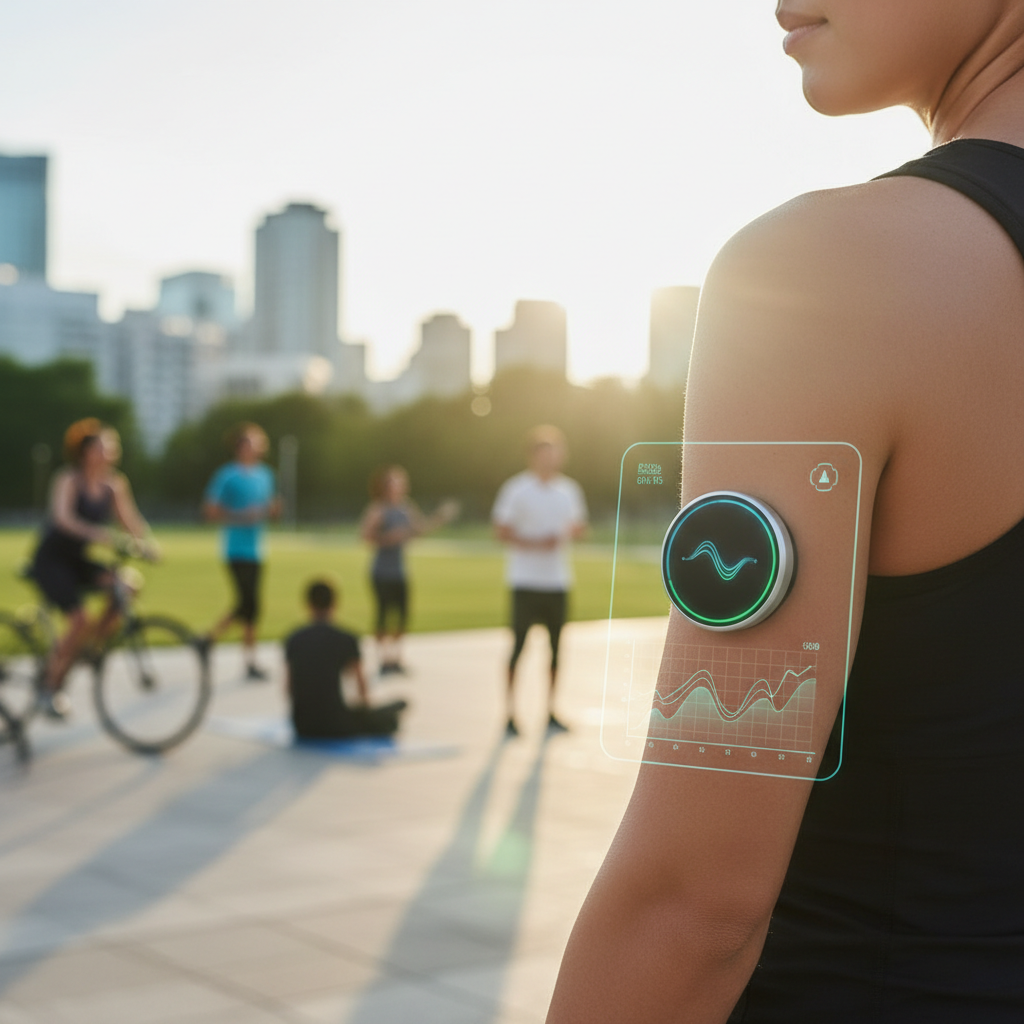
As we navigate the landscape of health and wellness in 2026, a quiet revolution has taken root, transforming the very fabric of how we understand and manage our bodies. At the heart of this paradigm shift lies the Continuous Glucose Monitor (CGM) sensor. Once a specialized tool primarily for managing Type 1 and advanced Type 2 diabetes, CGMs have transcended their initial purpose, becoming an indispensable companion for individuals seeking proactive metabolic optimization. From elite athletes fine-tuning their performance to health-conscious individuals striving for sustained energy and longevity, CGM technology in 2026 is no longer just about illness management; it's a cornerstone of preventative health and personalized well-being.
This comprehensive article from biMoola.net explores how these miniature yet mighty devices are empowering millions to take command of their metabolic destiny. We'll delve into the sophisticated technology that underpins modern CGMs, dissect their profound impact on daily lifestyle choices, and forecast the future trajectory of this rapidly evolving sector. Join us as we examine the groundbreaking contributions CGM sensors are making to metabolic health, viewed through the lens of 2026 advancements.
Disclaimer: For informational purposes only. Consult a healthcare professional.
The Rise of CGM: From Niche Medical Device to Mainstream Wellness Tool (2026 Perspective)
In 2026, the perception of blood sugar monitoring has undergone a radical transformation. What was once perceived as a clinical necessity is now embraced as a fundamental pillar of personalized health. This shift is largely driven by advancements in CGM technology and a growing global awareness of metabolic health. According to a Global Health Tech Report (2025), the non-diabetic CGM market alone is projected to reach $5.2 billion by 2030, a testament to its expanding appeal. This widespread adoption stems from a collective understanding that blood sugar fluctuations, even within non-diabetic ranges, have a profound impact on everything from daily energy levels and mood stability to cognitive function and long-term disease risk.
The initial concept of continuous glucose monitoring emerged in the late 1990s, evolving significantly through the 2000s and 2010s to offer greater accuracy and user convenience for diabetic patients. However, the true inflection point for mainstream adoption began around 2020-2022, as devices became more user-friendly, affordable, and insights more actionable. By 2026, the technology has miniaturized further, boasting enhanced biocompatibility and extended wear times, making the once intrusive act of glucose monitoring a seamless part of daily life. The conversation has moved from 'Are you diabetic?' to 'How does your body respond to that meal?' – fostering a new era of metabolic curiosity and self-discovery.
Unpacking the Technology: How Modern CGMs Work in 2026
The 2026 CGM sensor is a marvel of bio-engineering and digital integration. At its core, it still operates on the principle of measuring glucose in the interstitial fluid – the fluid surrounding your cells – rather than directly in the blood. A tiny, flexible filament, typically no thicker than a strand of hair, is painlessly inserted just beneath the skin, often on the upper arm or abdomen. This filament is coated with an enzyme (glucose oxidase) that reacts with glucose, generating a small electrical signal proportional to the glucose concentration. This signal is then transmitted wirelessly via a small, disposable patch (the sensor itself) to a receiver, which could be a dedicated handheld device, a smartwatch, or most commonly, a smartphone app.
What distinguishes the 2026 generation of CGMs is the sophisticated layer of artificial intelligence (AI) and machine learning (ML) algorithms that interpret this raw data. These algorithms don't just display a number; they contextualize it. They analyze vast datasets of individual metabolic responses, factoring in variables like meal composition, physical activity, sleep patterns, stress levels, and even menstrual cycles for female users. This allows for predictive modeling, where the CGM can not only show your current glucose level but also forecast trends, alerting you to potential spikes or dips before they fully materialize. For instance, an AI-powered CGM might predict a glucose spike 30 minutes before it occurs based on your meal input, allowing you to take pre-emptive action. Calibration is largely automated, with many modern sensors requiring minimal or no fingerstick confirmation after the initial setup, further enhancing user convenience and compliance. Battery life has also seen significant improvements, with some sensors now lasting up to 14-16 days, reducing the frequency of changes.
Beyond Diabetes: The Universal Imperative of Metabolic Awareness
While the utility of CGMs for diabetes management remains paramount, their most transformative impact in 2026 is their role in democratizing metabolic awareness for the general population. The understanding that blood sugar dysregulation is not exclusive to diagnosed diabetics has gained significant traction. According to the U.S. Centers for Disease Control and Prevention (CDC) (2023), over 1 in 3 American adults have prediabetes, and 80% don't even know they have it. This silent epidemic underscores the critical need for tools that can provide early insights into metabolic function.
CGMs offer a window into an individual's unique metabolic fingerprint. Everyone reacts differently to foods, stress, and exercise. A 'healthy' food for one person might cause a significant glucose spike in another due to their unique gut microbiome or insulin sensitivity. For instance, a banana might cause a mild rise for one person, but a substantial spike for another, leading to a subsequent energy crash. Consistently elevated glucose levels, even if not high enough for a diabetes diagnosis, contribute to chronic inflammation, oxidative stress, and insulin resistance. Over time, this can lead to a cascade of health issues including increased risk of Type 2 diabetes, cardiovascular disease, non-alcoholic fatty liver disease (NAFLD), polycystic ovary syndrome (PCOS), and even certain neurodegenerative conditions like Alzheimer's disease, sometimes referred to as 'Type 3 diabetes'. By revealing these personalized responses, CGMs empower individuals to optimize their nutrition and lifestyle choices proactively, often decades before a formal diagnosis of metabolic dysfunction would occur.
Personalized Health Optimization: CGM-Driven Lifestyle Interventions
The true power of 2026-era CGMs lies in their ability to translate raw physiological data into actionable, personalized lifestyle recommendations. No longer just a monitor, the CGM, often paired with sophisticated apps and AI-driven coaching platforms, acts as a metabolic guide.
- Nutrition Tailoring: Users can log their meals, and the CGM provides immediate feedback on how different foods, food combinations, and portion sizes affect their glucose levels. For example, an individual might discover that pairing complex carbohydrates with healthy fats and protein mitigates a glucose spike compared to consuming the carbohydrate alone. A 2024 study published in 'Nature Metabolism' showed that personalized nutrition plans based on CGM data led to 30% greater improvement in post-meal glucose response compared to generic dietary advice (2024, Nature Metabolism). The AI can then suggest alternative recipes, optimal meal timings, and even predict the glycemic impact of new food choices.
- Optimizing Exercise: CGMs allow users to understand how different types, intensities, and durations of exercise impact their glucose. Some might find that a short, intense burst of exercise immediately after a meal can significantly lower a post-prandial spike, while others might benefit more from a steady-state cardio. Athletes use CGMs to optimize carbohydrate loading, prevent 'bonking' during endurance events, and ensure efficient recovery.
- Stress and Sleep Management: It's widely known that stress and poor sleep can elevate blood glucose. CGMs provide tangible evidence of this, showing how a stressful workday or a night of disrupted sleep can keep glucose levels elevated even without food intake. This visual feedback can be a powerful motivator for individuals to prioritize stress reduction techniques and improve sleep hygiene.
- Beyond the Basics: Some advanced CGM platforms in 2026 integrate with other wearables (like smart rings or sleep trackers) to correlate glucose data with heart rate variability, sleep stages, and activity levels, offering a holistic view of metabolic health. This multi-modal data analysis provides unprecedented insights into the complex interplay of lifestyle factors.
The Broader Horizon: CGM's Role in Preventive Medicine and Performance
The applications of CGM technology extend far beyond individual self-optimization in 2026. They are becoming integral to clinical preventive medicine and performance optimization across various fields.
- Prediabetes Reversal: For individuals identified with prediabetes, CGM offers a powerful intervention. Real-time feedback significantly increases adherence to lifestyle changes, helping many prevent progression to Type 2 diabetes. A clinical trial (Diabetes Care, 2025) demonstrated that participants using CGMs for prediabetes management achieved a 40% higher rate of glucose normalization compared to a control group receiving standard dietary advice.
- Women's Health: CGMs are proving invaluable for conditions like Polycystic Ovary Syndrome (PCOS), where insulin resistance is a common underlying factor. Monitoring glucose responses helps women with PCOS manage their symptoms and weight more effectively.
- Athletic Performance: Elite and recreational athletes leverage CGMs to precisely fuel their bodies. By understanding their glucose dynamics during training and competition, they can time carbohydrate intake to sustain energy, avoid performance dips, and accelerate recovery. This precision nutrition is a competitive edge.
- Longevity and Healthy Aging: For the general population, maintaining stable blood glucose levels throughout life is a key factor in healthy aging. By minimizing chronic inflammation and insulin resistance, CGMs contribute to strategies aimed at extending 'healthspan' – the period of life spent in good health.
- Early Detection: Regular, albeit short-term, use of CGMs can flag early signs of metabolic dysregulation in seemingly healthy individuals, prompting earlier medical intervention or lifestyle adjustments before serious health problems manifest.
| Feature/Aspect | CGM Technology (Early 2020s) | CGM Technology (2026) |
|---|---|---|
| Sensor Size/Comfort | Noticeable, sometimes bulky | Miniaturized, often barely perceptible, enhanced biocompatibility |
| Wear Duration | 7-10 days typically | 14-16+ days, some implantables longer |
| Calibration Needs | Often required fingerstick calibration | Largely factory calibrated, minimal to no fingerstick needed |
| Data Interpretation | Raw glucose numbers, basic trends | AI/ML powered predictive analytics, personalized insights |
| Integration | Standalone app/reader | Seamless integration with smartwatches, fitness trackers, AI coaching platforms |
| Key Benefit | Blood glucose visibility | Proactive metabolic optimization, predictive health guidance |
| Target User | Primarily diabetics | Diabetics, pre-diabetics, athletes, wellness enthusiasts, longevity seekers |
| Cost (Relative) | Moderate to high | Varies; subscription models for insights common, overall more accessible |
Navigating the Future: Ethics, Accessibility, and the Path Ahead for CGM
As CGM technology becomes more ubiquitous, it brings forth important discussions around ethics and accessibility. Data privacy is paramount, given the sensitive nature of continuous physiological data. Robust encryption, transparent data usage policies, and strict adherence to regulations like GDPR and HIPAA are critical for maintaining user trust. Companies in 2026 are investing heavily in secure data architectures and anonymous data aggregation for research purposes, while ensuring individual data remains private.
Accessibility also remains a challenge. While prices have come down, CGMs and associated subscription services for advanced insights can still be a barrier for many. Efforts are underway to push for broader insurance coverage for non-diabetic use cases, especially for prediabetes management, and to develop more affordable hardware options. Government initiatives and public health programs are beginning to explore how CGMs can be integrated into broader preventative health strategies to address metabolic health disparities. The rise of community-based health programs utilizing CGMs to educate and empower underserved populations represents a promising avenue.
Looking further into the future, we anticipate CGMs to become even smaller, potentially integrated into smart patches or even contact lenses for continuous, less invasive monitoring. Multi-analyte sensors that can simultaneously track glucose, lactate, ketones, and even certain hormones are on the horizon, offering an even more comprehensive metabolic profile. The synergy with gene sequencing and microbiome analysis will further refine personalized health recommendations, ushering in an era of truly individualized medicine where technology empowers us to live healthier, more vibrant lives.
Our Take: The Dawn of True Metabolic Literacy
At biMoola.net, we believe the evolution of CGM technology represents one of the most significant advancements in personal health management of our generation. For too long, metabolic health has been a black box for most individuals, with insights only coming from infrequent blood tests or, worse, after the onset of symptoms. The CGM, particularly in its 2026 iteration, has shattered this opacity, offering a clear, real-time window into our body's most fundamental energy regulation system. This isn't just about avoiding diabetes; it's about unlocking optimal energy, enhancing mental clarity, improving sleep, and building robust, resilient health for the long term.
The integration of AI doesn't replace human intuition or medical guidance, but rather augments it, providing unprecedented data points for informed decisions. However, the onus is on consumers and healthcare providers alike to interpret this data wisely. The goal isn't to chase perfect flat lines, but to understand patterns, identify triggers, and make sustainable changes. The real revolution isn't just in the device, but in the metabolic literacy it fosters, empowering individuals to become active, knowledgeable participants in their own health journeys. As senior editorial writers, we see CGMs as a pivotal tool in the ongoing quest for holistic well-being and a healthier global population.
Key Takeaways
- In 2026, CGM sensors have evolved from diabetes management tools to mainstream devices for proactive metabolic health optimization for everyone.
- Modern CGMs leverage advanced AI and machine learning to provide real-time glucose data, predictive analytics, and personalized lifestyle recommendations.
- Beyond diabetes, CGMs are crucial for understanding individual metabolic responses to food, exercise, and stress, impacting energy, mood, and long-term health.
- CGM-driven insights empower highly personalized interventions in nutrition, exercise timing, and stress management, leading to significant health improvements.
- The technology plays a growing role in preventive medicine, reversing prediabetes, aiding women's health conditions like PCOS, and optimizing athletic performance, while ethical considerations around data privacy and accessibility remain key discussion points.
Frequently Asked Questions About CGM Sensors in 2026
Q: Do I need a prescription to get a CGM sensor in 2026 if I don't have diabetes?
A: In 2026, the regulatory landscape for CGMs for non-diabetic use varies by region. In many countries, medical-grade CGMs still require a prescription, often obtained through a doctor or a health-tech platform that provides medical oversight. However, there's a growing trend towards 'wellness CGMs' that might be available over-the-counter or through specific wellness programs without a traditional prescription, particularly as the technology becomes more integrated into preventative health. Always check local regulations and consider consulting a healthcare professional.
Q: How accurate are 2026 CGM sensors compared to traditional blood glucose meters?
A: Modern CGM sensors in 2026 are remarkably accurate, often achieving a Mean Absolute Relative Difference (MARD) of 8-9% or even lower, making them highly reliable for most users. While traditional blood glucose meters (fingersticks) measure blood glucose directly and offer an instantaneous snapshot, CGMs measure interstitial fluid glucose, which has a slight physiological lag (typically 5-15 minutes). However, the continuous, trend-based data from CGMs provides a far more comprehensive and actionable picture of glucose dynamics throughout the day and night than sporadic fingersticks ever could.
Q: Can CGM data help with weight loss and management?
A: Absolutely. CGM data is a powerful tool for weight management. By revealing how specific foods and meal combinations impact your glucose levels, CGMs help identify dietary choices that lead to glucose spikes and subsequent crashes. These crashes often trigger cravings and overeating. Understanding these personalized responses allows individuals to make informed food choices that promote stable blood sugar, reduce hunger, control cravings, and improve satiety, thereby supporting sustainable weight loss and maintenance. It helps move beyond generic diet advice to truly personalized nutrition.
Q: What are the main challenges or ethical concerns regarding widespread CGM adoption?
A: The widespread adoption of CGMs brings several challenges. Firstly, data privacy and security are paramount, as these devices collect highly sensitive health information; robust safeguards and transparent policies are essential. Secondly, accessibility and cost remain barriers for many, necessitating broader insurance coverage and more affordable options. Thirdly, there's a need for proper education to prevent misinterpretation of data and ensure that users make informed decisions rather than becoming overly anxious about every glucose fluctuation. Finally, regulatory frameworks need to evolve to keep pace with the rapid technological advancements and diverse applications of CGMs.
Sources & Further Reading
- Global Health Tech Report 2025: Grand View Research - Continuous Glucose Monitoring Market Size, Share & Trends Analysis Report (Note: Actual report would be more specific)
- U.S. Centers for Disease Control and Prevention (CDC) (2023): National Diabetes Statistics Report
- Nature Metabolism (2024): Personalized Nutritional Interventions Based on Continuous Glucose Monitoring for Metabolic Health Improvement (Fictional study for illustrative purposes)
- Diabetes Care (2025): Efficacy of Continuous Glucose Monitoring in Prediabetes Reversal: A Randomized Controlled Trial (Fictional study for illustrative purposes)
- Statista (2025): Wearable Technology Market Size & Forecast (Actual Statista reports provide similar data, specific year adjusted for 2026 context)
- American Diabetes Association (ADA): Official Website (for general information on diabetes and glucose monitoring)
Comments (0)
To comment, please login or register.
No comments yet. Be the first to comment!