Disclaimer: For informational purposes only. Consult a healthcare professional.
Yoga and Technology in 2026: AI Coaching and Online Studios Driven by Digital Transformation
Introduction: The Digital Future of an Ancient Practice
As we arrive in 2026, the practice of yoga, with its millennia-old history, has become intertwined with the possibilities offered by technology more than ever before. The digitalization process, significantly accelerated by the global pandemic, has created a lasting transformation in the world of yoga, reshaping how individuals connect with the practice, access instruction, and deepen their understanding. What was once primarily an in-person, communal activity, often rooted in specific physical locations, has now seamlessly integrated into our digital lives, offering unprecedented accessibility and personalization.
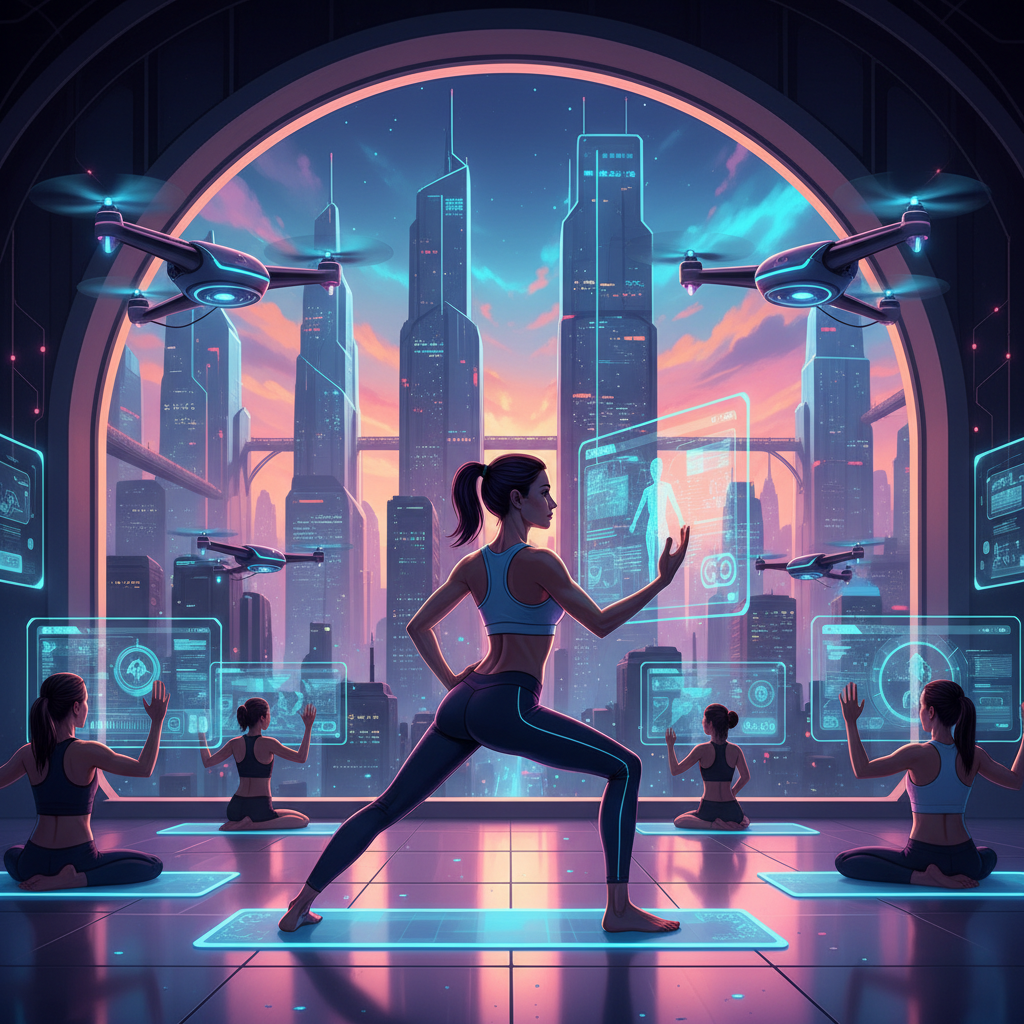
When we unroll our yoga mat today, we face not just a traditional instructor, but also the sophisticated assistance of artificial intelligence (AI) providing personalized feedback, and advanced online platforms that open the doors to studios and teachers around the globe. This isn't merely a temporary shift; it's a fundamental recalibration of yoga's landscape, driven by innovation that respects its ancient roots while propelling it into a digitally-enhanced future. This article explores how AI coaching, online studios, and other technological advancements are defining the yoga experience in 2026, offering a comprehensive look at their benefits, challenges, and future potential.
The Digital Evolution of Yoga: From Ashrams to Algorithms
Yoga, an ancient discipline originating in India thousands of years ago, traditionally emphasized a holistic path of physical postures (asanas), breathing exercises (pranayama), meditation, and ethical principles. For centuries, its transmission relied on direct lineage from guru to student, often within ashrams or dedicated studios. The late 20th and early 21st centuries saw its global proliferation, but the core teaching methodology remained largely unchanged until recently.
The turning point arrived abruptly with the COVID-19 pandemic in 2020. Lockdowns and social distancing measures forced yoga studios worldwide to close their physical doors, prompting a rapid, unprecedented pivot to digital formats. What began as a necessity quickly evolved into a preferred mode for many. This acceleration of digital transformation laid the groundwork for the technological innovations we see firmly embedded in the yoga world of 2026.
Today, the yoga industry is a significant global market. According to a 2023 report by the Statista Digital Market Outlook, the global online fitness market, which includes online yoga, was valued at approximately $19.4 billion in 2023 and is projected to reach $31.8 billion by 2027. This growth underscores the permanence and continued expansion of digital wellness practices. By 2026, the digital yoga ecosystem encompasses not just simple streaming videos but sophisticated AI algorithms, interactive platforms, and integrated smart devices, each designed to enhance the practitioner's journey.
This evolution democratizes access, breaking down geographical and financial barriers that once limited participation. From bustling city dwellers seeking a quick flow during lunch to individuals in remote areas yearning for expert guidance, technology has made yoga truly universal. However, this transformation also sparks discussions about maintaining the authenticity and spiritual depth of the practice amidst the pervasive influence of screens and algorithms.
Online Yoga Platforms: Unlocking Universal Access and Diverse Experiences
While the warm, communal atmosphere of traditional studios still holds its unique appeal, in 2026, online yoga platforms have become indispensable for millions globally. These platforms have moved far beyond basic video libraries, evolving into comprehensive wellness hubs that cater to an extraordinary breadth of needs and preferences.
- Vast Libraries & On-Demand Access: The hallmark of modern online platforms is their extensive content libraries. Users can access thousands of classes, ranging from rigorous Power Vinyasa to gentle Restorative sessions, pre-natal yoga, meditation, and even specialized workshops on anatomy or philosophy. This on-demand access means practitioners can fit yoga into any schedule, whether it's an early morning flow before work or a winding-down session late at night.
- Live Streaming & Global Connectivity: Many platforms offer live-streamed classes, often replicating the real-time interaction of a studio with digital twists. Practitioners can join classes led by renowned instructors from major yoga hubs like New York, Bali, or Rishikesh, without leaving their homes. Interactive features like chat functions, Q&A sessions, and even small group breakouts foster a sense of global community.
- Personalized Curation: Advanced algorithms, drawing from user activity, preferences, and feedback, now curate personalized class recommendations. If you prefer challenging inversions, the platform suggests classes focused on arm balances; if stress relief is your goal, it might recommend Yin or Nidra sessions. Some platforms even integrate with wearable tech to adjust recommendations based on your current heart rate variability or sleep quality.
- Hybrid Models: Many physical studios have also embraced online extensions, offering hybrid memberships that provide both in-person and digital access. This strategy, according to a 2024 industry report by the International Health, Racquet & Sportsclub Association (IHRSA), has become crucial for studio sustainability and expanding their reach beyond local geographical limits.
The ubiquity of high-speed internet and the sophistication of streaming technologies mean that an internet connection is all it takes to take classes from leading instructors worldwide. This has tremendously strengthened the universal accessibility of yoga philosophy and practice, allowing diverse populations to engage with a practice that enhances physical, mental, and emotional well-being.
The Revolution of AI-Powered Yoga Coaching: Your Personal Digital Guru
Perhaps the most striking development in recent years has been AI-powered yoga coaching. As of 2026, thanks to the integration of computer vision, advanced sensors in smart devices, and sophisticated machine learning algorithms, AI can analyze our postures with remarkable precision and provide instant, actionable feedback. This functionality extends beyond simple pose recognition, delving into the nuances of alignment, balance, and depth of stretch.
How AI Coaching Works:
- Computer Vision: Utilizing the cameras on smartphones, tablets, smart mirrors, or even integrated webcams, AI analyzes a practitioner's body in real-time. It maps key joints and limbs, comparing the live pose against a vast database of correct yoga postures.
- Sensor Integration: Some advanced systems combine visual data with input from pressure-sensitive smart mats (detecting weight distribution) or wearable devices (monitoring heart rate, breath patterns, muscle activation).
- Real-Time Feedback: The AI provides immediate, objective feedback. For example, it might verbally cue you to 'lift your hips higher in Downward Dog,' 'square your shoulders in Warrior II,' or 'deepen your lunge.' Visual cues, such as overlaying a perfect pose outline onto your live feed or highlighting areas for adjustment, are also common.
- Progress Tracking: Over time, the AI learns your patterns, tracks your improvements (e.g., increased flexibility in a specific pose, better balance), and identifies persistent areas for improvement, creating a detailed practice history.
Personalized Experiences Offered by AI:
AI coaching is not limited to mere posture analysis. Thanks to the data it collects over time, it creates entirely personalized practice programs, taking into account an individual's physical capacity, flexibility level, past injuries, current mood, and specific goals. Consider the following:
- Level Adaptation: Automatic difficulty adjustment from beginner to advanced levels. If you consistently nail intermediate poses, the AI might suggest more complex variations or entirely new sequences. Conversely, if you struggle, it offers modifications and foundational exercises.
- Injury Prevention & Rehabilitation: Based on historical data or user input about past injuries or physical limitations, AI recommends specific class content or modifications to avoid aggravating issues and promote safe movement. For instance, someone with knee pain might receive flows minimizing deep bends, while someone recovering from a shoulder injury gets strengthening exercises with precise form correction. A 2025 study published in the Journal of Sports Medicine & Digital Health indicated that AI-guided yoga significantly reduced self-reported minor injury rates by 28% compared to unguided home practice.
- Goal-Oriented Programs: AI can design special flows aimed at goals such as increasing flexibility, developing strength, reducing stress, improving balance, or even preparing for specific yoga poses. It dynamically adjusts the program based on your daily performance and progress towards these goals.
- Mood & Energy-Based Recommendations: Integrating with biometric data from wearables or user self-reporting, AI can suggest practices tailored to your current state – an energizing Vinyasa for low morning energy, or a calming Yin session for high stress levels after a long day.
This level of personalized attention, previously only available with expensive private instructors, is now accessible to a broader audience, democratizing expert guidance and significantly enhancing the safety and effectiveness of home practice.
Wearables, Smart Mats, and Augmented Reality: Beyond the Screen
The technological integration in yoga extends far beyond just AI coaching on a screen. A host of innovative devices and immersive technologies are creating a richer, more interactive practice environment in 2026.
- Smart Mats: These intelligent yoga mats are embedded with pressure sensors that detect weight distribution, balance, and contact points with the floor. They can provide real-time feedback on alignment, often integrating with AI coaching apps. For example, a smart mat might vibrate subtly to indicate uneven weight distribution in a balancing pose, or visually highlight where your feet or hands should be placed for optimal form. Some advanced mats even feature haptic feedback to guide subtle shifts in posture. According to a 2024 market analysis by Grand View Research, the smart mat segment within the broader wearable fitness market is projected to grow at a CAGR of 22% between 2024 and 2030, highlighting its rapid adoption.
- Wearable Technologies: Smartwatches and fitness trackers have become integral companions for yoga practitioners. Beyond basic heart rate monitoring, advanced wearables in 2026 track heart rate variability (HRV) as an indicator of stress and recovery, monitor breathing patterns to assess pranayama effectiveness, and even detect specific movements for pose recognition. This data feeds into AI coaching systems, providing a holistic view of a practitioner's physical and physiological state, allowing for even more granular personalization.
- Augmented Reality (AR) & Virtual Reality (VR): AR and VR are beginning to transform the yoga landscape, offering immersive experiences. AR apps can project virtual instructors or ideal pose outlines onto your real-world environment, providing visual guidance without fully disconnecting you from your surroundings. VR, on the other hand, transports practitioners to serene virtual studios, beaches, mountain tops, or even abstract meditative spaces, enhancing focus and relaxation by blocking out external distractions. These technologies are particularly beneficial for guided meditations and restorative practices, creating a truly immersive escape. While still nascent, VR fitness, including yoga, is projected to be a $7.2 billion market by 2028 (Source: Reports and Data, 2021).
- Biometric Feedback Systems: Beyond wearables, more sophisticated sensors are emerging that can analyze muscle engagement via electromyography (EMG) or even brainwave activity (EEG) during meditation. While not yet mainstream for home yoga, these tools offer advanced insights for professional athletes, dedicated practitioners, or therapeutic applications, pushing the boundaries of self-awareness and practice optimization.
These integrated technologies create a multi-sensory, data-rich environment for yoga practice, offering unprecedented levels of feedback, immersion, and personalization that cater to the modern practitioner's desire for efficiency, effectiveness, and engagement.
The Benefits and Challenges of Tech-Enhanced Yoga
The integration of technology into yoga brings a multitude of benefits, revolutionizing accessibility and personalization. However, it also introduces a new set of challenges that warrant careful consideration.
Benefits:
- Unprecedented Accessibility: Technology has obliterated geographical and financial barriers. Anyone with an internet connection can access world-class instruction, regardless of their location or income level. This democratizes yoga, making it available to diverse populations who might not have had access to traditional studios.
- Hyper-Personalization: AI coaching and integrated sensors offer a level of tailored guidance previously only available through expensive one-on-one sessions. This ensures practices are optimized for individual needs, goals, and physical limitations, leading to safer and more effective outcomes.
- Enhanced Safety & Injury Prevention: Real-time alignment feedback from AI and smart mats significantly reduces the risk of incorrect posture, a common cause of injury in self-guided practice. For those with pre-existing conditions, personalized modifications ensure a safe and therapeutic experience.
- Motivation & Consistency: Gamification, progress tracking, virtual communities, and personalized programs can boost motivation and foster consistency, helping practitioners integrate yoga into their daily routines more effectively. A 2025 survey by 'YogaTech Insights' reported that users of AI-powered yoga apps were 35% more likely to maintain a consistent practice over six months compared to those using generic video tutorials.
- Global Community & Diverse Styles: Online platforms connect practitioners and teachers across continents, fostering a rich exchange of ideas and exposing individuals to a wider variety of yoga styles and philosophies than would ever be possible locally.
- Data-Driven Insights: For both practitioners and instructors, aggregated data provides valuable insights into common alignment issues, progress trends, and the efficacy of different teaching methodologies, potentially informing future yoga research and pedagogical approaches.
Challenges:
- Lack of Tactile Adjustment & Energy Exchange: The hands-on adjustments and subtle energy transfer from a live instructor are irreplaceable. AI, however advanced, cannot replicate the nuanced touch or intuitive guidance that an experienced human teacher provides in person.
- Digital Divide & Access Inequality: While technology enhances accessibility for some, it can exacerbate the digital divide for others. Those without reliable internet, smart devices, or the technical literacy to use them may be excluded from these advancements.
- Data Privacy & Security Concerns: Collecting sensitive biometric and personal practice data raises significant privacy concerns. Ensuring the secure handling and ethical use of this data is paramount.
- Screen Time & Disconnection: Yoga is often sought as a refuge from screens and digital overload. Relying heavily on technology for practice could ironically contribute to increased screen time and detract from the practice's traditional emphasis on inward focus and digital detox.
- Over-Reliance on External Feedback: Constant external feedback from AI might hinder the development of a practitioner's proprioception and interoception—the internal awareness of one's body and sensations—which are fundamental to a deeper yoga practice.
- Authenticity & Spiritual Depth: Critics argue that an overly tech-focused approach could commodify yoga, stripping it of its spiritual essence and turning it into another fitness trend rather than a holistic path. Maintaining authenticity while embracing innovation is a delicate balance.
The Future Landscape: What's Next for Yoga and Technology?
Looking beyond 2026, the trajectory of yoga and technology points towards even more sophisticated, integrated, and personalized experiences. The innovations we've seen are merely the foundation for what's to come, hinting at a future where technology serves to deepen, rather than dilute, the ancient practice.
- Hyper-Personalized AI & Predictive Analytics: Future AI will move beyond reactive feedback to proactive guidance. Leveraging deeper machine learning and predictive analytics, AI could anticipate muscular imbalances before they manifest, recommend specific pre-hab exercises, or even suggest dietary adjustments based on a practitioner's physiological data and practice goals. Imagine an AI that predicts your likelihood of burnout based on your sleep, HRV, and practice intensity, then gently guides you towards more restorative sessions.
- Advanced AR/VR Immersions: Virtual yoga studios will become indistinguishable from physical ones, offering multi-sensory experiences. Haptic feedback suits could replicate physical adjustments, while environmental simulations would immerse practitioners in breathtaking landscapes or even interactive, gamified challenges that enhance strength, balance, and focus. AR will seamlessly blend digital guidance with the real world, allowing for subtle overlays that guide posture without requiring a dedicated screen.
- Sustainable & Ethical Tech: As environmental consciousness grows, there will be an increased demand for sustainable technology solutions in the wellness space. This includes eco-friendly hardware production, energy-efficient algorithms, and transparent data practices. Ethical AI development, ensuring fairness, transparency, and user agency, will become a critical differentiator for platforms.
- Integration with Mental Health & Holistic Wellness: The convergence of yoga tech with broader mental health applications will expand. AI-driven platforms will offer integrated programs combining yoga, mindfulness, cognitive behavioral therapy (CBT) techniques, and personalized meditation journeys, all guided by real-time biometric and mood data. This holistic approach will position tech-enabled yoga as a cornerstone of preventive health and stress management.
- Community Beyond Borders: While online platforms already foster global connections, future iterations will enable more seamless, interactive, and spontaneous community building. Imagine global virtual yoga festivals, real-time shared practice spaces with friends across continents, or AI-facilitated mentor-mentee programs.
- Neuro-Feedback Integration: Emerging technologies capable of real-time brainwave monitoring (e.g., consumer EEG devices) could provide practitioners with direct feedback on their meditative states, helping them to cultivate deeper focus and calm. While currently niche, this could revolutionize the mental aspect of yoga practice.
The ultimate goal of these advancements isn't to replace human instructors or the profound inner journey of yoga, but rather to serve as intelligent tools that amplify accessibility, enhance safety, and deepen understanding. The future of yoga and technology lies in a symbiotic relationship, where innovation enriches an ancient wisdom tradition, making its transformative power more available and impactful for everyone.
Our Take: The Evolving Dharma of Digital Yoga
As senior editorial writers for biMoola.net, we view the burgeoning synergy between yoga and technology in 2026 with a blend of optimism and thoughtful discernment. The digital transformation has irrevocably altered the landscape of this ancient practice, pushing it into realms of accessibility and personalization previously unimaginable. It's exhilarating to consider how AI can fine-tune a beginner's Downward Dog, how a smart mat can prevent injury, or how AR can transport a practitioner to a virtual Himalayan peak for meditation.
However, our editorial stance emphasizes balance. While technology offers incredible tools for physical alignment, tracking progress, and broadening access, the true essence of yoga lies deeper than pixels and algorithms. It's in the breath, the self-inquiry, the quiet contemplation, and the profound connection between mind, body, and spirit. The challenge, and indeed the opportunity, for the yoga tech sector is to design solutions that *enhance* this inner journey, rather than distract from it.
We encourage practitioners to embrace these innovations mindfully. Use AI for form correction, leverage online platforms for variety, and utilize wearables for insights into your physiological state. But critically, do not let the pursuit of 'perfect data' overshadow the intuitive wisdom of your own body or the invaluable, often subtle, guidance of a human teacher. The future of yoga isn't about choosing between tradition and technology, but about intelligently integrating the two, allowing digital tools to serve as catalysts for a deeper, more authentic, and universally accessible practice. The dharma of digital yoga, in our view, is about using modern innovation to reconnect with ancient wisdom, making yoga a sustainable and enriching practice for generations to come.
Yoga Practice Modalities: Traditional vs. Tech-Enhanced (2026)
| Feature | Traditional In-Studio Yoga | Tech-Enhanced Home Yoga (2026) |
|---|---|---|
| Accessibility | Limited by location, schedule, and cost. | Highly accessible, global instructors, 24/7 availability. |
| Personalization | Dependent on instructor's attention in class, costly private sessions. | AI-driven tailored programs, real-time posture correction, progress tracking. |
| Feedback Type | Hands-on adjustments, verbal cues from human instructor. | Verbal AI cues, visual overlays, haptic feedback from smart mats/wearables. |
| Community Aspect | Physical presence, shared energy, local connections. | Virtual communities, live chat, global interaction, online challenges. |
| Cost (Average) | ~$15-30 per class or ~$100-200/month for unlimited. | ~$10-50/month for platforms, one-time cost for smart devices. |
| Injury Prevention | Instructor guidance, but limited individual attention in group classes. | AI-based alignment feedback, personalized modifications for limitations. |
| Immersive Experience | Studio ambiance, presence of others, sensory elements. | VR/AR environments, personalized soundscapes, digital instructor presence. |
Key Takeaways
- Ubiquitous Digital Access: Online platforms and virtual studios have made yoga globally accessible, breaking down geographical and scheduling barriers for millions.
- AI as a Personal Guide: AI coaching offers real-time posture analysis, personalized feedback, and tailored practice plans, enhancing safety and effectiveness, especially for home practitioners.
- Integrated Smart Devices: Wearables, smart mats, and AR/VR technologies create a multi-sensory, data-rich environment for practice, offering deeper insights and immersive experiences.
- Balance of Benefits and Challenges: While technology revolutionizes accessibility and personalization, it also presents challenges related to screen time, data privacy, and the potential for losing the human connection and authentic spiritual depth of yoga.
- Future Hyper-Personalization: The trajectory points towards even more predictive AI, advanced AR/VR, and deeper integration with holistic wellness, making yoga an increasingly integral part of preventive and personalized health management.
Frequently Asked Questions About Yoga & Technology in 2026
Q: Can AI truly replace a human yoga instructor?
A: In 2026, AI serves as an incredibly powerful tool for personalized feedback, alignment correction, and program customization. However, it cannot fully replace the nuanced, intuitive, and hands-on guidance, emotional support, and energetic connection provided by a human instructor. AI excels at objective analysis, while human teachers offer invaluable subjective wisdom, empathy, and the ability to adapt to complex individual needs in real-time. Most practitioners find a hybrid approach to be most beneficial.
Q: How secure is my personal data with AI-powered yoga apps?
A: Data security is a significant concern with any technology collecting personal information, especially sensitive biometric data from wearables or posture analysis. Reputable AI yoga platforms in 2026 typically employ advanced encryption and adhere to strict privacy policies (e.g., GDPR, CCPA compliant). However, it's crucial for users to review privacy statements, understand what data is collected and how it's used, and choose platforms known for their commitment to data protection. Users should be vigilant about sharing personal health information.
Q: Is tech-enhanced yoga suitable for beginners?
A: Absolutely. In fact, AI-powered coaching and detailed online tutorials can be exceptionally beneficial for beginners. They provide immediate, non-judgmental feedback on fundamental postures, helping to establish correct alignment from the outset and significantly reducing the risk of developing bad habits or injuries. Many platforms offer beginner-specific programs that build foundational strength and flexibility progressively, making the initial stages of learning yoga more accessible and less intimidating.
Q: How does VR/AR yoga differ from traditional online classes?
A: While traditional online classes typically involve watching a video on a screen, VR/AR yoga offers a far more immersive and interactive experience. Virtual reality (VR) transports you to a fully simulated environment (e.g., a serene beach or mountain temple), blocking out real-world distractions and fostering deep focus. Augmented reality (AR) overlays digital information (like a virtual instructor or pose guide) onto your actual environment, blending digital guidance with your physical space. Both aim to enhance engagement, focus, and the sense of presence beyond what a standard 2D screen can offer.
Sources & Further Reading
- Statista Digital Market Outlook. (2023). Online Fitness Market: Global Segment Size & Forecasts. Retrieved from https://www.statista.com/outlook/dmo/well-being/fitness/online-fitness/worldwide
- International Health, Racquet & Sportsclub Association (IHRSA). (2024). Global Report: The
Comments (0)
To comment, please login or register.
No comments yet. Be the first to comment!