Wearable Technology

Smart Clothing Revolution in 2026: The Future of Health and Sports with Hexoskin and Athos

Smart Clothing Revolution in 2026: The Future of Health and Sports with Hexoskin and Athos

As we arrive at the year 2026, wearable technology has long ceased to be merely smartwatches on our wrists. Now, our clothes, even without us realizing it, have transformed into biometric laboratories that optimize our health and performance. Smart clothing, as textile products equipped with sensors, has brought about revolutionary changes, especially in the world of health and sports, over the past few years, and the pace of this change is increasing day by day. In this blog post, we will look at the position of pioneering companies like Hexoskin and Athos in this exciting field in 2026, and shed light on the future of wearable textiles.

Why Is Smart Clothing So Important?

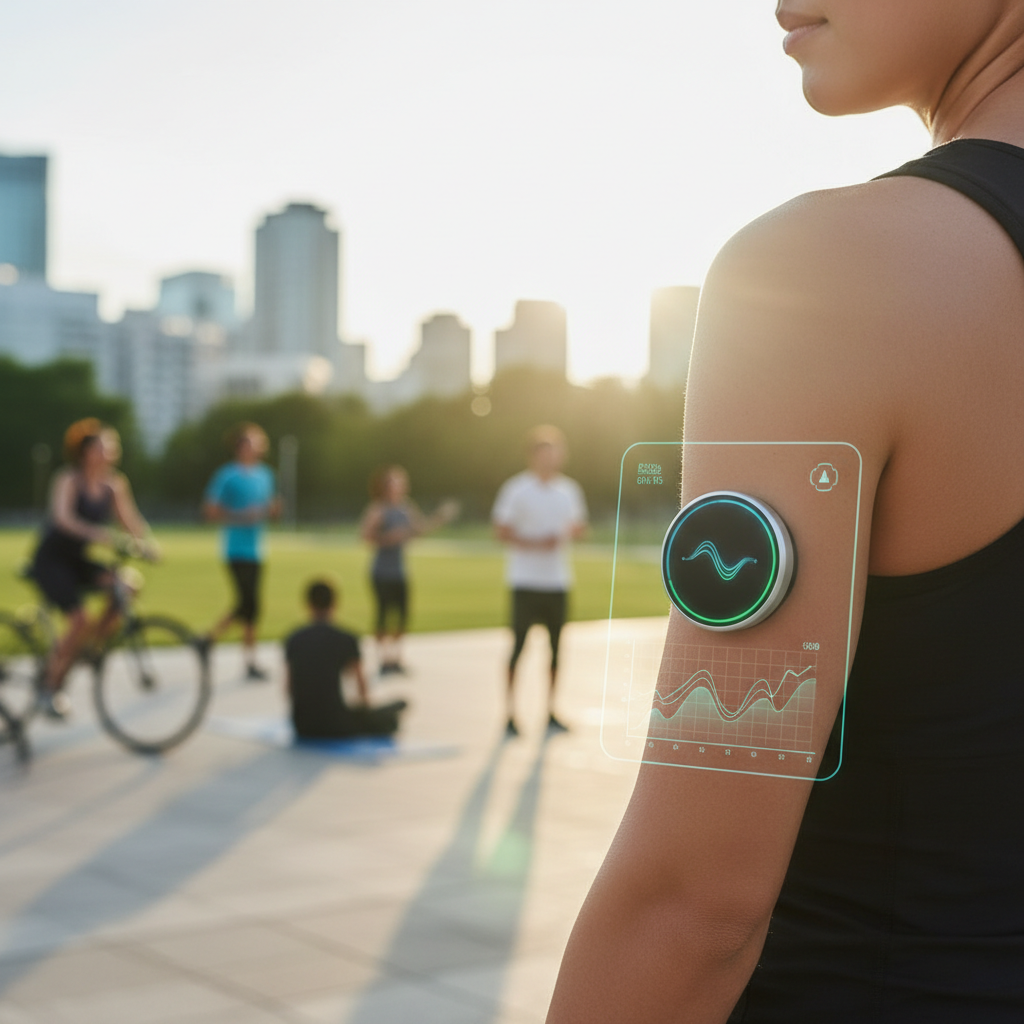
Thanks to micro-sensors integrated into traditional fabrics, smart clothing collects real-time and continuous data from our bodies. This data includes many biometric indicators such as heart rate, respiratory rhythm, body temperature, muscle activity (EMG), and even posture and movement analysis. This collected data is analyzed through special algorithms and AI-powered platforms, providing personalized feedback to users. By 2026, the accuracy and integration of these technologies are no longer nascent concepts but robust, reliable systems that seamlessly blend into our daily lives, offering unprecedented insights into our physiological states.

The significance of this evolution cannot be overstated. We've moved beyond passive tracking to proactive health management and performance enhancement. Imagine a world where your apparel doesn't just keep you warm or stylish but actively monitors for early signs of illness, optimizes your athletic training down to the individual muscle fiber, or even alerts emergency services in the event of a fall. This isn't science fiction; it's the reality of smart clothing in 2026, driven by continuous innovation and the relentless pursuit of human optimization.

The Evolution of Wearable Tech: From Gadgets to Garments

The journey of wearable technology has been a fascinating one, marked by rapid advancements and a constant drive towards greater integration and subtlety. What began with bulky heart rate monitors strapped to chests and rudimentary pedometers, evolved into sleek smartwatches capable of a myriad of functions. However, the true revolution, especially by 2026, lies in the transition from distinct "gadgets" worn on the body to "garments" that are inherently smart.

From Discrete Devices to Seamless Integration

  • Early Days (Pre-2010s): Basic fitness trackers, GPS watches, and chest strap heart rate monitors. These were often clunky, required separate devices, and provided limited data.
  • The Smartwatch Era (2010s): Apple Watch, Fitbit, Garmin, and others brought a wealth of sensors (accelerometers, optical heart rate, GPS) to the wrist. They offered convenience and a broader range of metrics but still felt like an external device.
  • The Rise of Smart Clothing (Late 2010s - Early 2020s): Companies began experimenting with embedding sensors directly into fabrics. Initial challenges included durability, washability, battery life, and data accuracy.
  • The 2026 Landscape: By this year, many of those early challenges have been largely overcome. Flexible electronics, miniature sensors, advanced conductive fibers, and sophisticated power management systems have matured. Smart clothing is no longer a niche product but a burgeoning industry, offering unparalleled comfort and continuous data collection without the need for conscious interaction. The "invisibility" factor is key – the technology disappears into the fabric, allowing the user to simply wear their clothes and benefit from the insights.

This seamless integration is powered by several key technological breakthroughs:

  • Miniaturization of Sensors: Sensors have shrunk to microscopic levels, making them imperceptible when woven into fabrics.
  • Flexible and Conductive Materials: Development of highly elastic, breathable, and conductive yarns and polymers that can withstand repeated washing and daily wear.
  • Energy Efficiency: Significant improvements in battery technology and low-power sensor design allow for extended use between charges, or even energy harvesting from movement or body heat.
  • Advanced Data Processing at the Edge: Miniaturized processing units embedded in the clothing can handle initial data analysis, reducing the need to constantly transmit raw data to a phone, thus saving power and improving response times.

The global smart clothing market, valued at an estimated $2.5 billion in 2023, is projected to reach over $15 billion by 2030, growing at a compound annual growth rate (CAGR) exceeding 25%. This aggressive growth underscores the pivotal role 2026 plays as a year of significant adoption and technological refinement.

The Biometric Revolution: What Smart Clothing Measures and Why It Matters

The true power of smart clothing lies in its ability to transform our garments into sophisticated biometric laboratories. Unlike traditional spot checks or medical devices, smart textiles offer continuous, non-invasive monitoring, capturing a holistic view of our physiological state. By 2026, the accuracy and breadth of this data are astounding.

Key Biometric Indicators and Their Significance:

  • Cardiovascular Health:
    • ECG-accurate Heart Rate & Heart Rate Variability (HRV): Far more precise than optical sensors, smart clothing can capture a full electrocardiogram (ECG), providing medical-grade data on heart rhythm, detecting irregularities like arrhythmias, and offering deep insights into stress levels and recovery through HRV.
    • Why it matters: Early detection of cardiac issues, optimized training zones for athletes, stress management for general wellness.
  • Respiratory Function:
    • Breathing Rate, Volume, and Patterns: Sensors embedded in the chest area can track the expansion and contraction of the rib cage, providing accurate data on breaths per minute, tidal volume, and identifying irregular breathing patterns (e.g., sleep apnea, hyperventilation).
    • Why it matters: Monitoring respiratory conditions, improving athletic endurance through breath control, assessing sleep quality, and detecting early signs of respiratory distress.
  • Musculoskeletal Activity (EMG):
    • Electromyography (EMG): This is a game-changer for sports and rehabilitation. Smart apparel can measure the electrical activity produced by skeletal muscles, indicating which muscles are firing, how intensely, and when.
    • Why it matters: Real-time feedback on exercise form, identifying muscle imbalances, preventing injuries, optimizing strength training, and tracking recovery post-injury. For an athlete, knowing if their glutes are properly engaging during a squat can be the difference between a new personal best and a pulled hamstring.
  • Thermoregulation:
    • Core Body Temperature & Skin Temperature: Embedded thermistors can track fluctuations, indicating fever, hypothermia, or heat stress.
    • Sweat Rate & Composition: Emerging sensors can analyze sweat to monitor hydration levels and electrolyte balance.
    • Why it matters: Preventing heatstroke in athletes or workers in extreme environments, managing fevers, optimizing hydration strategies.
  • Movement and Posture Analysis:
    • Accelerometers & Gyroscopes: These sensors track speed, direction, orientation, and subtle movements. They enable detailed gait analysis, posture correction, fall detection, and sophisticated tracking of sports-specific movements (e.g., golf swing, running stride).
    • Why it matters: Injury prevention, performance optimization in sports, fall detection for the elderly, ergonomic improvements for office workers.

Practical Application: A Runner's Edge

Consider a marathon runner training for their next race. In 2026, their smart running shirt, equipped with Hexoskin-like sensors, continuously monitors their ECG, respiratory rate, and core body temperature. During a long run, their smart shorts, integrated with Athos-like EMG sensors, provide real-time feedback on muscle activation in their quads, hamstrings, and glutes. An AI-powered app analyzes this data:

  • It might alert them that their heart rate variability indicates insufficient recovery from yesterday's intense session, suggesting a slower pace for today.
  • It could identify a slight imbalance in their left hamstring activation, prompting them to adjust their form to prevent future injury.
  • If their core body temperature starts to rise dangerously, it could suggest slowing down or taking a hydration break.

This level of personalized, proactive coaching, driven by continuous biometric data, is transforming athletic performance and significantly reducing injury rates.

Pioneers in the Field: Hexoskin and Athos in 2026

While many companies are vying for a slice of the smart clothing market, Hexoskin and Athos stand out as established pioneers, each carving out a distinct niche and demonstrating remarkable evolution by 2026.

Hexoskin: The Medical-Grade Biometric Lab

Hexoskin has long been recognized for its focus on clinical-grade accuracy and comprehensive physiological monitoring. By 2026, their smart garments (primarily shirts and vests) have become indispensable tools across various high-stakes sectors:

  • Core Technology & Evolution: Hexoskin's strength lies in its patented textile sensors that seamlessly integrate ECG, respiratory rate, activity, and sleep monitoring. By 2026, their algorithms, refined over a decade of data collection, offer unparalleled accuracy in HRV analysis, sleep stage detection, and early warning signs of physiological distress. Their "Hexoskin Smart" platform has evolved to include predictive analytics, not just descriptive data.
  • Target Audiences:
    • Elite Athletes & Space Agencies: Used by professional
Editorial Transparency: This article was produced with AI writing assistance and reviewed by the biMoola editorial team for accuracy, factual integrity, and reader value. We follow Google's helpful content guidelines. Learn about our editorial standards →
B

biMoola Editorial Team

Senior Editorial Staff · biMoola.net

The biMoola editorial team specialises in AI & Productivity, Health Technologies, and Sustainable Living. Our writers hold backgrounds in technology journalism, biomedical research, and environmental science. All published content is fact-checked and reviewed against authoritative sources before publication. Meet the team →

Comments (0)

No comments yet. Be the first to comment!

biMoola Assistant
Hello! I am the biMoola Assistant. I can answer your questions about AI, sustainable living, and health technologies.