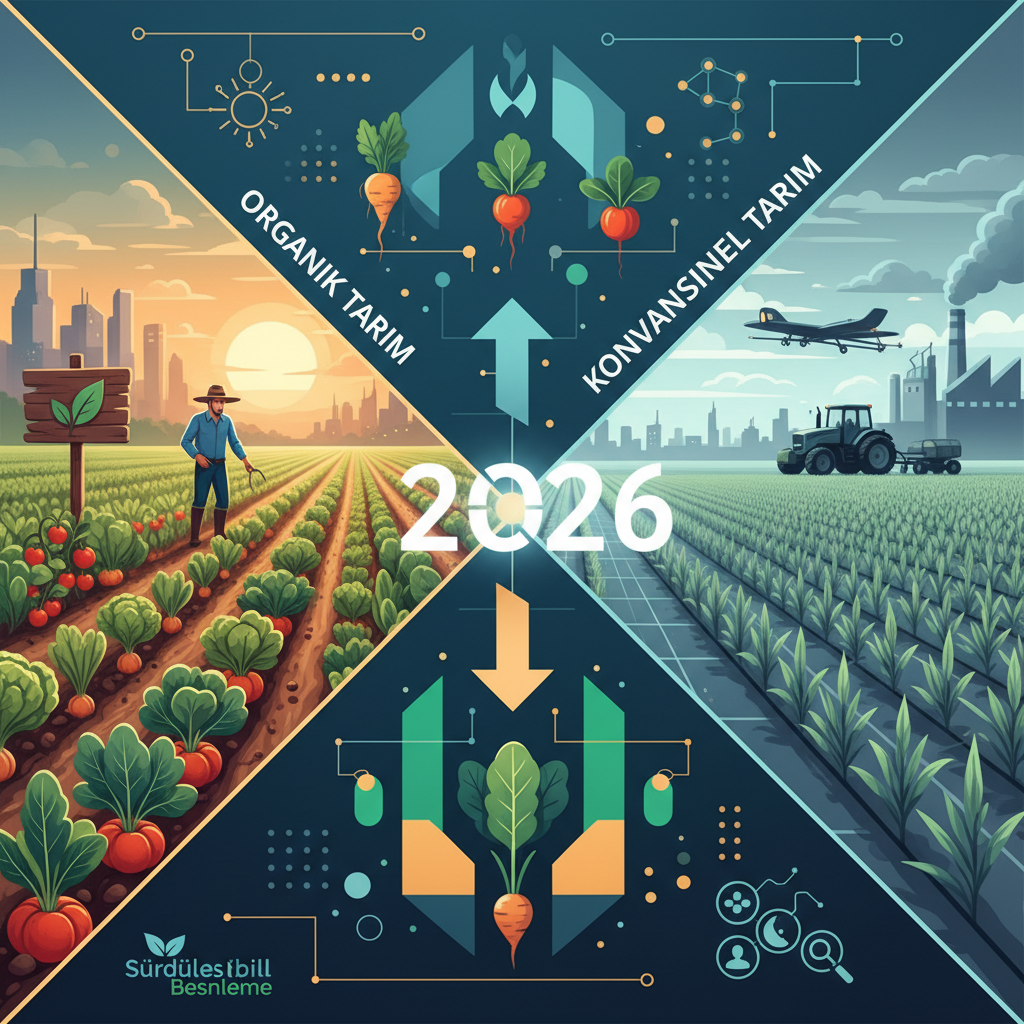
As we arrive in 2026, one of the biggest ongoing debates about the food industry and our eating habits still holds true: is organic farming or conventional farming better? With the widespread availability of organically labeled products on supermarket shelves and the increasing health and environmental awareness of consumers, the answers to this question are constantly evolving. However, accurately distinguishing between the scientific facts and common myths behind this intense debate is more critical than ever.
As an SEO expert and blogger, in this article, we will delve deep into the scientific dimension of organic and conventional farming from a 2026 perspective, question common beliefs, and shed light on future sustainable nutrition models. Get ready for answers on which method is truly healthier, more environmentally friendly, or more economical.
What are Organic and Conventional Farming? Key Differences
Fundamentally, both agricultural methods aim to produce food, but their approaches are radically different:
- Organic Farming: A system based on natural processes and cycles, avoiding the use of synthetic pesticides, herbicides, genetically modified organisms (GMOs), synthetic fertilizers, and routine antibiotics. It prioritizes improving soil health, preserving biodiversity, and ensuring animal welfare.
- Conventional Farming: An approach that aims for high yields, cost-effectiveness, and meeting market demands, making intensive use of chemical inputs (synthetic fertilizers, pesticides) and modern technologies (GMO seeds, precision agriculture). It has played a key role in feeding the world's population.
Effects on Health: Facts and Myths
Perhaps the most heated topic of debate is whether organic foods are more beneficial for human health than conventional foods. As of 2026, numerous comprehensive meta-analyses and long-term studies reveal the following findings:
Nutritional Value Differences
Numerous studies indicate that there is no significant difference in fundamental macronutrient (carbohydrate, protein, fat) values between organic and conventional products. However, some research suggests that antioxidant levels (such as polyphenols) and certain micronutrients (such as vitamin C, zinc) might be slightly higher in organic products. These differences are generally small and do not have a major impact on health when compared to the overall dietary pattern. What truly matters is how much fresh and diverse food you consume, rather than its label.
Pesticide Residues and Risks
While organic farming prohibits the use of synthetic pesticides, conventional farming uses these substances to increase yields. According to 2026 data, the likelihood of encountering pesticide residues in conventional products is higher than in organic products. However, residues within permitted limits in both methods are generally considered safe for human health. Nevertheless, particularly for sensitive groups (children, pregnant women), organic products have the potential to reduce pesticide exposure. It should be noted that naturally derived pesticides can also be used in organic products, and these must also comply with safety standards.
Environmental Sustainability Dimension
The impact of food production systems on our environment is one of the most urgent issues of 2026. Global problems such as climate change and biodiversity loss compel us to re-evaluate our agricultural practices:
- Soil Health and Biodiversity Conservation: Organic farming practices are generally more successful than conventional methods in increasing soil organic matter, reducing erosion, and enhancing soil microbial biodiversity. This translates to more fertile and resilient agricultural lands in the long term.
- Water Use and Pollution: Synthetic fertilizers and pesticides used in conventional farming can seep into groundwater and rivers, causing water pollution. While organic methods minimize this risk, they may require more land and water use in some cases.
- Carbon Footprint: Organic farms can play a significant role in combating climate change due to their potential to sequester carbon in the soil. However, some research indicates that because organic production generally yields less, more land is needed to produce the same amount of food, and thus the overall carbon footprint sometimes does not differ significantly from conventional farming. This is one of the most actively researched areas in 2026.
Cost and Accessibility Issue
The fact that organic foods are generally more expensive than their conventional counterparts is a significant factor in consumer choices. Higher labor costs, lower yield rates, and strict certification processes in organic production are reflected in the final product price. As of 2026, although the organic product market continues to grow, the price difference still poses a barrier for a large segment of the population. This situation brings with it criticism that sustainable nutrition caters only to a specific income group.
“As of 2026, the scientific consensus indicates that both organic and conventional agriculture have their unique advantages and disadvantages. Instead of a single ‘best’ solution, we should focus on integrating the best aspects of both systems in line with sustainability and health goals.”
In conclusion, the debate between organic farming and conventional farming is complex and has no single correct answer. The scientific data we have obtained as of 2026 shows that organic foods offer significant environmental benefits such as reduced pesticide exposure and contributions to soil health, while their radical superiority in terms of nutritional value is debatable. Conventional farming, on the other hand, continues to play a critical role in global food security and accessibility.
As a consumer, the best thing you can do is to make informed choices. According to your budget and priorities, you can benefit from both organic and conventional products, and by choosing local and seasonal products, you can contribute to both your health and the environment. Future sustainable food systems will likely blend the best practices of both methods, shaping new hybrid models that protect our planet and human health.
Comments (0)
To comment, please login or register.
No comments yet. Be the first to comment!