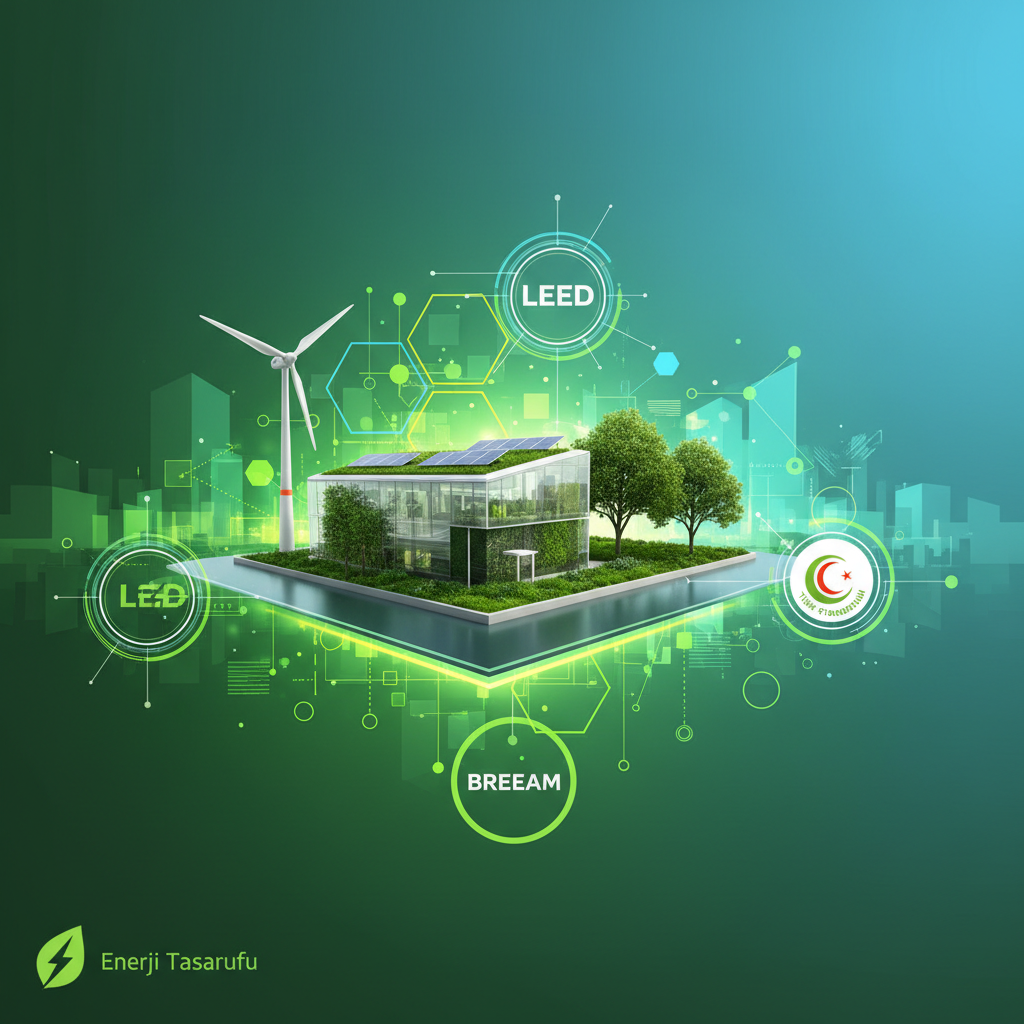
By 2026, the effects of the global climate crisis and the scarcity of natural resources have transformed sustainable living and construction practices from a choice into a necessity. Green buildings, by setting environmental performance targets across a wide spectrum – from energy and water efficiency to material selection, indoor air quality, and land use – offer healthier and more efficient structures for both our planet and its inhabitants. One of the most important tools in this transformation is the internationally and nationally recognized green building certification systems.
The Rise of Sustainable Construction and Green Certifications (2026 Perspective)
As of 2026, green building certifications have become a common criterion not only in large-scale commercial projects but also in the residential sector and even public buildings. Increased environmental awareness, stricter regulations, and the importance investors place on ESG (Environmental, Social, and Governance) criteria have exponentially increased the market value of these certifications. The energy crisis and costs are pushing building operators and owners towards more efficient solutions, highlighting the operational advantages of certified buildings.
Digitalization and artificial intelligence integration have made certification processes more transparent and measurable. Buildings can now provide real-time performance data through smart sensors, continuously monitoring whether sustainability targets are being met. This has enabled certifications to evolve from being merely a design phase document into a dynamic tool that guarantees a building's sustainability performance throughout its entire life cycle.
International Arena: The Position of LEED and BREEAM in 2026
LEED: Global Leadership from America
LEED (Leadership in Energy and Environmental Design) is one of the most recognized and widely applied green building certification systems globally, developed by the U.S. Green Building Council (USGBC), and it continues to be so in 2026. It has a strong presence, particularly in the US, Canada, China, and the Middle East. Current versions like LEED v4.1 thoroughly evaluate buildings' performance in areas such as energy and water efficiency, waste management, indoor environmental quality, and innovation.
- Increased Market Value: Certified buildings have been proven to have higher rental income and sales value compared to uncertified buildings.
- Operational Cost Savings: Provides savings of up to 20-30% in energy and water consumption.
- Healthy and Productive Environments: Well-designed interiors positively impact employee productivity and occupant health.
BREEAM: Europe's Established Approach
BREEAM (Building Research Establishment Environmental Assessment Method) was developed by the UK-based BRE Global and is widely used, especially in Europe, as well as in certain parts of the Middle East and Asia. BREEAM adopts a more holistic approach than LEED, offering a broad assessment scale that covers the environmental, social, and economic sustainability performance of buildings. In 2026, BREEAM is providing more in-depth analyses in carbon footprint calculations by focusing further on life cycle analysis and circular economy principles.
Green Building Certification in Turkey: National Standards and Development
In Turkey, both international systems (LEED, BREEAM) and national initiatives play an active role in green building certification. The sustainable building regulations and energy efficiency standards of the Ministry of Environment, Urbanization and Climate Change form the basis of development in this field. Especially within the scope of 'Zero Waste' and 'Smart Cities' projects, the environmental performance of buildings has gained significant importance. Organizations such as the Turkish Green Building Council (ÇEDBİK) promote sustainable construction practices in a national context and guide the sector.
As of 2026, in Turkey, alongside international certifications, a national 'Green Building Rating System' or a similar labeling system, developed taking into account local climate conditions, material supply chains, and cultural characteristics, has also become widespread. These systems play a critical role in ensuring the compliance of public buildings and mass housing projects with sustainability standards. Furthermore, energy performance certificate applications like BEP-TR have made the energy performance of buildings a legal requirement, accelerating the national green building transformation.
The Future of Green Certifications: Digitalization and Artificial Intelligence (2026 and Beyond)
In 2026, green building certification processes have become much more dynamic with platforms supported by the Internet of Things (IoT) and Artificial Intelligence (AI). Buildings have transformed into 'living' organisms capable of instantly reporting their energy consumption, water usage, air quality, and even waste production. This data is analyzed by AI algorithms to optimize building performance, predict malfunctions, and offer proactive solutions for achieving sustainability goals.
"Sustainability is no longer an option, but a necessity, and certification is the most reliable guide on this journey. As we've seen in 2026, this guide will be further strengthened by digitalization, helping us build the smart, green cities of the future."
Why is Green Building Certification Important? (Benefits as of 2026)
- Environmental Impact Reduction: Less energy and water consumption, reduction of carbon emissions, and protection of natural resources.
- Operational Cost Savings: Lower bills and reduced long-term maintenance costs.
- Increased Market Value and Brand Image: Becoming an attraction for investors and tenants, contributing to corporate sustainability goals.
- Human Health and Productivity: Improved indoor air quality, use of natural light, and thermal comfort leading to increased health and productivity.
- Regulatory Compliance and Future Preparedness: Adapting to changing legal regulations and resilience against future environmental risks.
In summary, as we reach 2026, green building certifications have become an indispensable part of the construction sector and real estate market. While international systems like LEED and BREEAM set global standards, countries like Turkey contribute to this transformation with their national systems. The buildings of the future must be not only aesthetic and functional but also environmentally friendly, energy-efficient, and sensitive to human health. Green building certifications will continue their guiding role in achieving this goal.
Comments (0)
To comment, please login or register.
No comments yet. Be the first to comment!