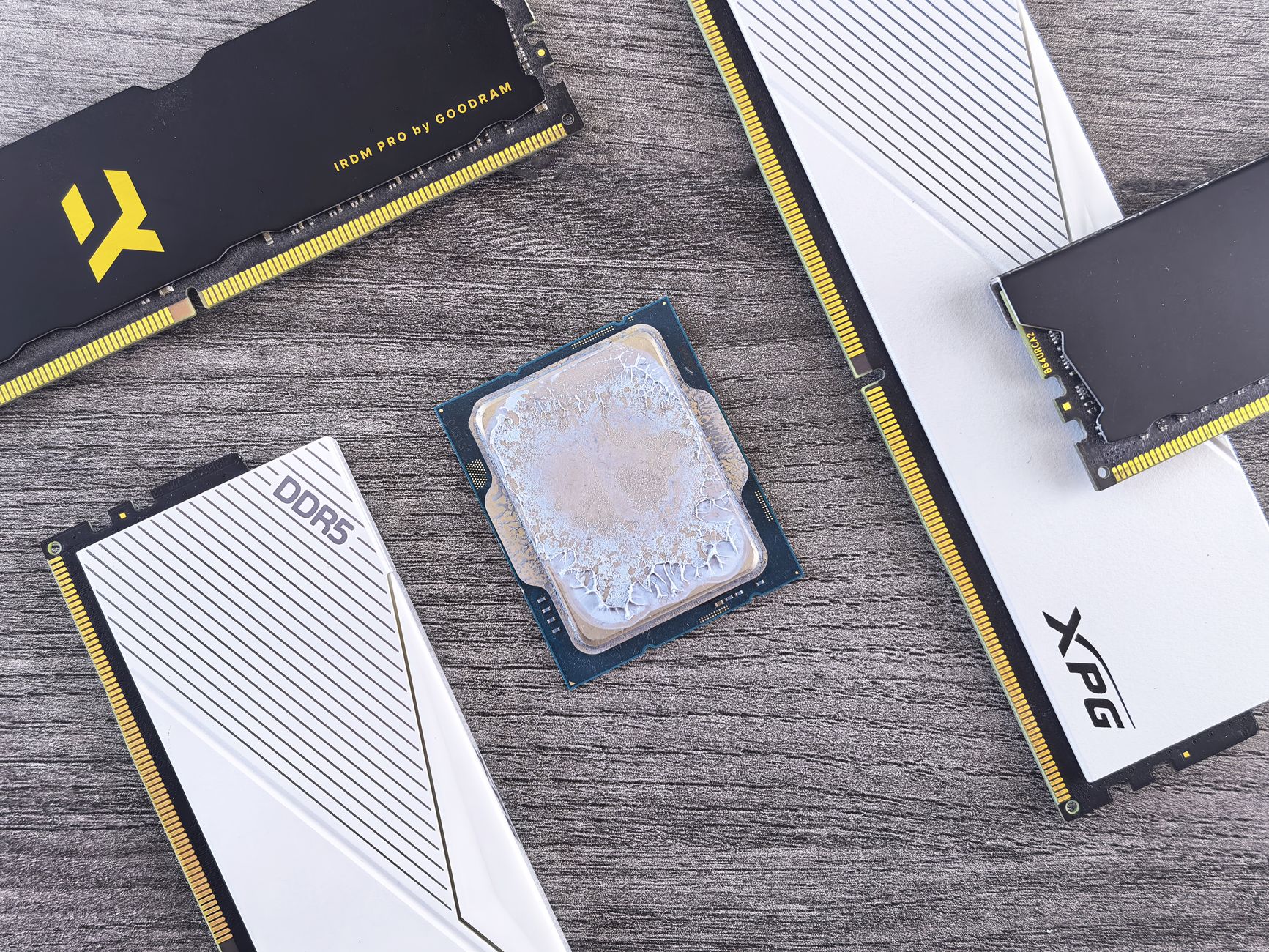
In the fast-evolving landscape of computing, memory is often the unsung hero, quietly powering everything from our daily browsing to the most complex AI models. For years, enthusiasts and professionals alike have watched DDR5 RAM prices with a keen eye, hoping for a market correction that would make this cutting-edge technology more accessible. Recent market signals, particularly from key Asian tech hubs like Japan, suggest that moment has arrived. With reports indicating significant price drops, including a notable 22% reduction on 64GB kits in some Japanese retail sectors, the question isn't just 'what happened?' but 'what does this mean for the future of AI, productivity, and your next hardware investment?'
This article will delve into the intricate market dynamics behind the current DDR5 price trends, explore the profound implications for sectors heavily reliant on high-performance memory – notably AI and intensive productivity workloads – and provide actionable insights for consumers and businesses contemplating an upgrade. We'll cut through the hype to offer a grounded, expert analysis, helping you navigate the opportune moment presented by these shifting market conditions. Prepare to understand not just the 'what,' but the 'why' and 'what next' of DDR5 memory, straight from our seasoned editorial desk.
The DDR5 Evolution: A Brief History and Performance Leap
To truly appreciate the current market shift, it's essential to understand DDR5's journey and its foundational advantages over its predecessor, DDR4. Launched commercially in late 2021, DDR5 (Double Data Rate 5 Synchronous Dynamic Random-Access Memory) represented a significant generational leap in memory technology. It wasn't merely an incremental upgrade; it was a re-engineering designed to meet the escalating demands of modern computing.
Key Technical Advancements
At its core, DDR5 brought a substantial increase in bandwidth, starting at 4800 MT/s (mega transfers per second) compared to DDR4's typical 3200 MT/s, with modules now pushing well beyond 8000 MT/s. This speed increase is critical for data-intensive applications. Beyond raw speed, DDR5 introduced a more efficient power architecture, moving power management from the motherboard to the DIMM (Dual In-line Memory Module) itself via an integrated Power Management Integrated Circuit (PMIC). This allows for finer-grained power control and potentially better overclocking stability, alongside lower operating voltages (1.1V standard, down from DDR4's 1.2V), contributing to reduced power consumption and heat generation.
Furthermore, DDR5 doubles the burst length from 8 to 16 and features two independent 32-bit channels per DIMM (plus 8 ECC bits per channel for servers), effectively doubling the internal parallelism. This architecture enhances data efficiency and reduces latency for common tasks, particularly those involving multiple CPU cores accessing memory simultaneously. For complex scientific simulations, large database operations, or multi-threaded content creation, this means data can be accessed and processed far more rapidly.
Early Adoption Challenges
Despite these technological marvels, DDR5's initial rollout was met with high prices and limited availability, often exacerbated by global supply chain disruptions during 2021-2022. Early modules were significantly more expensive than their DDR4 counterparts, creating a barrier to entry for many consumers and businesses. Compatibility issues with new CPU platforms (Intel's 12th Gen 'Alder Lake' was the first to support it, followed by AMD's Ryzen 7000 series) also meant that upgrading often required a complete system overhaul, including a new motherboard and CPU, further dampening immediate enthusiasm. This slow initial uptake, coupled with cautious manufacturer expansion, set the stage for the market dynamics we observe today.
Understanding the Market Dynamics: Why the Price Drop Now?
The recent reports of DDR5 RAM price drops, particularly the significant 22% reduction on 64GB kits in regions like Japan, aren't an isolated anomaly but rather the culmination of several interconnected market forces. These trends have been building over the past few quarters, signaling a fundamental shift from scarcity to a more balanced, if not oversupplied, market.
Oversupply and Inventory Correction
One of the primary drivers is a broader industry oversupply. Major memory manufacturers, anticipating robust demand post-pandemic and buoyed by the initial hype around DDR5, ramped up production capacities significantly. However, consumer demand for PCs and other electronics cooled more rapidly than expected in late 2023 and early 2024, leading to an accumulation of unsold inventory. Distributors and retailers, faced with sluggish sales, are now compelled to reduce prices to clear stock. A Q1 2024 market report by TrendForce highlighted that NAND Flash and DRAM average selling prices (ASPs) were continuing their decline, albeit at a slowing pace, indicating persistent inventory challenges across the memory sector. While some segments saw price stabilization, others, like specific DDR5 modules, experienced continued downward pressure.
Increased Manufacturing Efficiency and Yields
As DDR5 technology matures, manufacturers have refined their production processes. Yield rates – the percentage of functional chips produced from a wafer – have improved dramatically since the early days of DDR5. Higher yields mean more chips can be produced at a lower per-unit cost, directly translating to more competitive pricing. This learning curve effect is typical for new semiconductor technologies; initial high costs give way to economies of scale as production becomes more streamlined.
Global Economic Headwinds and Consumer Caution
Global economic uncertainties, including inflation and higher interest rates, have led to more cautious consumer spending. Discretionary purchases, such as PC upgrades, are often postponed in tighter economic climates. This reduced purchasing power has contributed to the softening demand, creating a buyer's market for components like RAM. Businesses, too, are often deferring major hardware refresh cycles unless absolutely necessary, further impacting bulk memory sales.
Competitive Landscape
The memory market is dominated by a few key players: Samsung, SK Hynix, and Micron. While they sometimes act in concert, competitive pressures often lead to strategic price adjustments to gain or maintain market share. As these giants vie for customers in a less demand-driven environment, price competition inevitably intensifies, especially for high-volume products like 64GB DDR5 kits that cater to power users and entry-level server markets.
Impact on AI & Productivity: More RAM for Less
The plummeting cost of DDR5 RAM is more than just good news for PC builders; it represents a pivotal moment for two of biMoola's core areas of focus: Artificial Intelligence and overall productivity. Memory, after all, is the lifeblood of high-performance computing.
Democratizing AI Development and Deployment
Artificial Intelligence, particularly large language models (LLMs), generative AI, and complex machine learning algorithms, are inherently memory-hungry. Training sophisticated models, even smaller ones, requires vast amounts of data to be held in active memory for processing. Inferencing (the process of using a trained model) also benefits significantly from ample, fast RAM, especially for real-time applications or processing large batches of queries.
Previously, equipping an AI workstation with 64GB, 128GB, or even 256GB of high-speed DDR5 RAM was a substantial investment, often pushing system costs beyond the reach of individual researchers, smaller startups, or even university labs with tighter budgets. With price drops, high-capacity DDR5 becomes significantly more accessible. This democratization of memory could accelerate local AI development, allowing more users to experiment with and deploy AI models on their own hardware, rather than relying solely on expensive cloud-based GPU instances. This shift could foster innovation by reducing the financial barrier to entry for AI practitioners.
Boosting Professional Productivity
Beyond AI, numerous professional applications thrive on copious amounts of fast RAM. Content creators working with 4K or 8K video editing, 3D rendering, and complex animation suites will experience smoother workflows. Engineers and architects running CAD/CAE simulations, data scientists processing massive datasets, and software developers compiling large codebases will all benefit from reduced loading times and improved multitasking capabilities. The ability to load entire project files into RAM rather than constantly relying on slower storage drives can dramatically cut down on wait times and frustration, translating directly into enhanced productivity and creativity.
For modern multi-taskers, running multiple virtual machines, demanding browser tabs, and numerous applications simultaneously without slowdowns becomes a reality. This isn't just about speed; it's about eliminating bottlenecks that break concentration and hinder efficient work.
Navigating the Upgrade Path: Practical Advice for Consumers & Businesses
With DDR5 prices becoming more palatable, many will naturally wonder if now is the right time to upgrade. The decision isn't always straightforward and depends heavily on individual needs, existing hardware, and budget. Here’s a breakdown of considerations:
For the Individual Consumer
- Assess Your Current System: Do you already have a DDR5-compatible CPU (Intel 12th Gen or newer, AMD Ryzen 7000 series or newer) and motherboard? If not, upgrading to DDR5 means a full platform overhaul, which is a much larger investment than just buying new RAM. If you're on DDR4, the performance gains of a full platform upgrade might be significant, but evaluate if your current setup truly limits your daily tasks.
- Identify Your Bottlenecks: Is your current system slow due to insufficient RAM? Open Task Manager (Windows) or Activity Monitor (macOS) and check your memory usage. If it's consistently near 100% when performing your typical tasks, more RAM will likely yield a noticeable improvement. If your CPU or GPU is the bottleneck, RAM alone won't solve the problem.
- Consider Capacity and Speed: For most users, 32GB of DDR5 is a comfortable sweet spot. For serious gamers, content creators, or AI enthusiasts, 64GB or even 128GB might be warranted, especially now that prices are lower. When it comes to speed, aim for at least 6000 MT/s with low CAS latency (CL30-CL36) for a good balance of performance and value. Don't chase the absolute highest speeds unless you're an extreme overclocker, as the real-world performance difference often diminishes past a certain point.
- Future-Proofing: A new DDR5 platform offers longevity, supporting future CPU generations on the same socket (e.g., AMD's AM5). If you plan to keep your system for 3-5 years, investing in DDR5 now makes sense.
For Businesses and IT Departments
- Total Cost of Ownership (TCO): For enterprise workstations and servers, DDR5 offers not just performance but also efficiency. The lower operating voltage of 1.1V, compared to DDR4's 1.2V, translates to marginal but cumulative power savings over hundreds or thousands of modules. This can be a significant factor in large data centers or offices with many high-performance machines.
- Performance for Key Workloads: Businesses reliant on data analytics, virtualized environments, AI development, or graphic design will see tangible productivity gains from DDR5. Equipping workstations with 64GB or 128GB of DDR5 can empower employees to handle more complex tasks locally, reducing reliance on cloud infrastructure for certain operations.
- Scalability and Longevity: Investing in DDR5-enabled servers now ensures compatibility with the latest generation of server CPUs (e.g., Intel Xeon Scalable 4th Gen 'Sapphire Rapids' and AMD EPYC 'Genoa'), offering better scalability and a longer upgrade path for critical infrastructure.
- Strategic Purchasing: IT procurement teams should monitor price trends closely. Bulk purchases during periods of significant price drops can yield substantial savings on hardware refresh cycles. Consider working with suppliers to lock in favorable pricing for future deployments.
The Future of Memory: Beyond DDR5
While DDR5 is currently enjoying its moment in the sun with favorable pricing, the relentless march of technological innovation ensures that the memory landscape will continue to evolve. Understanding these future developments is crucial for strategic long-term planning, particularly for those at the cutting edge of AI and high-performance computing.
DDR6 on the Horizon
The successor to DDR5, DDR6, is already in the early stages of development. While an official standard is still some years away (likely targeting a commercial release around 2027-2028), preliminary specifications suggest another monumental leap in performance. Industry analysts predict DDR6 could double DDR5's effective bandwidth, potentially starting at speeds around 12,800 MT/s and scaling much higher. This will be achieved through further optimizations in architecture, possibly increased channel counts, and more advanced manufacturing processes. The driving force behind DDR6 remains the insatiable demand from AI, machine learning, and data-intensive applications that continuously push the boundaries of memory bandwidth.
CXL (Compute Express Link)
Perhaps even more transformative than generational DDR upgrades is the emergence of Compute Express Link (CXL). CXL is an open industry standard interconnect that offers high-bandwidth, low-latency communication between the CPU and memory, accelerators (like GPUs and AI chips), and storage. Unlike traditional memory interfaces tied directly to the CPU, CXL allows for memory pooling and sharing across multiple CPUs and accelerators. This means a system could dynamically allocate memory resources from a shared pool to various processors as needed, drastically improving resource utilization and flexibility. For AI workloads, where GPU VRAM often becomes a bottleneck, CXL could enable GPUs to access a much larger pool of main memory, blurring the lines between system RAM and accelerator memory. AnandTech provides excellent deep dives into CXL's potential. We anticipate CXL-enabled memory solutions, leveraging existing DDR5 and future DDR6 modules, to become increasingly prevalent in server and high-end workstation environments within the next 3-5 years, fundamentally changing how systems handle memory.
HBM (High Bandwidth Memory)
While not a direct competitor to DDR5/6 (which are primarily used for system RAM), High Bandwidth Memory (HBM) continues to evolve as the preferred memory solution for specialized accelerators like high-end GPUs and AI processors. HBM stacks multiple memory dies vertically, connecting them with very short, wide pathways to achieve extremely high bandwidth in a compact form factor. HBM3 and its successors will continue to be critical for the most demanding AI training models that require unprecedented levels of memory bandwidth directly attached to the processing unit, complementing rather than replacing mainstream DDR technologies.
Key Takeaways
- DDR5 RAM prices, particularly for higher-capacity kits, have seen significant drops globally, exemplified by a 22% reduction on 64GB kits in regions like Japan, driven by market oversupply and improved manufacturing.
- This price correction makes high-performance DDR5 memory more accessible, significantly lowering the barrier to entry for advanced AI development, machine learning, and demanding productivity workloads.
- DDR5 offers substantial technical advantages over DDR4, including higher bandwidth, improved power efficiency, and better internal parallelism, crucial for modern computing challenges.
- Consumers and businesses should evaluate their upgrade needs based on existing hardware compatibility, specific workload requirements, and the potential for long-term productivity gains and TCO improvements.
- The memory landscape continues to evolve rapidly, with DDR6 on the horizon and transformative technologies like CXL poised to redefine system memory architecture for future AI and high-performance computing.
DDR5 Market Snapshot & Price Trends
Here's a snapshot of the DDR5 market based on recent industry reports and projections:
- Q4 2023 - Q1 2024 Average Price Drop: Industry analysts like IDC reported an average decline of 15-20% for bulk DDR5 modules across the global market.
- 64GB Kit Price Reduction: Specific retail markets, notably Japan, observed reductions of up to 22% for 64GB (2x32GB) DDR5 kits during this period.
- DDR5 Adoption Rate: As of Q1 2024, DDR5 penetration in the consumer PC market reached approximately 40% for new system builds, up from 15% in Q1 2023, according to a 2024 Gartner report. This growth is expected to accelerate with falling prices.
- Projected Market Size: The global DDR5 DRAM market is projected to reach over $25 billion by 2028, growing at a CAGR of nearly 25% from 2023, driven by AI and data center expansion.
- Manufacturing Cost Reductions: Major memory manufacturers have achieved a 10-12% reduction in per-unit manufacturing costs for DDR5 since its initial launch, contributing directly to lower retail prices.
Expert Analysis: Our Take
At biMoola.net, we view the current DDR5 price correction not just as a market fluctuation, but as a crucial inflection point. For too long, the promise of DDR5's superior performance was locked behind a premium price tag, making it a luxury rather than a standard for many. The reported 22% drop on high-capacity kits in markets like Japan is a strong indicator of a broader, global trend that will democratize access to high-performance memory.
This isn't merely about faster loading times; it's about enabling innovation. When memory becomes more affordable, the practical limitations on AI researchers, data scientists, and creative professionals shrink. Suddenly, running larger models locally, experimenting with more complex datasets, or rendering intricate scenes without crippling slowdowns becomes a financially viable option for a wider audience. This shift reduces reliance on expensive cloud resources for preliminary work, empowering independent developers and smaller teams to compete more effectively.
Furthermore, this price re-alignment makes the case for a full platform upgrade (CPU + motherboard + RAM) far more compelling for those still on aging DDR4 systems. The total cost of ownership for a new, high-performance workstation, capable of handling future AI demands, has decreased significantly. This is particularly relevant for small to medium-sized businesses looking to equip their workforce with future-proof tools without breaking the bank.
However, users should exercise prudent judgment. While prices are attractive, one shouldn't rush into an upgrade without a clear understanding of their needs. A 64GB kit is overkill for light web browsing, but essential for serious AI development. The sweet spot for value and performance might shift as different speed bins and capacities see varying discounts. Our advice is to leverage this moment of market generosity to invest wisely in memory that aligns with your true computational demands, positioning yourself for a more productive and AI-ready future. This isn't just a sale; it's an opportunity to redefine your computational capabilities.
Q: Is now the best time to buy DDR5 RAM, or should I wait longer for further price drops?
A: While predicting market bottoms is notoriously difficult, the current period represents a very strong buyer's market for DDR5. The significant price drops observed are largely due to an industry-wide inventory correction and improved manufacturing yields. While minor fluctuations may occur, a major sustained further crash is less likely in the immediate future as manufacturers may begin to cut production to stabilize prices. If you need high-performance memory now for AI, gaming, or productivity tasks, this is an excellent time to invest, especially in higher-capacity kits that have seen the largest percentage reductions. Waiting indefinitely might mean missing out on current value and delaying your system's performance upgrade.
Q: Do I need a new CPU and motherboard to use DDR5 RAM?
A: Yes, absolutely. DDR5 RAM is not backward compatible with DDR4 motherboards or CPUs. To utilize DDR5, you must have a compatible CPU (e.g., Intel 12th Gen 'Alder Lake' or newer, or AMD Ryzen 7000 series or newer) and a motherboard specifically designed to support DDR5. If your current system runs on DDR4, upgrading to DDR5 will necessitate a complete platform overhaul, including a new CPU and motherboard, in addition to the new RAM modules.
Q: How much DDR5 RAM do I actually need for AI development or intensive productivity?
A: For serious AI development, especially training smaller models locally or performing complex data analysis, 64GB of DDR5 RAM is becoming the new baseline, and 128GB is increasingly recommended for larger models or multi-tasking with demanding applications. For content creation (4K/8K video editing, 3D rendering) or heavy software development, 32GB can be sufficient for many tasks, but 64GB provides significantly more headroom, allowing for smoother workflows and handling larger project files. Always consider the specific memory requirements of the software you use most frequently.
Q: What are the key performance metrics to look for when buying DDR5 RAM, beyond just capacity?
A: Beyond capacity, the two most important metrics are speed (measured in MT/s or MHz) and CAS Latency (CL). Higher speed generally means more data throughput. For DDR5, aim for at least 6000 MT/s, with popular sweet spots around 6400 MT/s to 7200 MT/s for a good balance of performance and stability. CAS Latency, represented by a 'CL' number (e.g., CL30, CL32), indicates the delay between a command being issued and the data being available. Lower CL numbers are better. So, a kit like 6000MT/s CL30 will generally outperform a 6000MT/s CL40 kit. Always check motherboard QVL (Qualified Vendor List) for compatibility with specific high-speed kits.
Sources & Further Reading
- AnandTech: DDR5 Technology & Market Analysis
- TrendForce: DRAM Market Updates and Projections
- Gartner Market Report: Global Semiconductor Forecasts, Q1 2024 (Subscription Required)
Disclaimer: For informational purposes only. Consult a healthcare professional.
Comments (0)
To comment, please login or register.
No comments yet. Be the first to comment!


