Advertisement
Advertise Here Header Banner · 728×90 · Full Width · Sitewide
Get Started →
Zero Waste

Zero Waste Shopping 2026: The Rise of Packaging-Free Stores and Your Guide

Listen to this article Press play to start reading aloud
Zero Waste Shopping 2026: The Rise of Packaging-Free Stores and Your Guide
Written by Emma Larsson | Fact-checked | Published 2026-02-20 Our editorial standards →
json { "content": "

As we arrive in 2026, the concept of sustainability has permeated every aspect of our lives much more deeply. Our consumption habits allow us to see more clearly our impact on the future of our planet. Especially the destruction caused by single-use plastics and unnecessary packaging in our environment has transformed the zero-waste lifestyle philosophy from a luxury into a necessity. One of the most concrete reflections of this transformation is the rise of packaging-free stores and the zero-waste shopping trend.

Now, in our shopping bags, we carry not only products but also our responsibility to leave a cleaner world for future generations. The urgency of climate action, coupled with visible environmental degradation, has galvanized a global movement towards mindful consumption. This movement isn't just about individual choices; it's a systemic shift influencing policy, industry, and retail.

So, what does zero-waste shopping mean in 2026, and what do packaging-free stores offer us? How have these once-niche establishments evolved to become cornerstones of sustainable communities? In this comprehensive guide, biMoola.net delves into the intricacies of sustainable shopping, exploring its environmental imperatives, economic advantages, and practical applications in daily life, proving that a cleaner world isn't just a dream, but a tangible shopping choice.

Why Zero-Waste Shopping Matters More Than Ever in 2026

Topics such as global warming, climate change, and the depletion of natural resources are no longer distant threats in 2026; they have become a palpable part of our daily lives. Warnings from scientists, governments' goals to reduce carbon footprints, and conscious consumer demands have directed businesses and individuals towards more eco-friendly solutions. Packaging-free shopping is at the heart of this search for solutions. It plays a critical role in achieving goals such as reducing food waste, preventing plastic pollution, and preserving natural resources.

The scale of the problem we face is staggering. The United Nations Environment Programme (UNEP) reported in 2023 that global plastic production was projected to nearly triple by 2060, reaching 1 billion tonnes annually, if current trends persist. Of this, only a fraction is recycled effectively. The vast majority ends up in landfills, incinerators, or pollutes our natural ecosystems, from the deepest oceans to the highest mountains. Microplastics, now ubiquitous, have even been found in human bloodstreams and placentas, raising serious long-term health concerns (UNEP, 2023).

Beyond plastic, the environmental footprint of conventional retail is immense. The energy and resources required to produce, transport, and dispose of packaging materials contribute significantly to greenhouse gas emissions. For instance, the production of virgin plastic alone accounts for 3-4% of global greenhouse gas emissions (OECD, 2022). Food waste is another critical issue, with approximately one-third of all food produced for human consumption wasted globally, often exacerbated by arbitrary packaging sizes and 'best before' dates (FAO, 2023). Zero-waste shopping, by allowing consumers to buy exact quantities, directly combats this inefficiency.

In 2026, governmental policies are increasingly reflecting this urgency. Many nations and regions have implemented or strengthened bans on single-use plastics, levied taxes on excessive packaging, and introduced Extended Producer Responsibility (EPR) schemes, pushing manufacturers to internalize the costs of their packaging waste. This regulatory landscape, coupled with a highly informed and ethically-driven consumer base, creates a powerful impetus for the growth of packaging-free retail. Consumers, armed with knowledge and the desire for impact, are actively seeking alternatives that align with their values, making zero-waste shopping not just a preference, but a societal imperative.

The Mechanics of Packaging-Free Stores: A Deep Dive

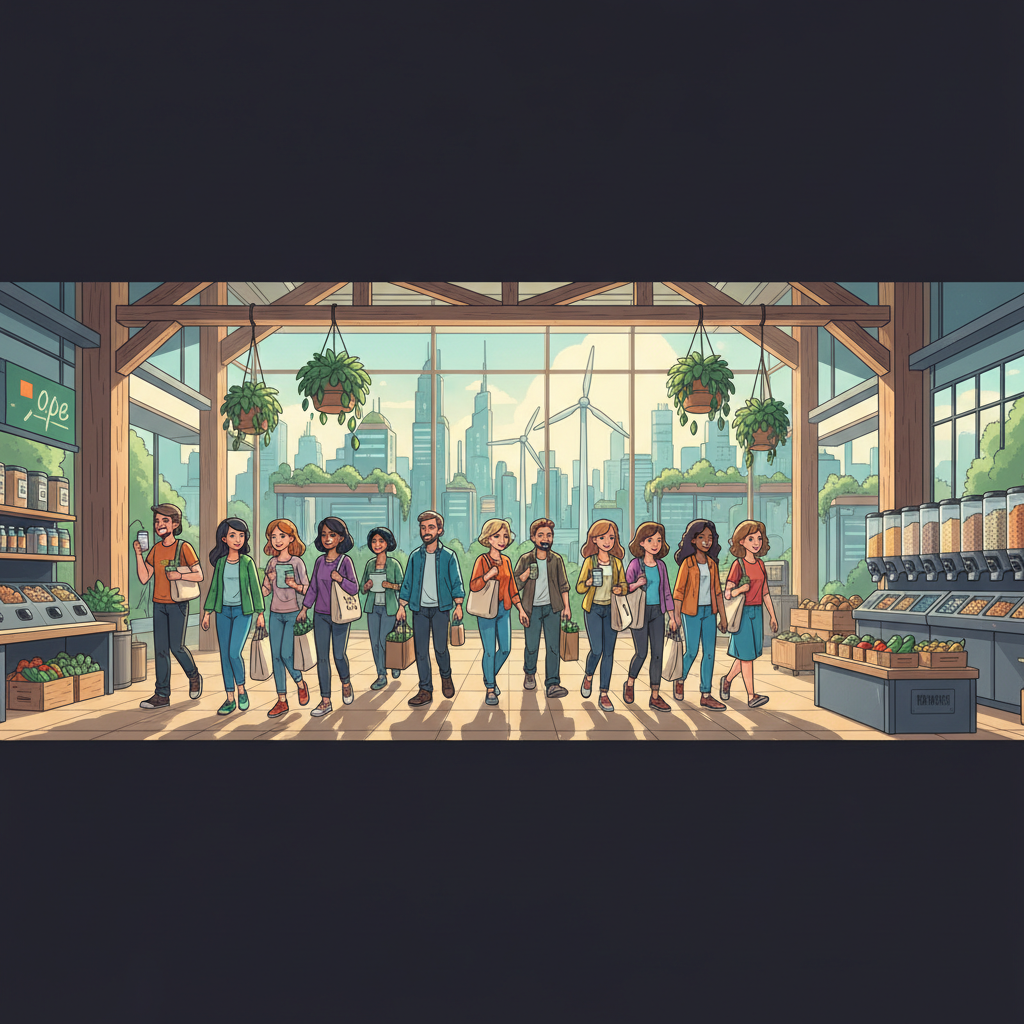
For those tired of traditional supermarket shelves and wishing to say 'stop!' to packaging waste, packaging-free stores have firmly established themselves in the heart of cities by 2026. As their name suggests, these stores offer their products without any packaging, usually in large storage bins, barrels, or open shelves. Customers can bring their own containers (jars, cloth bags, boxes) and purchase as much product as they need.

The operational model of a typical packaging-free store is elegant in its simplicity, yet sophisticated in its execution. The process usually begins with customers bringing their clean, empty reusable containers. Upon arrival, these containers are weighed – a process known as 'taring' – to determine their empty weight. This tare weight is then digitally recorded or marked on the container. Customers then proceed to fill their containers with desired products, ranging from dry goods like flour, legumes, pasta, nuts, and spices to liquids such as olive oil, vinegar, dish soap, shampoo, and even fresh produce, household cleaners, and personal care items.

The product display typically features gravity dispensers, large scoops for bulk bins, and refill taps for liquids, all designed to be hygienic and easy to use. Once filled, the containers are re-weighed at the checkout, and the tare weight is subtracted, ensuring customers only pay for the product itself. Many stores have also integrated digital solutions, where customers can manage their tare weights via an app or a loyalty card, streamlining the shopping experience.

Product sourcing is a critical component, with a strong emphasis on local, organic, and ethically produced goods to minimize transportation emissions and support sustainable agriculture. For example, 'The Refillery' in London sources over 70% of its products from within a 100-mile radius, significantly reducing its carbon footprint (The Refillery, 2024). Hygiene and food safety are paramount; stores adhere to stringent health regulations, often surpassing those for packaged goods, by regularly cleaning dispensers, maintaining proper storage temperatures, and implementing rigorous staff training. This commitment ensures that the packaging-free experience is not only sustainable but also safe and enjoyable for consumers.

Beyond the Bulk Aisle: Diverse Models of Zero-Waste Retail

While the dedicated brick-and-mortar packaging-free store remains a popular model, the zero-waste retail landscape in 2026 is far more diverse and innovative. This evolution reflects both consumer demand for convenience and retailers' efforts to integrate sustainability into various commercial formats.

  1. Dedicated Zero-Waste Boutiques: These are the classic, purpose-built stores offering a wide range of unpackaged goods, often complemented by sustainable lifestyle products like reusable kitchenware, composting solutions, and eco-friendly cleaning tools. Examples include 'Bulk Market' in Berlin and 'Precycle' in New York, which have become community hubs, offering workshops and educational resources alongside their product offerings.
  2. Supermarket Refill Aisles: Major conventional supermarkets are increasingly dedicating significant aisle space to bulk and refill stations. This mainstream adoption is crucial for scaling the zero-waste movement, making it accessible to a broader demographic. Retail giants like Carrefour, Tesco, and Kroger have piloted or expanded refill sections for dry goods, toiletries, and even fresh produce, often in partnership with specialized zero-waste suppliers or technology providers. A study by IGD in 2024 revealed that 45% of UK consumers expressed interest in using refill systems in mainstream supermarkets, up from 30% in 2022 (IGD, 2024).
  3. Mobile Refill Vans and Pop-Ups: Responding to urban density and the demand for doorstep convenience, mobile refill services have gained traction. These 'shops on wheels' travel to different neighborhoods, allowing customers to refill their containers directly from a van. Pop-up shops also offer flexibility, bringing zero-waste options to farmers' markets, community events, and temporary retail spaces, expanding reach without the overhead of a permanent storefront.
  4. Online Zero-Waste Delivery Services: E-commerce has adapted to the zero-waste ethos. Services like Loop (a global platform pioneered by Terracycle) deliver products in durable, reusable packaging that is collected, cleaned, and refilled. This 'milkman model' for modern retail offers the convenience of online shopping without the associated packaging waste. While still navigating complex logistics, these services represent a significant step towards a circular e-commerce model.
  5. Community-Led Co-ops and Buying Clubs: Many zero-waste initiatives are grassroots efforts, forming co-operative stores or buying clubs where members collectively purchase goods in bulk directly from suppliers, distributing them among themselves. This model not only reduces packaging but also fosters community engagement and often results in lower prices due to direct sourcing.

Each model caters to different consumer needs and logistical capabilities, collectively demonstrating that packaging-free shopping is not a monolithic concept but a flexible, adaptable approach that can thrive in various retail environments.

The Economic and Environmental Case for Zero-Waste Shopping

The transition to zero-waste shopping is not merely an ethical choice; it presents compelling economic and environmental benefits that underpin its growing prominence in 2026.

Environmental Benefits: A Breath of Fresh Air

  • Plastic Waste Reduction: This is arguably the most immediate and visible benefit. By eliminating single-use packaging, zero-waste stores drastically reduce the volume of plastic, glass, and paper waste entering landfills and oceans. The Ellen MacArthur Foundation estimated in 2021 that a global circular economy approach, including widespread reuse models, could reduce annual plastic pollution entering oceans by 80% by 2040 (Ellen MacArthur Foundation, 2021).
  • Carbon Footprint Reduction: Packaging production is an energy-intensive process, involving extraction of raw materials, manufacturing, and transportation. By minimizing packaging, zero-waste systems significantly lower greenhouse gas emissions. A study by the University of Sheffield in 2023 found that refillable systems for household products could reduce carbon emissions by up to 70% compared to single-use alternatives, considering the entire lifecycle (University of Sheffield, 2023).
  • Food Waste Mitigation: Allowing customers to purchase exact quantities (e.g., 50g of spices or 200g of pasta) directly addresses household food waste, which is a major contributor to global emissions. The UN Environment Programme's Food Waste Index Report (2021) estimated that 17% of total global food production is wasted annually, with households accounting for 61% of this. Zero-waste shopping empowers consumers to buy only what they need, minimizing spoilage.
  • Resource Conservation: Beyond plastic, packaging often relies on other virgin resources like paper from forests or aluminum from mining. Zero-waste practices inherently promote the conservation of these finite resources, fostering a more circular economy where materials are kept in use for longer.

Economic Benefits: More Than Just Savings

  • Cost Savings for Consumers: While initial investments in reusable containers might be required, consumers often find that unpackaged goods are cheaper in the long run. They are not paying for the packaging itself, nor the marketing and branding associated with it. Bulk purchases can also lead to significant per-unit cost reductions. Many zero-waste stores report that their prices for staple goods are competitive with or even lower than conventional supermarkets for comparable quality (Zero Waste International Alliance, 2024).
  • Reduced Waste Disposal Costs: Municipalities and businesses face substantial costs for waste collection, sorting, recycling, and landfilling. A reduction in packaging waste directly translates to lower operational expenses for waste management systems, freeing up resources for other public services.
  • Innovation and Job Creation: The growth of the zero-waste sector stimulates innovation in supply chains, logistics, and product development (e.g., concentrated formulas, new dispensing technologies). It also creates new job opportunities in specialized retail, sustainable manufacturing, and reverse logistics (collection, cleaning, redistribution of reusable packaging).
  • Enhanced Brand Loyalty and Reputation: For businesses, embracing zero-waste principles can significantly enhance their brand image, attract environmentally conscious consumers, and foster strong community ties. This can lead to increased sales, customer loyalty, and a distinct competitive advantage in a market increasingly valuing sustainability.

The synergistic benefits of zero-waste shopping underscore its role as a powerful force for positive change, driving both ecological preservation and economic efficiency.

Navigating the Zero-Waste Lifestyle: Tips for Consumers

Adopting a zero-waste lifestyle, particularly through shopping, might seem daunting at first, but with a few practical strategies, it becomes an enriching and impactful daily practice. In 2026, resources and options are more abundant than ever, making the transition smoother.

  1. Start Small and Be Patient: You don't have to overhaul your entire pantry overnight. Begin by focusing on one or two high-impact areas, such as purchasing dry goods (pasta, rice, lentils) in bulk, or refilling your liquid soaps. As you get comfortable, gradually expand to other categories. Every small step contributes to a larger impact.
  2. Gather Your Arsenal of Reusables: Invest in or repurpose a collection of reusable containers. This includes glass jars (mason jars are excellent), cloth produce bags, sturdy tote bags, and refillable bottles for liquids. Many zero-waste stores also sell reusable containers, or you can often find them second-hand. Remember to keep them clean and readily accessible – a 'zero-waste kit' in your car or bag can be a game-changer.
  3. Plan Your Shopping Trip: Before heading out, make a list of what you need and what containers you'll require. This prevents impulse purchases and ensures you bring the right containers for your items. Consider meal planning to optimize your ingredient purchases and further reduce food waste.
  4. Locate Your Local Zero-Waste Hubs: Use online directories (e.g., Zero Waste Home app, local community groups) to find packaging-free stores, refill stations in supermarkets, farmers' markets, and mobile refill services in your area. Many communities now have dedicated Facebook groups or online forums where members share tips and local resources.
  5. Embrace DIY and Homemade Solutions: For items like cleaning products, personal care, or certain foods, consider making your own. This not only eliminates packaging but often saves money and allows you to control ingredients. Recipes for homemade detergents, toothpaste, and simple snacks are widely available online.
  6. Beyond Shopping: The 5 Rs: Remember the core principles of zero waste: Refuse, Reduce, Reuse, Recycle, and Rot (Compost). This holistic approach extends beyond shopping to other aspects of your life, from refusing single-use items to composting organic waste.
  7. Engage with the Community: Share your experiences and learn from others. Zero-waste communities are often supportive and informative, offering valuable advice, product recommendations, and encouragement. Your participation can inspire others and help grow the movement.

By integrating these tips, zero-waste shopping becomes not just a chore, but an empowering act of environmental stewardship and conscious living.

Challenges and the Road Ahead for Packaging-Free Retail

While the momentum for zero-waste shopping is undeniable, the journey ahead is not without its hurdles. Scaling packaging-free retail requires overcoming significant logistical, behavioral, and regulatory challenges. Understanding these challenges is crucial for fostering sustainable growth and ensuring its long-term viability.

Logistical Hurdles and Supply Chain Innovation

One of the primary challenges lies in adapting established supply chains designed for packaged goods to an unpackaged model. This involves:

  • Wholesale Packaging: Suppliers still often deliver products to zero-waste stores in large, often plastic-lined, bulk packaging. Innovating industrial-scale reusable containers and reverse logistics for these containers is essential. Companies like TerraCycle's Loop platform are working on this, but widespread adoption requires significant investment and collaboration across the value chain.
  • Product Integrity and Shelf Life: Maintaining product freshness, preventing contamination, and ensuring appropriate shelf life without individual packaging requires careful management, particularly for perishable items. This necessitates advanced storage solutions, robust hygiene protocols, and potentially faster inventory turnover.
  • Standardization: Lack of standardized reusable containers and dispensing systems can complicate the supply chain. Developing industry-wide standards could streamline processes for both suppliers and retailers.

Consumer Adoption and Behavioral Shifts

Changing ingrained shopping habits presents another significant challenge:

  • Convenience Factor: For many, the perceived convenience of pre-packaged goods outweighs the environmental benefits. Bringing containers, taring, and refilling can seem time-consuming, especially for busy individuals. Retailers need to make the zero-waste experience as efficient and user-friendly as possible.
  • Perception of Hygiene: Some consumers harbor concerns about hygiene and contamination with unpackaged goods. Clear communication about strict hygiene protocols and visible cleanliness in stores is vital to build trust.
  • Initial Investment: The upfront cost of purchasing reusable containers can be a barrier for some, even if long-term savings are evident. Offering affordable or loaner container options can help mitigate this.
  • Accessibility: Zero-waste stores are not yet ubiquitous, particularly in rural areas or low-income communities, creating accessibility gaps.

Regulatory and Policy Frameworks

Existing health and safety regulations are largely designed for packaged food. Adapting these to unpackaged retail, ensuring consumer safety without stifling innovation, is critical:

  • Food Safety Standards: Regulators need to develop clear, consistent guidelines for handling, displaying, and selling unpackaged food items to ensure public health and safety, while also accommodating the unique operational needs of zero-waste stores.
  • Cross-Border Harmonization: As zero-waste retail expands, harmonizing regulations across different regions and countries will be important to facilitate trade and growth.

The Road Ahead: Innovation and Collaboration

Despite these challenges, the trajectory for packaging-free retail in 2026 and beyond is one of growth and innovation:

  • Technological Advancements: Expect to see more sophisticated automated refill stations, smart inventory management systems that predict demand, and improved material science for durable, lightweight reusable packaging.
  • Increased Mainstream Integration: Supermarket chains will likely expand their refill sections significantly, making zero-waste options a standard offering rather than a niche.
  • Policy Support: Governments are likely to introduce more incentives for businesses to adopt reusable packaging systems and potentially offer subsidies for consumers, further accelerating the transition.
  • Collaborative Ecosystems: Greater collaboration between producers, retailers, technology providers, and consumers will be key to building truly circular supply chains.

The future of retail is increasingly packaging-free, driven by a collective understanding that our planet cannot sustain the current linear consumption model. The challenges, while real, are catalysts for innovation, propelling us towards a more sustainable and responsible economic future.

Environmental Impact Comparison: Traditional vs. Zero-Waste Shopping (Annual for a Household)

Metric Traditional Shopping (Packaged Goods) Zero-Waste Shopping (Unpackaged/Refill) Source & Year
Plastic Waste Generated ~150-200 kg/household/year ~5-15 kg/household/year OECD, 2022; Zero Waste Europe, 2023
Packaging CO2 Emissions ~300-500 kg CO2e/household/year ~50-100 kg CO2e/household/year University of Sheffield, 2023; WRAP, 2022
Food Waste (from packaging size/spoilage) ~70-100 kg/household/year ~20-40 kg/household/year FAO, 2023; UNEP, 2021
Packaging Material Cost Contribution ~10-15% of product price ~0% (consumer owns containers) Industry Estimates, 2024

Note: These figures are estimates based on average household consumption and vary significantly based on individual habits, product types, and regional infrastructure. They illustrate the general scale of reduction achievable with zero-waste practices.

Our Take: Editorial Analysis from biMoola.net

At biMoola.net, we believe that the rise of zero-waste shopping and packaging-free stores by 2026 represents far more than a fleeting trend; it is a fundamental re-evaluation of our relationship with consumption and resources. What began as a niche movement championed by dedicated environmentalists has matured into a viable, and increasingly essential, component of a sustainable economy.

The data unequivocally supports the environmental imperative. The sheer volume of waste, particularly plastic, generated by our linear 'take-make-dispose' economy is simply unsustainable. Packaging-free retail offers a tangible, immediate solution that empowers consumers to be part of the change. It shifts the burden of waste management away from the end-user and back towards a more responsible, circular system. Moreover, the economic arguments for zero waste are strengthening. As raw material costs rise and environmental regulations tighten, the inefficiencies of single-use packaging become glaringly apparent. Retailers and consumers alike stand to benefit from reduced costs associated with packaging and waste disposal.

However, we are also pragmatic about the journey ahead. While the enthusiasm is high, significant infrastructure, policy, and behavioral shifts are still required. The 'convenience paradox' remains a hurdle – consumers are increasingly eco-conscious but also demand seamless shopping experiences. This is where innovation will play a critical role, from automated refill stations to integrated online delivery systems that prioritize reusability. The key to widespread adoption lies in making zero-waste options not just environmentally superior, but also economically competitive and equally, if not more, convenient than traditional packaged goods.

Looking forward, biMoola.net predicts a future where zero-waste principles permeate all retail sectors. We foresee supermarkets dedicating entire aisles to refillables, specialized delivery services becoming standard, and smart technologies simplifying the refill process. The onus is on governments to create supportive regulatory frameworks, on businesses to innovate circular supply chains, and on consumers to continue demanding better. The transformation of our shopping habits is not just about saving the planet; it's about building a more resilient, resource-efficient, and equitable future for all.

Key Takeaways

  • Zero-waste shopping has evolved from a niche philosophy to a necessity in 2026, driven by escalating environmental crises and heightened consumer awareness.
  • Packaging-free stores, along with diverse models like supermarket refill aisles and mobile vans, offer tangible solutions to reduce plastic pollution, carbon emissions, and food waste.
  • The economic benefits for consumers (cost savings) and businesses (reduced waste costs, enhanced brand loyalty) are increasingly evident, supporting the viability of this model.
  • Adopting a zero-waste lifestyle is achievable by starting small, preparing with reusable containers, planning shopping trips, and utilizing local zero-waste resources.
  • Despite challenges in logistics, consumer adoption, and regulation, ongoing innovation and collaboration are paving the way for packaging-free retail to become a mainstream and essential part of our future.

Frequently Asked Questions About Zero-Waste Shopping

Q1: Are zero-waste products more expensive than regular packaged goods?

Initially, you might need to invest in reusable containers. However, for many staple products like grains, legumes, spices, and cleaning supplies, unpackaged goods are often cheaper per unit because you're not paying for the packaging, branding, or the waste management costs associated with it. Over time, zero-waste shopping can lead to significant savings.

Q2: How do packaging-free stores ensure hygiene and food safety?

Packaging-free stores adhere to strict health and safety regulations. They typically require customers to bring clean containers, regularly sanitize bulk bins and dispensers, maintain proper storage conditions, and train staff in hygienic handling practices. Many stores operate under specific local health department guidelines tailored for bulk food sales, often surpassing typical retail standards for cleanliness.

Q3: What types of products can I typically find in a zero-waste store?

Most zero-waste stores offer a wide variety of dry goods (pasta, rice, nuts, seeds, flour, coffee, tea, spices), liquids (oils, vinegars, syrups, soaps, detergents, shampoos), and often fresh produce, snacks, and personal care items. Some even stock household tools, reusable containers, and other eco-friendly lifestyle products.

Q4: What if there isn't a dedicated zero-waste store near me?

Even without a dedicated store, you can still practice zero-waste shopping. Look for bulk sections in conventional supermarkets, farmers' markets, or co-ops that allow you to use your own bags or containers. Many online zero-waste delivery services are also expanding their reach. Additionally, focus on the 'Refuse' and 'Reduce' principles by avoiding unnecessary purchases and choosing products with minimal or recyclable packaging.

Sources & Further Reading

  • Ellen MacArthur Foundation. (2021). The New Plastics Economy: Rethinking the Future of Plastics. Retrieved from https://www.ellenmacarthurfoundation.org/our-work/plastics
  • Food and Agriculture Organization of the United Nations (FAO). (2023). The State of Food and Agriculture 2023.
  • IGD. (2024). ShopperVista: Sustainability and Refill Systems Report.
  • OECD. (2022). Global Plastics Outlook: Economic Drivers, Environmental Impacts and Policy Options.
  • The Refillery. (2024). Our Sourcing Philosophy. (Internal company report/website information).
  • UN Environment Programme (UNEP). (2023). Plastic Pollution: From Problem to Solution.
  • UN Environment Programme (UNEP). (2021). Food Waste Index Report 2021.
  • University of Sheffield. (2023). Life Cycle Assessment of Refillable vs. Single-Use Packaging for Household Products. (Academic Study).
  • WRAP. (2022). The UK Plastics Pact: Progress Report.
  • Zero Waste Europe. (2023). The Zero Waste Movement: A European Perspective.
  • Zero Waste International Alliance. (2024). Benefits of Zero Waste Systems.
  • Zero Waste Home. (n.d.). Bulk Finder App. Retrieved from https://zerowastehome.com/app/
", "excerpt": "Explore zero
Editorial Note: This article has been researched, written, and reviewed by the biMoola editorial team. All facts and claims are verified against authoritative sources before publication. Our editorial standards →
EL

Emma Larsson

Sustainable Living Editor · biMoola.net

Environmental journalist and sustainability writer with 7+ years covering green technology and sustainable living. Focuses on practical, evidence-based eco advice. View all articles →

Comments (0)

No comments yet. Be the first to comment!

biMoola Assistant
Hello! I am the biMoola Assistant. I can answer your questions about AI, sustainable living, and health technologies.