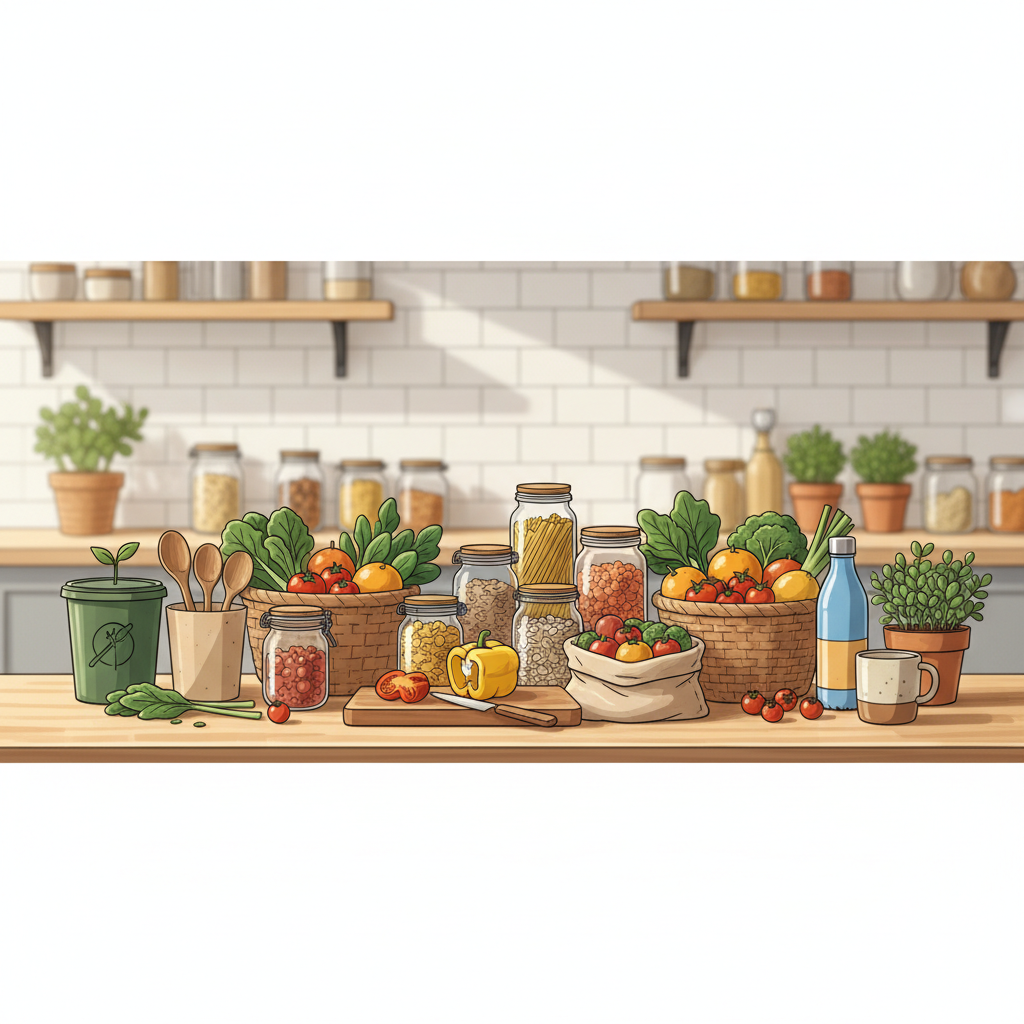
As we reach 2026, problems like the climate crisis and resource depletion that our planet faces are felt more concretely than ever. The scientific community's warnings are no longer distant prophecies but present realities, manifesting in extreme weather events, biodiversity loss, and strained natural resources across the globe. With this heightened awareness, the importance of our individual and collective efforts to foster sustainability is increasing exponentially. Many of us are asking: where should we start this crucial transformation? The answer, for countless households, often comes from the kitchen – the very heart of our homes, a place of nourishment, gathering, and, often, significant waste generation. The philosophy of cultivating a zero waste kitchen, moving beyond just being a fleeting trend, is rapidly evolving into a foundational pillar of a sustainable future. It's not about achieving absolute perfection overnight, but about embarking on a thoughtful, deliberate journey towards minimizing our environmental footprint, one meal, one shopping trip, one conscious choice at a time. This comprehensive guide will equip you with the knowledge, practical strategies, and inspiration to transform your kitchen into a beacon of sustainability within 30 days, paving the way for a more responsible and resource-efficient lifestyle in 2026 and beyond.
The Imperative for Zero Waste: Understanding the 'Why'
Before diving into the 'how,' it's crucial to grasp the profound 'why' behind the zero waste movement, particularly as it pertains to our kitchens. The urgency of addressing our consumption habits has never been more apparent. Our current linear economic model—take, make, dispose—is pushing planetary boundaries to their breaking point. The kitchen, as a primary nexus of consumption and disposal, offers a powerful starting point for change.
The Environmental Toll: Landfills, Emissions, and Resource Depletion
- Food Waste Crisis: Globally, approximately one-third of all food produced for human consumption is lost or wasted, according to the Food and Agriculture Organization (FAO) of the United Nations. In industrialized nations like the United States, this figure can be as high as 30-40% of the food supply, as reported by the USDA. This isn't just wasted food; it's wasted water, energy, land, and labor used to produce it. When food waste ends up in landfills, it decomposes anaerobically, producing methane—a greenhouse gas 25 times more potent than carbon dioxide over a 100-year period. Reducing food waste directly mitigates climate change.
- Plastic Pollution Epidemic: Our kitchens are often replete with single-use plastics—packaging from groceries, disposable containers, cling film, and more. Less than 9% of plastic waste is recycled globally, according to the United Nations Environment Programme (UNEP). The vast majority ends up in landfills, incinerators, or pollutes our oceans, breaking down into microplastics that infiltrate our food chain and ecosystems, posing severe threats to wildlife and human health.
- Resource Depletion: Every item we consume, from a plastic-wrapped snack to a mass-produced kitchen gadget, requires raw materials and energy for its production, transportation, and eventual disposal. A zero waste approach encourages us to question these cycles, opt for durable goods, and reduce our overall consumption, thereby easing the strain on finite natural resources.
The Personal and Financial Benefits
Beyond the undeniable environmental advantages, embracing a zero waste kitchen offers tangible personal and financial benefits. By meticulously planning meals, utilizing ingredients fully, and investing in reusable items, households often discover significant savings. A study by the Waste & Resources Action Programme (WRAP) in the UK found that reducing household food waste could save an average family hundreds of pounds annually. Moreover, a zero waste lifestyle often correlates with healthier eating habits, as it naturally encourages cooking from scratch with whole, unprocessed foods, reducing reliance on pre-packaged, often less nutritious, options. The process itself can be incredibly empowering, fostering a deeper connection to our food, our planet, and our community.
The 30-Day Zero Waste Kitchen Challenge: A Step-by-Step Approach
Embarking on a zero waste journey can feel overwhelming, but breaking it down into manageable steps makes it achievable. This 30-day challenge is designed to guide you through a gradual transformation, building sustainable habits one week at a time.
Week 1: Assessment, Planning, and Decluttering
- Day 1-3: The Kitchen Audit. Begin by thoroughly examining your kitchen. Open every cupboard, drawer, and your refrigerator. Note down what you have in abundance, what you frequently throw away (especially food), and what single-use items dominate. This audit reveals your biggest waste culprits and consumption patterns. For instance, are you consistently buying pre-packaged snacks? Do vegetables often wilt before you use them?
- Day 4-5: Goal Setting & Research. Based on your audit, set realistic, actionable goals for the month. For example: "Reduce food waste by 50%," "Eliminate single-use plastic bags," or "Start composting." Research local bulk stores, farmers' markets, and recycling facilities. Look into DIY recipes for common kitchen items like cleaning supplies or snacks.
- Day 6-7: Declutter & Prepare. Remove expired food and items you no longer use (donate if possible). Start a list of reusable alternatives you'll need: produce bags, bulk food containers, beeswax wraps, reusable coffee cups, and water bottles. Begin to phase out plastic wrap and aluminum foil, opting for glass containers or cloth covers.
Week 2: Mastering Food Waste Reduction
- Day 8-10: Strategic Meal Planning. This is the cornerstone of food waste reduction. Plan your meals for the week based on what you already have and what you realistically need to buy. Create a precise shopping list to avoid impulse purchases and overbuying. Consider "theme nights" or recipes that use similar ingredients to minimize waste.
- Day 11-13: Smart Storage Solutions. Learn how to properly store fresh produce to extend its life. Leafy greens last longer in airtight containers with a damp cloth; root vegetables prefer cool, dark places; apples can be stored separately to prevent ripening other fruits. Invest in quality airtight containers (glass is ideal) and learn about freezing techniques for leftovers or surplus ingredients.
- Day 14: Creative Cooking & Leftover Love. Challenge yourself to use every edible part of your ingredients. Vegetable scraps can become broth, stale bread can become croutons or breadcrumbs, and leftover rice can be transformed into fried rice or patties. Make "leftover night" a regular occurrence.
Week 3: Eliminating Plastic and Disposables
- Day 15-17: Bulk Buying & Package-Free Shopping. Armed with your reusable bags and containers, visit a bulk store or farmers' market. Purchase grains, nuts, seeds, pasta, spices, and even liquids like oil and vinegar in bulk. This drastically reduces packaging waste. Don't forget reusable produce bags for fruits and vegetables.
- Day 18-20: Reusable Alternatives. Systematically replace single-use items. Swap paper towels for washable cloth rags, plastic sandwich bags for silicone pouches, plastic wrap for beeswax wraps or container lids, and disposable coffee pods for reusable ones.
- Day 21: DIY Cleaning & Personal Care. Many kitchen cleaning products come in plastic bottles and contain harsh chemicals. Learn to make your own all-purpose cleaner using vinegar, baking soda, and essential oils. Consider making your own dish soap or opting for solid dish soap bars.
Week 4: Composting, Upcycling, and Conscious Consumption
- Day 22-24: Composting Your Scraps. If you haven't already, set up a composting system. This could be a small countertop bin for food scraps that you then take to a community garden, a backyard compost pile, or even a worm bin (vermicomposting). Composting diverts organic waste from landfills, creating nutrient-rich soil.
- Day 25-27: Upcycling & Repair. Look at items destined for the trash with new eyes. Glass jars can become storage containers, old t-shirts can become cleaning rags, and broken appliances might be repairable rather than replaceable. Before buying new, ask: can I repair it? Can I repurpose something I already own?
- Day 28-30: Reflect & Plan for the Future. Review your progress. What challenges did you face? What successes did you celebrate? Acknowledge that zero waste is a journey, not a destination. Plan for continuous improvement, perhaps by tackling another area of your home or advocating for zero waste practices in your community.
Practical Strategies for a Waste-Free Kitchen
Beyond the 30-day challenge, these strategies form the backbone of a truly sustainable kitchen.
Smart Food Storage & Preservation
The key to reducing food waste lies in understanding how to keep food fresh for as long as possible. This involves more than just refrigeration.
- Glass Containers: Invest in a good set of glass containers with airtight lids. They are durable, easy to clean, don't stain or absorb odors, and are microwave and oven-safe. They also allow you to see what's inside, reducing forgotten leftovers.
- Beeswax Wraps & Silicone Covers: These are excellent alternatives to plastic wrap. Beeswax wraps are breathable and naturally antibacterial, perfect for cheese, cut fruits, and covering bowls. Silicone covers stretch to fit various container sizes.
- Proper Fridge Organization: Dedicate specific zones in your fridge. Store cooked foods on upper shelves, dairy in the middle, and raw meats on the bottom shelf to prevent cross-contamination. Use humidity drawers for fruits and vegetables appropriately.
- Freezing & Dehydrating: Don't let excess produce go bad. Blanch and freeze vegetables, freeze fruit for smoothies, or dehydrate herbs and fruits for long-term storage. Ice cube trays are great for freezing herbs in oil or leftover broth.
Mastering Meal Planning & Batch Cooking
This is arguably the most impactful strategy for reducing food waste and saving money. A well-planned kitchen is a waste-free kitchen.
- Inventory First: Before planning, always check your pantry, fridge, and freezer. Build your meal plan around ingredients you already have to ensure nothing goes to waste.
- Ingredient Maximization: Plan meals that allow you to use an ingredient in multiple ways. For example, roast a whole chicken and use the meat for several meals, then boil the carcass for bone broth. Use vegetable scraps for stock.
- Batch Cooking: Dedicate a few hours one day a week to cook staples like grains, roast vegetables, or prepare large batches of soup or chili. This provides quick, healthy meal components throughout the week, reducing reliance on takeout and pre-packaged foods.
- Portion Control: Cook appropriate portions to minimize leftovers that might go uneaten. If you do have leftovers, pack them immediately for lunch the next day.
The Art of Composting & Food Scrap Utilization
Composting is a powerful way to return nutrients to the earth and drastically reduce landfill waste.
- Backyard Composting: For those with outdoor space, a compost pile or bin is ideal for fruit and vegetable scraps, coffee grounds, tea bags, eggshells, and yard waste. It creates rich soil for gardens.
- Worm Composting (Vermicomposting): A compact and efficient option, worm bins can be kept indoors or outdoors and are excellent for processing kitchen scraps into nutrient-dense worm castings.
- Community Composting: If home composting isn't feasible, many cities and towns offer food scrap drop-off points or curbside collection services. Websites like ShareWaste can help you find local composters.
- Creative Scrap Use: Beyond composting, many "scraps" are edible. Broccoli stems can be peeled and roasted, carrot tops can become pesto, and citrus peels can be candied or used to infuse vinegar for cleaning.
Bulk Buying & Package-Free Shopping
This strategy directly tackles the plastic pollution crisis.
- Bring Your Own: Always carry reusable shopping bags. For bulk items, bring your own clean, empty jars, cloth bags, or containers. Many bulk stores allow you to tare (weigh) your containers before filling them.
- Farmers' Markets & Local Producers: These are goldmines for package-free produce and often allow you to buy directly from the source, reducing transportation emissions and supporting local economies.
- Prioritize Whole Foods: Unprocessed foods like fresh fruits, vegetables, and grains naturally come with less packaging than highly processed alternatives.
- Consider Refill Stores: A growing number of stores specialize in refills for liquids like olive oil, soap, shampoo, and cleaning products.
DIY Kitchen Essentials
Making your own cleaning products, snacks, and even some pantry staples reduces packaging, saves money, and avoids unnecessary chemicals.
- All-Purpose Cleaner: Mix white vinegar, water, and a few drops of essential oil (like lemon or tea tree) in a reusable spray bottle.
- Baking Soda & Vinegar:
Comments (0)
To comment, please login or register.
No comments yet. Be the first to comment!