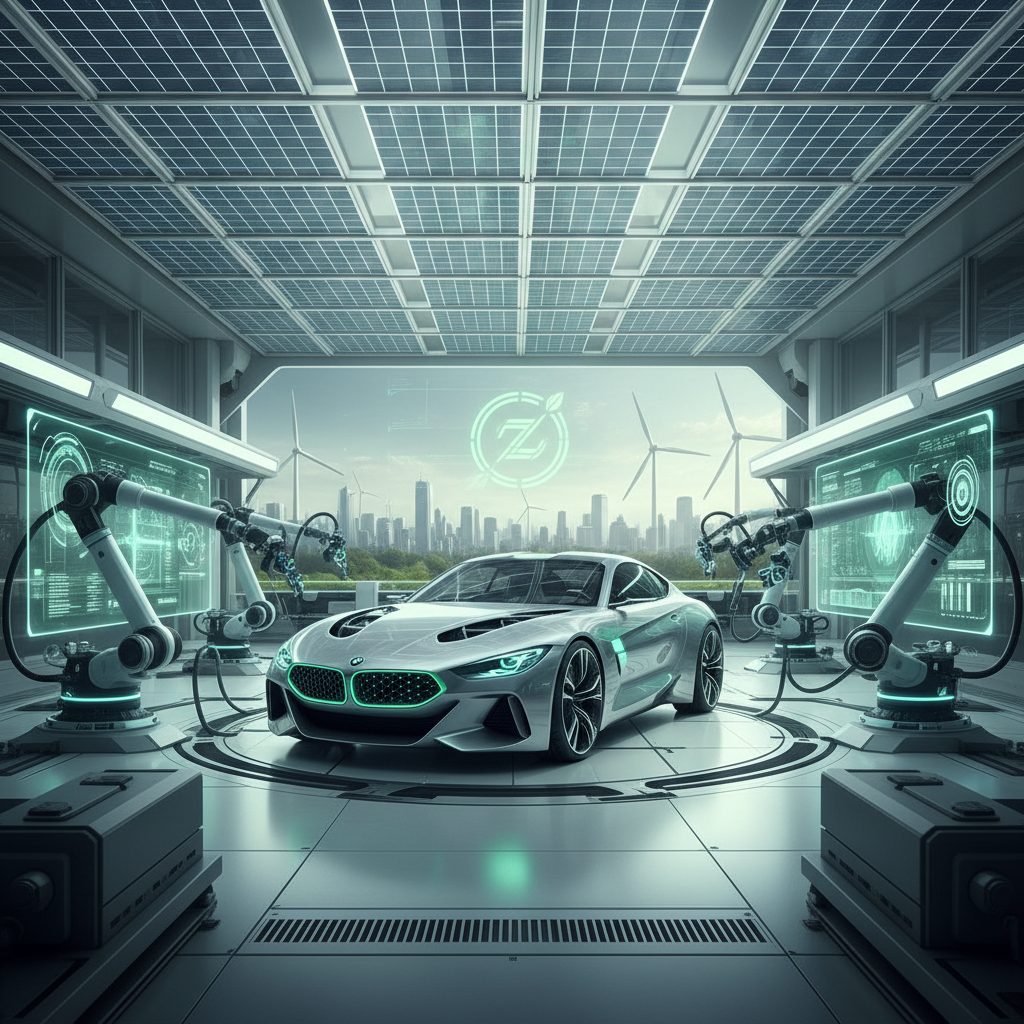
The automotive world is constantly in flux, a dynamic landscape shaped by technological innovation, evolving consumer preferences, and an undeniable push towards environmental stewardship. Recently, news surfaced of the production end for BMW's iconic Z4 roadster, a model that has graced roads since its inception in 2002. While the discontinuation of any beloved vehicle often sparks nostalgia, for us at biMoola.net, this moment signals something far more significant: a strategic pivot by a luxury automotive giant navigating the complex currents of sustainable living and industrial productivity.
This article delves beyond the headlines of a model's retirement. We'll explore how decisions like BMW's reflect profound shifts in manufacturing efficiency, circular economy principles, and the accelerating transition to electric mobility. You'll gain expert insight into the intricate balance between preserving brand heritage and embracing a future defined by ecological responsibility and cutting-edge technology. Prepare to understand the broader implications for the automotive industry, for sustainable consumption, and for what 'driving pleasure' truly means in the 21st century.
The Curtains Fall: Understanding the Z4's Departure
The BMW Z4, a two-seater roadster known for its agile handling and distinctive styling, has reached the end of its production line. This marks a significant moment for enthusiasts and for BMW's product portfolio. Introduced as a successor to the Z3, the Z4 went through several generations, including the E85/E86 (2002-2008), E89 (2009-2016), and the latest G29 generation (2018-2024), which shared its platform with the Toyota Supra. The final units of the Z4, particularly those from the Magna Steyr plant in Graz, Austria, rolled off the assembly lines, signaling the end of an era for the traditional, combustion-engined roadster.
While specific global sales figures for the Z4's entire run are often aggregated, market analysis indicates a steady decline in demand for two-seater sports cars over the past decade. For instance, the global sports car segment, which includes roadsters, saw its market share dwindle from roughly 1.5% of total passenger car sales in the early 2010s to less than 1% by the early 2020s, according to reports from Statista and various automotive industry analysts. Factors contributing to this decline include a general consumer shift towards SUVs and crossovers, rising fuel prices impacting enthusiast purchases, and the increasing cost of developing niche platforms that cannot be easily amortized across higher-volume models.
For BMW, a brand synonymous with 'driving pleasure,' the decision to discontinue a model like the Z4 is rarely made lightly. It reflects a strategic reallocation of resources, moving away from segments with diminishing returns towards areas poised for significant growth, particularly electric vehicles (EVs) and more sustainable mobility solutions.
BMW's Strategic Compass: Steering Towards Sustainability
The discontinuation of the Z4 should be viewed not as an isolated event, but as a microcosm of BMW's ambitious sustainability agenda. The company has publicly committed to a comprehensive roadmap aimed at drastically reducing its environmental footprint across the entire value chain. This commitment aligns directly with the escalating global imperative for sustainable living and green technology.
Ambitious Emissions Targets
BMW Group has set robust targets for CO2 emission reduction. By 2030, the company aims to reduce its CO2 emissions per vehicle by at least 40% across the entire value chain, compared to 2019 levels. This includes reductions of 80% in production (Scope 1 and 2 emissions), 50% in the use phase (from the customer), and 20% in the supply chain. These targets are validated by the Science Based Targets initiative (SBTi), underscoring their scientific basis and alignment with the Paris Agreement.
The shift away from low-volume, specialized internal combustion engine (ICE) vehicles like the Z4 allows BMW to reallocate engineering and production resources towards electric and more energy-efficient platforms. The company's 'Neue Klasse' architecture, set to launch in 2025, is central to this strategy, promising significant advancements in EV technology, battery efficiency, and circular economy principles in manufacturing.
Circular Economy and Resource Efficiency
BMW is increasingly focusing on the circular economy. This involves designing vehicles for maximum recyclability, using secondary raw materials, and extending component lifecycles. For instance, the company is actively pursuing closed-loop material cycles for steel, aluminum, and plastics. The target for Neue Klasse vehicles is to significantly increase the proportion of secondary materials.
Sustainability Metrics in Automotive Manufacturing (Illustrative Comparison)
| Metric | Traditional ICE Vehicle Production (Est. Average) | Future-Focused EV Production (BMW 'Neue Klasse' Goals) |
|---|---|---|
| CO2 Emissions (per vehicle, supply chain & production) | ~10-15 tonnes CO2e | Target: <5-8 tonnes CO2e (reduction of 40-50% by 2030) |
| Recycled Material Content (by weight) | ~20-30% | Target: >50% (for select materials like aluminum, steel, plastics) |
| Renewable Energy Use in Production Plants | Varies, often <50% | Target: 100% (e.g., all BMW Group plants have used 100% green electricity since 2021) |
| Water Consumption (per vehicle) | ~2-4 m³ | Target: Significant reduction (e.g., 25% reduction by 2030) |
| Raw Material Extraction Impact | High for virgin materials | Reduced dependence via closed-loop systems & secondary materials |
Note: Figures are illustrative based on industry averages and public commitments by leading manufacturers like BMW. Actual numbers may vary.
Manufacturing Productivity: Optimizing for the Future
Ending production of a niche model like the Z4 isn't just about environmental strategy; it's also a critical move in enhancing manufacturing productivity and efficiency. Modern automotive production is a marvel of lean manufacturing and automation, but every unique platform adds complexity and cost.
Consolidating Platforms and Supply Chains
By streamlining their product portfolio, manufacturers can consolidate vehicle platforms, allowing for greater economies of scale. A common platform can be used for multiple models, reducing R&D costs, simplifying supply chains, and increasing component commonality. This not only lowers unit costs but also reduces the logistical and environmental footprint associated with managing diverse inventories and supplier networks.
The strategic exit from a low-volume segment like the Z4's frees up valuable production capacity, capital, and skilled labor. These resources can then be re-invested into higher-volume, strategically important projects, particularly the ramp-up of EV production lines. The complexity of manufacturing a traditional ICE vehicle, with its thousands of moving parts, is considerable. While EVs have their own complexities (battery production, thermal management), the overall architecture allows for different manufacturing optimizations.
The Role of AI in Production Optimization
Artificial Intelligence (AI) and advanced robotics are playing an increasingly crucial role in enhancing manufacturing productivity. From predictive maintenance that prevents costly downtime to AI-driven quality control systems and optimized logistics, AI integration is transforming assembly lines. BMW, like other major automakers, is heavily investing in these technologies. The lessons learned from managing diverse product lines can be fed into AI models to optimize the transition to new platforms and ensure seamless, efficient production of next-generation vehicles.
For example, AI algorithms can analyze production data to identify bottlenecks, suggest process improvements, and even design more efficient factory layouts for upcoming models. This leads to reduced waste, lower energy consumption, and faster time-to-market for new sustainable vehicles. The decision to discontinue a model allows the strategic implementation of these productivity gains into the new core offerings.
The Future of Open-Top Motoring: Electric Convertibles?
The source material hinted at BMW's 'future convertible strategy.' This is an exciting area where sustainable living and driving pleasure could intersect. Historically, convertibles were seen as pure indulgence, often associated with larger carbon footprints. However, the advent of electric powertrains changes this narrative.
Redefining Driving Pleasure with Electric Power
An electric convertible could offer a unique blend of silent, emission-free open-top motoring. Imagine cruising along a coastal road, feeling the sun and wind, with only the gentle hum of the electric motors – no engine roar, no exhaust fumes. This redefines the sensory experience of a convertible, aligning it with a more environmentally conscious lifestyle. Instant torque from electric motors also provides exhilarating acceleration, a key attribute for sports cars and roadsters.
BMW has already demonstrated its commitment to electrification across its portfolio. While a direct electric successor to the Z4 hasn't been confirmed, the company's modular EV platforms make it technically feasible. The challenges lie in battery packaging within a convertible's structural constraints and ensuring adequate range without compromising the vehicle's dynamics or aesthetics. However, with advancements in solid-state batteries and more compact powertrain components, an electric roadster becomes increasingly viable.
Circular Economy Principles in Automotive Manufacturing
Beyond reducing tailpipe emissions, true automotive sustainability demands a holistic approach, encompassing the entire lifecycle of a vehicle. This is where circular economy principles become paramount – moving away from a linear 'take-make-dispose' model towards one that prioritizes resource retention, reuse, and recycling. BMW is at the forefront of implementing these principles.
Designing for Disassembly and Recyclability
Future vehicles, particularly those built on platforms like BMW's 'Neue Klasse,' are being designed from the ground up with recyclability in mind. This means selecting materials that are easier to separate and reprocess, reducing the number of different material types, and using modular designs that facilitate disassembly at end-of-life. Components like battery packs are being engineered for second-life applications (e.g., stationary energy storage) before eventual recycling of their precious metals.
The increased use of secondary raw materials is another cornerstone. For instance, BMW aims for a significant percentage of its aluminum and steel to come from recycled sources, reducing the energy-intensive process of virgin material extraction. The development of innovative, sustainable materials – such as bio-based plastics, recycled textiles, and even sustainably sourced leathers – is also critical.
The Consumer Shift: From Performance to Purpose
Underlying all these manufacturing and strategic shifts is a fundamental change in consumer values. While performance and luxury remain important for brands like BMW, there's a growing demographic that also prioritizes purpose, sustainability, and ethical consumption.
Informed Choices for a Greener Future
Today's consumers are more informed about the environmental impact of their purchases. They are increasingly asking questions about a vehicle's entire lifecycle emissions, its material sourcing, and the ethical practices of the manufacturer. This shift is particularly pronounced among younger generations who are willing to pay a premium for products that align with their values. For an automaker, demonstrating genuine commitment to sustainability is no longer just a 'nice-to-have' but a crucial differentiator.
Practical advice for readers considering their next vehicle: Look beyond just fuel efficiency. Investigate the manufacturer's overall sustainability reports, their targets for carbon neutrality, and their commitment to circular economy practices. Certifications, third-party ratings, and the use of recycled or sustainable materials are all indicators of a company's genuine efforts towards a greener future. Choosing an EV or a vehicle with high recycled content directly contributes to reducing the environmental burden of transportation.
Our Take: Balancing Heritage with the Future Imperative
The discontinuation of the BMW Z4 is more than just the end of a car model; it's a symbolic marker of a profound transition within the luxury automotive sector. As editorial writers at biMoola.net, we see this as a necessary, albeit often bittersweet, evolution. For decades, BMW's identity was intricately linked with the 'Ultimate Driving Machine' — often interpreted as raw, unadulterated performance powered by internal combustion. The challenge now is to redefine that identity for an era where 'ultimate' also encompasses ultimate sustainability and ultimate responsibility.
While the initial news of the Z4's end might seem like a contraction, it’s fundamentally an expansion of focus. BMW is not merely reacting to market pressures; it is proactively shaping its future. The allocation of resources towards the 'Neue Klasse' electric platform, the aggressive sustainability targets, and the emphasis on circular economy principles demonstrate a genuine commitment to remaining relevant and competitive in a rapidly changing world. The brand understands that a future without a clear environmental strategy is no future at all.
However, the journey is fraught with challenges. The massive investment required for the EV transition, the complexities of creating truly circular supply chains, and the ongoing need to satisfy diverse global markets mean that compromises and difficult decisions will continue. For consumers, this translates into a rapidly diversifying market where 'luxury' increasingly means cutting-edge sustainable technology and a reduced environmental footprint, rather than simply horsepower. The Z4's sunset, therefore, illuminates the path forward: a future where driving pleasure is intrinsically linked with planetary well-being.
Key Takeaways
- The discontinuation of BMW's Z4 roadster reflects a broader industry shift away from niche, low-volume internal combustion engine models.
- BMW is strategically reallocating resources towards its electric vehicle (EV) offensive, particularly the 'Neue Klasse' platform, to meet ambitious sustainability targets by 2030.
- Enhanced manufacturing productivity, through platform consolidation and AI integration, is crucial for optimizing resource allocation and reducing environmental impact in vehicle production.
- The automotive industry is embracing circular economy principles, focusing on designing for recyclability, using secondary raw materials, and extending component lifecycles.
- Consumer preferences are evolving, with an increasing demand for vehicles that offer not only performance and luxury but also align with sustainable living values and ethical manufacturing practices.
Q: Why are automakers discontinuing popular models like the Z4?
A: Automakers discontinue models for a variety of strategic reasons, often encompassing declining sales in specific segments (like two-seater roadsters), high development and production costs for niche platforms, and a strategic pivot towards emerging technologies like electric vehicles (EVs). Resources freed up from older models can be reallocated to fund future innovations and meet sustainability targets.
Q: How does a car's production contribute to its overall environmental impact?
A: A significant portion of a car's environmental impact occurs before it even hits the road. This includes the mining and processing of raw materials (steel, aluminum, plastics, battery minerals), energy consumption in manufacturing plants, and the logistics of the supply chain. Emissions from production can account for 15-30% of a vehicle's total lifetime carbon footprint, even more so for EVs if their batteries are produced with high-carbon energy sources, underscoring the importance of green manufacturing processes.
Q: Will we see electric convertibles in the future, or is open-top motoring disappearing?
A: While traditional convertible sales have declined, open-top motoring is unlikely to disappear entirely. There's a strong potential for electric convertibles to redefine the experience, offering silent, emission-free, and instantly torquey performance. Brands like BMW are exploring how to integrate battery technology and structural integrity into attractive electric roadster designs, leveraging advancements in modular EV platforms and battery efficiency. It may be a smaller, more exclusive segment, but it will likely evolve with electrification.
Q: What can consumers do to make more sustainable choices when buying a car?
A: Consumers can make more sustainable choices by considering several factors beyond just fuel efficiency. Research the manufacturer's overall sustainability reports, including their commitments to reducing emissions across their supply chain and production. Look for vehicles with high recycled content, durable materials, and those designed for easy end-of-life recycling. Prioritize electric vehicles (EVs) or plug-in hybrids (PHEVs) where feasible, and consider the longevity and repairability of the vehicle. Engaging with certified pre-owned markets also extends vehicle lifecycles, reducing demand for new production.
Sources & Further Reading
Disclaimer: For informational purposes only. Consult a healthcare professional for health-related advice. Information related to vehicles and sustainability is based on publicly available data and expert analysis at the time of writing.
", "excerpt": "BMW's Z4 production ends, signaling a strategic shift toward sustainable manufacturing, EV innovation, and circular economy principles in the luxury automotive sector." } ```
Comments (0)
To comment, please login or register.
No comments yet. Be the first to comment!