Green Technology

Wind Energy Revolution in 2026: How Offshore Turbines Are Shaping the Future?

Wind Energy Revolution in 2026: How Offshore Turbines Are Shaping the Future?

The New Course of Energy: Offshore Wind Energy in 2026

As we arrive in 2026, the world's energy map has become greener than ever before. In line with the goals of reducing carbon emissions and combating climate change, while renewable energy sources have reached their highest share of all time, one of the brightest stars of this transformation has undoubtedly been offshore wind energy. Kilometers away from coastlines, colossal turbines taming the fierce winds of the ocean are rising like the power plants of the future. In this article, from a 2026 perspective, we will examine the progress made by offshore wind turbines, the technological innovations they offer, and how they are transforming our energy future.

The Rise of Offshore Wind Energy: Why Now?

Space constraints and visual impact concerns faced by onshore wind turbines have directed the energy sector towards more efficient and scalable solutions. As of 2026, the installation speed and capacity of offshore wind farms have surpassed terrestrial projects. The fact that winds at sea are stronger and more consistent than on land allows these turbines to generate electricity with much higher capacity factors. Furthermore, the increasing wind potential further away from the coast makes offshore wind turbines indispensable for energy efficiency. Globally, investments in this technology continue unabated, and countries are assigning a major role to offshore wind in achieving their energy independence goals.

Next-Generation Technologies and Innovations 2026

Giant Turbines and Floating Platforms

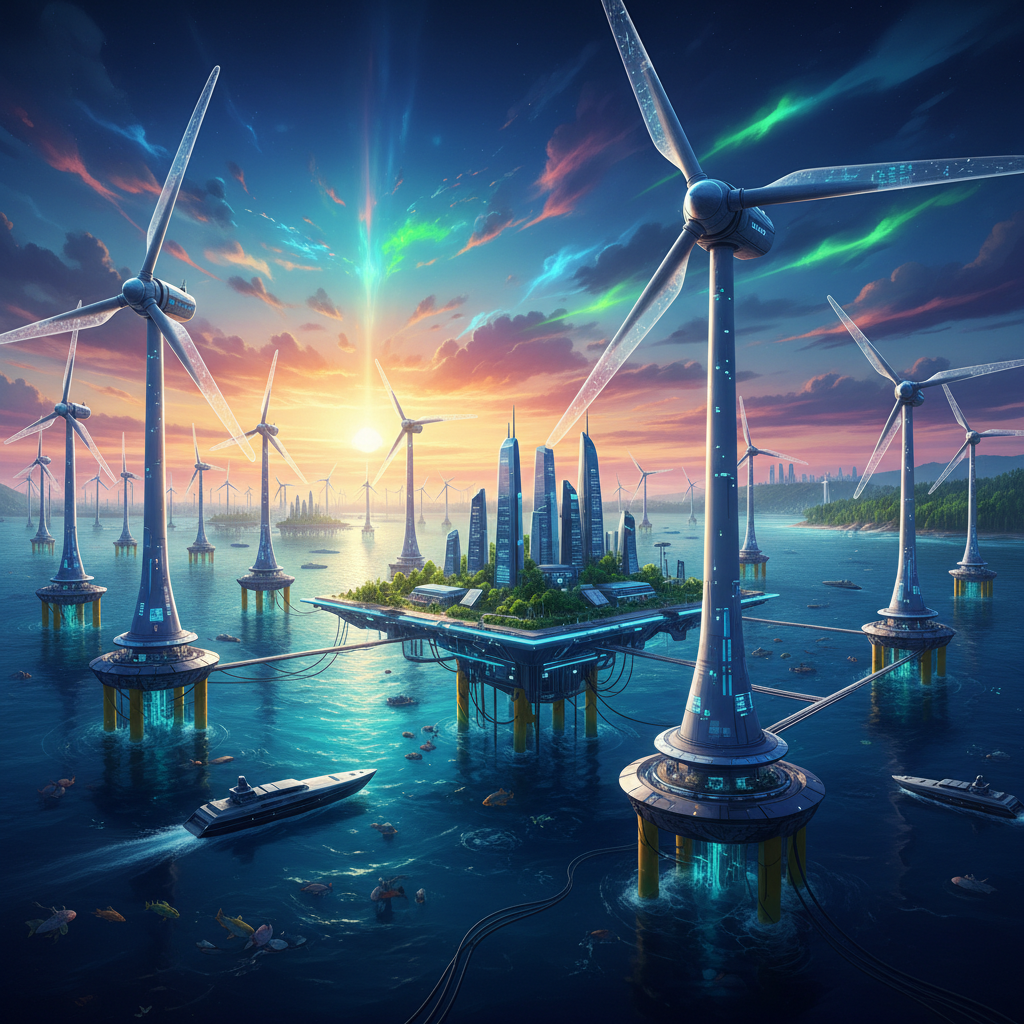
Looking at offshore wind farms in 2026, the first thing that stands out is the incredible growth in turbine sizes. Turbines with capacities of 15-20 MW and above have now become standard. These colossal structures alone have the power to meet the electricity needs of tens of thousands of households. However, the real revolution is taking place in floating wind turbine technologies, which enable installation in deep seas. These floating platforms, pioneered by countries like Norway, Scotland, and Japan, provide access to waters too deep for seabed anchoring, thereby exponentially increasing the wind energy potential.

Technological advancements are not limited to size alone. As of 2026, materials used in offshore wind turbines have become lighter, more durable, and recyclable. Smart sensors and AI-powered optimization systems enable turbines to adapt instantly to wind conditions, maximizing energy production. Furthermore, integrated solutions such as storing excess energy or using it for green hydrogen production significantly contribute to the stability of energy grids.

Environmental Impact and Biodiversity

The environmental impacts of offshore wind farms are being managed more rigorously than ever in 2026. Advanced sonar systems, noise reduction technologies, and siting plans sensitive to bird migration routes are being implemented to minimize potential effects on marine life. In some projects, turbine foundations even act as artificial reefs, enhancing marine biodiversity and creating new habitats. These projects are the best evidence that green technology can progress in harmony with the environment.

Economic Impacts and Global Market 2026

In 2026, offshore wind energy is not only an environmental solution but also provides a significant impetus to the global economy. Major economies such as the European Union, the United Kingdom, China, and the USA are investing billions of dollars in this sector, creating new employment opportunities, strengthening supply chains, and fostering innovation. Thanks to increasing capacity and falling costs, offshore wind now offers a more competitive electricity generation cost than traditional fossil fuels in many regions. This helps reduce energy bills and enhances national energy security.

Challenges and Future Vision

Of course, the rise of offshore wind energy in 2026 also brings some challenges. Harsh marine conditions can lead to higher maintenance and operating costs compared to onshore projects. Furthermore, strong transmission infrastructures are needed to transfer the generated energy over long distances to land-based grids. However, these challenges continue to be overcome through constantly developing technologies and international collaborations. Especially superconducting cables and advanced energy storage solutions are critical for resolving bottlenecks in this field.

“By 2026, offshore wind has ceased to be merely an energy source; it has become a symbol of our determination to build a sustainable future and our technological vision. The power of the seas reinforces humanity's energy independence.”

In conclusion, as we reach 2026, offshore wind turbines are positioned as the driving force of the global energy transformation. With next-generation technologies, colossal capacities, and increasing efficiencies, they play a key role in providing access to clean, sustainable, and reliable energy worldwide. In the coming years, advancements in this sector will continue to fundamentally change our energy policies and our relationship with our planet.

Comments (0)

No comments yet. Be the first to comment!

biMoola Assistant
Hello! I am the biMoola Assistant. I can answer your questions about AI, sustainable living, and health technologies.