In the digital age, where algorithms sculpt the unseen and machines paint the unimaginable, a single phrase can spark a revelation. Consider “The Blue Dragon of Kilmarnock” – a concept born from the generative artistry of Midjourney. On the surface, it's a fantastical image: a mythical beast, perhaps in shades of cerulean and sapphire, set against the familiar backdrop of a Scottish town. But beneath this captivating veneer lies a profound metaphor for the transformative power of generative AI in shaping our creative and productive landscapes.
At biMoola.net, we delve into the intersection of AI, productivity, and sustainable innovation. Today, we're not just admiring a digital dragon; we're dissecting what it represents: the human-AI synergy that is redefining artistic expression, streamlining industrial design, and pushing the boundaries of what's possible. This article will unravel the intricate layers of generative AI’s impact, from its revolutionary role in content creation and design to the critical ethical dilemmas it presents. You’ll gain an expert perspective on how “dragons” – once confined to myth – are now being conjured by AI, challenging us to rethink creativity, efficiency, and the very nature of human ingenuity.
Decoding the Dragon: Generative AI’s Creative Ascent
The “Blue Dragon of Kilmarnock” is more than just an image; it's a potent symbol of generative AI’s ability to materialize abstract concepts into compelling visuals. Like a mythical creature emerging from mist, these AI models, trained on vast datasets of information, can conjure entirely new entities from simple text prompts. This capability has moved generative AI from a niche curiosity to a fundamental tool in various creative industries.
From Prompts to Panoramas: The Art of AI Image Generation
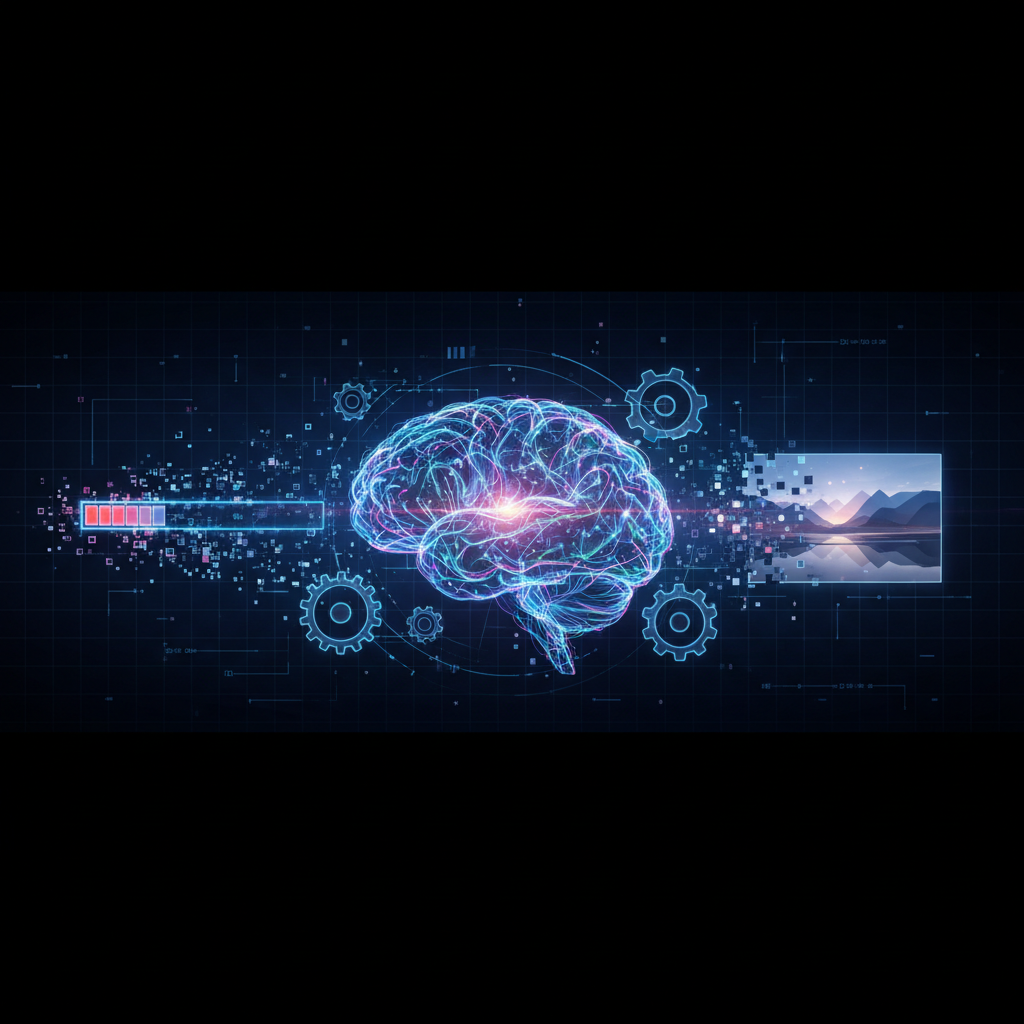
At the heart of tools like Midjourney, DALL-E 3, and Stable Diffusion lies a sophisticated understanding of patterns, styles, and semantic relationships gleaned from billions of images and corresponding text descriptions. When a user inputs a prompt – such as “blue dragon, Kilmarnock, Scottish town, misty, epic” – the AI doesn't merely search for existing images; it synthesizes new ones, pixel by pixel, based on its learned understanding of those elements. This process, often leveraging diffusion models, starts with noise and iteratively refines it into a coherent image that aligns with the prompt's intent.
The results are often astonishing, blending realistic textures with fantastical elements, and mimicking diverse artistic styles, from photorealism to impressionism. A 2024 report by Gartner highlighted generative AI as a “top strategic technology trend,” noting its potential to “democratize content creation” by making sophisticated visual output accessible to individuals without traditional artistic training.
The Human-AI Symbiosis: A New Creative Partnership
The “Blue Dragon” wasn't created in a vacuum; it was prompted by a human imagination. This highlights a crucial aspect of generative AI: it's not replacing human creativity but augmenting it. Professionals across design, marketing, and entertainment are increasingly adopting AI as a creative partner. Consider a graphic designer needing multiple iterations of a logo concept, an architect visualizing complex structural elements, or a game developer creating hundreds of unique textures. AI can generate these elements in minutes, allowing the human creator to iterate faster, explore more options, and focus on higher-level conceptualization and refinement.
This symbiosis extends beyond image generation. AI-powered tools are now writing marketing copy, composing musical scores, and even assisting in drafting code. According to a 2023 survey by McKinsey & Company, generative AI could add trillions of dollars in value to the global economy, largely by enhancing productivity across various sectors, including those heavily reliant on creativity.
Kilmarnock’s Canvas: AI in Real-World Applications
The inclusion of “Kilmarnock” in our mythical dragon’s prompt grounds this fantastical concept in a tangible reality. It symbolizes how generative AI, despite its often awe-inspiring output, is finding practical, “down-to-earth” applications that directly impact productivity and innovation in established industries.
Beyond Aesthetics: AI for Design & Prototyping
Generative AI isn't just for creating pretty pictures; it's a powerful engine for functional design. In industrial design, architects, engineers, and product developers are leveraging AI to generate novel prototypes, explore material combinations, and optimize designs for efficiency and sustainability. For example, an AI could design a building facade that minimizes heat gain based on local climate data, or a complex automotive part that is lighter yet stronger through generative topology optimization. This rapid prototyping cycle significantly reduces development time and costs, allowing companies to bring innovations to market faster.
This capability is particularly transformative in sectors requiring iterative design and complex problem-solving. For instance, in drug discovery, AI can propose novel molecular structures with desired properties, accelerating the identification of potential therapeutic compounds – a form of “generative design” for health technologies.
Storytelling & World-building with AI Assistance
The narrative potential of generative AI is immense. For content creators, filmmakers, and game developers, AI can be an invaluable tool for world-building. Imagine an AI generating hundreds of unique historical artifacts for a documentary, crafting diverse alien landscapes for a sci-fi epic, or even drafting character backstories for a sprawling RPG. The “Blue Dragon of Kilmarnock” itself could be a central figure in a new folklore woven by AI, offering a template for rich narrative exploration.
This capability accelerates pre-production phases, allowing creative teams to visualize concepts quickly, test different narrative paths, and create immersive experiences with unprecedented speed and detail. This doesn't diminish human storytellers; it empowers them to focus on the overarching plot, character development, and emotional resonance, while AI handles the intricate details of their imaginative worlds.
The Productivity Paradox: Efficiency vs. Originality
While generative AI promises unparalleled productivity gains, it also introduces a nuanced debate about originality and the value of human touch. The “dragon” of efficiency clashes with the “dragon” of unique human expression.
Streamlining Workflows: The Speed Advantage
There's no doubt that AI dramatically speeds up many creative and analytical tasks. Generating multiple design mock-ups, writing first drafts of articles, or summarizing complex reports now takes moments, not hours or days. This efficiency allows businesses to scale their content creation, rapidly respond to market trends, and reallocate human talent to more strategic, high-value activities. The financial sector, for instance, uses AI to generate vast amounts of personalized financial reports, while marketing teams leverage it for diverse campaign content across platforms.
The global generative AI market, valued at approximately $10.7 billion in 2022, is projected to reach over $100 billion by 2030, according to Statista, underscoring the massive investment and adoption driven by this productivity surge.
Cultivating Unique Visions in an AI-Driven Landscape
The concern, however, is that an over-reliance on AI might lead to a homogenization of creative output. If all designers use similar AI tools with similar prompts, will we see an abundance of “AI-generated sameness”? Our “Blue Dragon” might be unique, but what about the next 10,000 AI-generated dragons?
The solution lies not in shunning AI but in mastering prompt engineering, developing a unique “AI voice,” and integrating AI as a tool for initial ideation rather than final creation. The human element – critical thinking, emotional intelligence, cultural nuance, and the “spark” of original thought – remains paramount for truly groundbreaking work. The productivity gain should free up human creators to focus on truly unique concepts, refine AI outputs with distinctive flair, and challenge the AI to generate increasingly innovative and less generic results.
Navigating the Ethical Labyrinth: Copyright, Bias, and Authenticity
As “Blue Dragons” proliferate, so do the complex ethical questions surrounding their creation and ownership. This “dragon” represents the formidable challenges that AI presents to established legal and societal norms.
Authorship and Ownership in AI Art
Who owns “The Blue Dragon of Kilmarnock”? The user who typed the prompt? The developers of Midjourney? Or the artists whose styles and works were ingested into the AI’s training data? These questions are at the forefront of legal and artistic debates globally. Current copyright law is struggling to keep pace, with courts in various jurisdictions – including the U.S. Copyright Office – generally asserting that AI-generated works without significant human authorship are not copyrightable. This creates a murky landscape for artists, businesses, and platform developers.
The issue extends to “style theft,” where AI models can mimic the distinctive aesthetics of living artists without compensation or consent. This raises fundamental questions about fair use, intellectual property rights, and the future livelihoods of human artists.
Addressing Algorithmic Bias and Misinformation
AI models learn from the data they are fed. If that data contains societal biases – in terms of gender, race, culture, or even aesthetic preference – the AI will replicate and often amplify those biases in its output. An AI asked to generate “a CEO” might predominantly produce images of white men, reflecting historical power structures rather than contemporary diversity. This “Blue Dragon” could unintentionally perpetuate stereotypes.
Furthermore, the ability of generative AI to create hyper-realistic “deepfakes” and convincing synthetic media poses a significant threat of misinformation and disinformation. The ease with which AI can generate compelling but entirely fabricated images, videos, and text means that discerning authenticity is becoming increasingly challenging, with profound implications for journalism, public trust, and social cohesion.
The Future Landscape: Dragons, Dreams, and Digital Realities
Looking ahead, generative AI is poised to evolve far beyond current capabilities, transforming not just how we create but also how we interact with information and solve complex problems. The “Blue Dragon” is merely a glimpse into a much larger, more powerful future.
AI as a Tool for Untapped Imagination
Imagine using AI to generate not just an image, but an entire interactive virtual world based on a text description. Or an AI that can translate complex scientific data into intuitive visual metaphors, making breakthroughs more accessible. Generative AI is increasingly being explored for scientific visualization, drug discovery, and even material science, where it can simulate and predict properties of novel compounds. This allows researchers to rapidly explore a vast solution space that would be impossible for humans alone, accelerating innovation across sectors.
The potential for education is also immense, with AI creating personalized learning materials, interactive simulations, and adaptive assessments. The “Blue Dragon of Kilmarnock” could become a dynamically generated character in an AI-powered educational game, teaching children about Scottish history or mythical creatures.
Preparing for a Creatively Augmented Future
For individuals and organizations, adapting to this AI-augmented future requires a proactive approach. It means investing in “prompt engineering” skills, understanding the ethical implications of AI use, and fostering a culture of human-AI collaboration. Rather than viewing AI as a competitor, we must embrace it as a powerful co-creator – a “dragon” to be tamed and guided, not feared. The most successful ventures will be those that integrate AI seamlessly into their workflows, allowing it to handle repetitive or resource-intensive tasks while empowering human talent to focus on strategic thinking, emotional intelligence, and truly original conceptualization.
The ability to “speak” effectively to AI – to articulate complex creative needs in a way AI can understand and generate – will become a critical skill for 21st-century professionals, ensuring that the “Blue Dragons” we conjure are not just impressive, but genuinely purposeful and impactful.
Generative AI Market Insights (2023-2030)
| Metric | 2023 Estimate | 2030 Projection | CAGR (2023-2030) |
|---|---|---|---|
| Market Size (USD Billion) | $15 - $20 | $110 - $125 | ~35-40% |
| Key Growth Drivers | Increased adoption in creative industries, content generation, software development, customer service, drug discovery, R&D acceleration. | ||
| Primary Impact Areas | Productivity enhancement, innovation acceleration, democratization of content creation, personalized experiences. |
Source: Various industry reports (e.g., Gartner, Statista, McKinsey), compiled for illustrative purposes. Actual figures may vary.
Key Takeaways
- Generative AI, exemplified by tools like Midjourney, is fundamentally transforming creative industries by enabling rapid visualization and content generation from text prompts.
- The “human-AI symbiosis” is emerging as the dominant paradigm, where AI augments human creativity, allowing professionals to focus on higher-level conceptualization and strategic refinement.
- Generative AI is finding practical applications beyond aesthetics, streamlining industrial design, accelerating prototyping, and enriching digital storytelling across diverse sectors from architecture to game development.
- Navigating the ethical challenges of AI – including copyright, authorship, algorithmic bias, and misinformation – is crucial for its responsible development and deployment.
- The future will see AI as an increasingly powerful tool for untapped imagination, demanding new skills in prompt engineering and fostering human-AI collaboration to maximize its potential for innovation and productivity.
Our Take: The Dragon Is Here to Build, Not Burn
The initial reaction to something as powerful and transformative as generative AI can often be one of apprehension. Like encountering a “Blue Dragon” – majestic and potentially intimidating – there's a natural inclination to focus on its destructive capabilities or the jobs it might displace. However, our analysis at biMoola.net suggests a more optimistic, and pragmatic, reality: this dragon is here to build, not burn. The image of the “Blue Dragon of Kilmarnock” is a testament not just to AI’s ability to create, but to humanity’s persistent drive to imagine and — crucially — to collaborate with new tools. The “Kilmarnock” component anchors the fantastical in the practical, reminding us that AI’s most significant impacts will be in solving real-world problems and enhancing tangible outcomes, whether that's optimizing sustainable designs or accelerating medical research.
The true expertise in the age of AI won't be solely in coding algorithms, but in cultivating the unique “human lens” – critical thinking, empathy, ethical reasoning, and the ability to ask the right questions – that guides these powerful models. We're entering an era where “prompt engineering” is akin to conducting an orchestra, requiring not just technical understanding but a deep appreciation for the desired creative output. The challenge lies in ensuring this powerful technology serves humanity’s best interests, creating a richer, more productive, and more sustainable future. For every concern about job displacement, we see opportunities for job evolution, requiring a renewed focus on creative and strategic roles. The dragons are here; now it's up to us to learn how to ride them wisely.
Frequently Asked Questions About Generative AI & Creativity
Q: Will generative AI replace human artists and designers?
A: While generative AI can automate many aspects of creative work, the consensus among experts is that it will augment rather than replace human artists and designers. AI excels at generating variations, executing specific styles, and accelerating ideation, but it lacks genuine subjective understanding, emotional intelligence, and the capacity for truly novel conceptual leaps. Human creators will increasingly become “prompt engineers,” curators, and conceptual directors, using AI as a powerful tool to bring their unique visions to life faster and more efficiently, focusing on the strategic and artistic direction.
Q: How do ethical concerns like copyright and bias in AI art affect its use in productivity?
A: Ethical concerns are paramount. Copyright issues mean businesses must exercise caution when using AI-generated content commercially, as its legal ownership and originality can be disputed. This necessitates clear policies on AI use and potentially licensing AI models trained on ethically sourced data. Algorithmic bias, where AI replicates or amplifies societal prejudices present in its training data, can lead to problematic or unrepresentative outputs. For productivity, this means organizations must audit AI outputs for fairness and inclusivity, ensure diverse training data, and maintain human oversight to prevent the generation of biased or misleading content, protecting brand reputation and trust.
Q: What specific skills are becoming more important due to generative AI?
A: Several skills are gaining prominence. “Prompt engineering” – the art and science of crafting effective text inputs to guide AI – is crucial for achieving desired outputs. Critical thinking, creativity, and problem-solving remain vital for defining what to create and how to refine AI suggestions. Ethical reasoning and digital literacy are also essential for navigating the complex implications of AI-generated content. Furthermore, the ability to collaborate effectively with AI, understanding its strengths and limitations, and integrating it into existing workflows will be key for future productivity across professions.
Q: Can generative AI contribute to sustainable living or health technologies?
A: Absolutely. While our “Blue Dragon” example focuses on creativity, generative AI has immense potential in these fields. In sustainable living, AI can design energy-efficient buildings, optimize supply chains for reduced waste, or create visualizations of environmental impact. For health technologies, AI can rapidly generate novel drug candidates, design custom prosthetics, model complex biological processes, or even create personalized therapeutic content. By accelerating research, design, and problem-solving, AI can significantly contribute to innovative solutions for global sustainability and health challenges.
Sources & Further Reading
- Gartner: What Is Generative AI?
- McKinsey & Company: The economic potential of generative AI: The next productivity frontier
- Statista: Generative AI market size worldwide in 2022 and 2030
Disclaimer: For informational purposes only. Consult a healthcare professional for medical advice. This content is not intended to provide professional advice or recommendations.
Comments (0)
To comment, please login or register.
No comments yet. Be the first to comment!