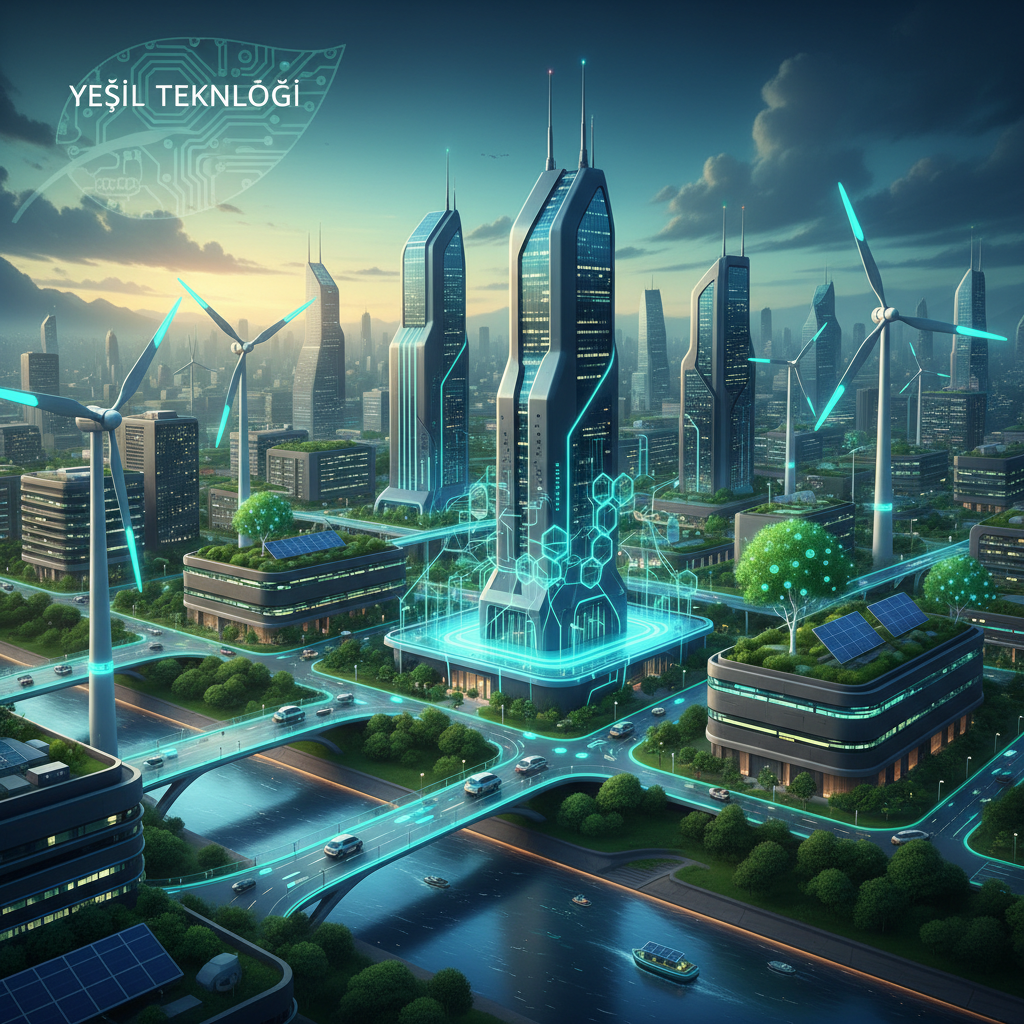
In today's world, the environmental challenges our cities face and the rapidly growing population necessitate radical changes in urban planning. By 2026, the concept of smart cities has evolved from a mere vision into a reality filled with concrete applications. At the heart of this transformation lie Internet of Things (IoT) technologies. IoT is key to making our cities more livable, more efficient, and most importantly, more sustainable.
Green city planning is no longer limited to aesthetic concerns; it now offers an approach that protects natural resources, minimizes carbon footprint, and enhances the quality of life for citizens by leveraging the power of technology. So, from a 2026 perspective, what role does IoT play in this sustainable urban transformation?
IoT and Smart Cities: The Foundation of Green Transformation
Smart cities are urban areas that optimize city services and improve citizens' quality of life by collecting data through digital technologies and advanced sensor networks. The backbone of these networks is formed by IoT devices. From traffic lights to waste containers, public lighting systems to water distribution networks, everything provides instant data flow thanks to IoT sensors. This data enables city administrations to make informed decisions, use resources more efficiently, and reduce environmental impacts.
By 2026, IoT-based solutions not only provide efficiency but also become a critical driving force in helping cities achieve their green transformation goals. The future of smart cities undoubtedly depends on the depth of IoT integration.
The Critical Role of IoT in Sustainable Urban Planning
The contributions of IoT to green city planning are quite extensive. Here are the main areas:
- Smart Energy Management and Green Buildings: IoT sensors monitor and optimize energy consumption in buildings in real-time. Through smart grids, renewable energy sources (solar panels, wind turbines) are integrated more efficiently, and energy storage solutions are managed intelligently. Street lighting, with motion sensors and daylight detectors, only operates when needed, saving energy.
- Efficient Waste and Resource Management: Smart waste bins report their fill levels to a central system, optimizing waste collection routes, reducing fuel consumption and carbon emissions. IoT-supported recycling programs encourage waste separation and increase the reuse of resources.
- Smart Transportation Systems and Air Quality: Traffic sensors collect density data to dynamically regulate traffic flow, reducing congestion. Smart parking systems enable drivers to quickly find empty parking spaces, preventing unnecessary cruising. Additionally, city-wide air quality sensors continuously monitor pollution levels, informing citizens and assisting in the development of policies addressing pollution sources.
- Water Management and Environmental Protection: IoT-supported smart water meters and sensors instantly detect water leaks, preventing wastage. Smart irrigation systems automatically water plants in parks and gardens according to their needs, saving water. The quality of river and lake waters is also continuously monitored with IoT sensors, preventing environmental pollution.
- Digital Management of Urban Green Spaces: Green areas in cities, such as parks, gardens, and vertical farms, are monitored with IoT sensors for soil moisture, nutrient content, and air quality. This optimizes plant health, uses less water and fertilizer, and supports biodiversity.
Quality of Life and Citizen Participation
Sustainability is not limited to environmental factors; it also encompasses the quality of life for city residents. IoT-powered smart cities contribute to the well-being of citizens in many areas, from smart surveillance systems that enhance security to integrated platforms that provide rapid access to emergency services. Reduced pollution, more efficient transportation, and increased green spaces have positive effects on the physical and mental health of urban dwellers. Furthermore, through smart applications, citizens can easily provide feedback to city management, actively participating in urban transformation processes.
Steps and Challenges for the Future
“By 2026, IoT integration has become not merely a technological achievement, but also a guarantee of sustainability and efficiency in urban life. However, this transformation also brings challenges such as data security, cyber threats, and the digital divide. It is crucial for cities to overcome these challenges and build an inclusive and secure digital future.”
While the benefits provided by IoT are undeniable, the installation and maintenance of these systems can entail high costs. Furthermore, the privacy and security of the enormous amounts of data collected are priority issues for city administrations. Ensuring that all citizens have access to and use these technologies (preventing the digital divide) is also an important social responsibility. Although solutions for many of these challenges may have been developed by 2026, continuous adaptation and innovation are required.
In conclusion, in 2026, smart cities and IoT technologies are working hand-in-hand to enable urban living that is not only more efficient but also more environmentally responsible and socially inclusive. Green city planning has become more rational and sustainable thanks to the data and automation provided by IoT, and significant steps have been taken towards building more livable cities for future generations. This integration will continue to shape the future of our cities.
Comments (0)
To comment, please login or register.
No comments yet. Be the first to comment!