In an increasingly connected world, our homes are becoming more intelligent, more responsive, and more integrated into our daily lives. From smart thermostats to voice assistants, technology is reshaping our living spaces. But what if the very illumination in our rooms could do more than just light them? What if it could subtly inform, inspire, and even enhance our well-being?
Enter the latest innovation from Govee: a multicolor ceiling light that isn't just a light, but a low-resolution display. This development is far more than a mere gadget release; it signals a fascinating trajectory for smart home technology, bridging the gap between ambient lighting and discreet information delivery. At biMoola.net, we've been closely tracking the convergence of AI, productivity, health technologies, and sustainable living, and this new breed of smart lighting embodies all these facets. This article will delve into the profound implications of such devices, exploring their technical underpinnings, potential applications, and what they mean for the future of our digital existence.
The Evolution of Smart Lighting: Beyond On/Off
For decades, home lighting was a utilitarian affair: a switch, a bulb, and a choice between incandescent, fluorescent, or halogen. The advent of LEDs brought energy efficiency and longevity, but the true revolution began with the integration of connectivity. Early smart bulbs, emerging in the early 2010s, primarily offered remote control and dimming capabilities via a smartphone app. This was a significant leap, but still largely focused on convenience.
Over the past few years, smart lighting has matured considerably. We've seen the rise of tunable white lights that adjust color temperature to mimic natural daylight cycles, color-changing RGB bulbs for mood setting, and sophisticated systems that learn user preferences. The market has exploded, with a 2023 report from Statista projecting the global smart lighting market to reach over $37 billion by 2030, up from $14.6 billion in 2022. This growth isn't just about bigger numbers; it reflects a shift in consumer expectations and technological capabilities.
Today's smart lighting is about more than just illumination; it's an integral part of the smart home ecosystem, interacting with other devices, responding to voice commands, and even sensing occupancy. From accentuating interior design to enhancing security, these systems are becoming central to modern living. The current wave of innovation, exemplified by Govee's new offering, pushes this boundary further, suggesting that our lights can now actively communicate information without demanding our full attention.
Govee's Latest Innovation: A New Paradigm for Ambient Light
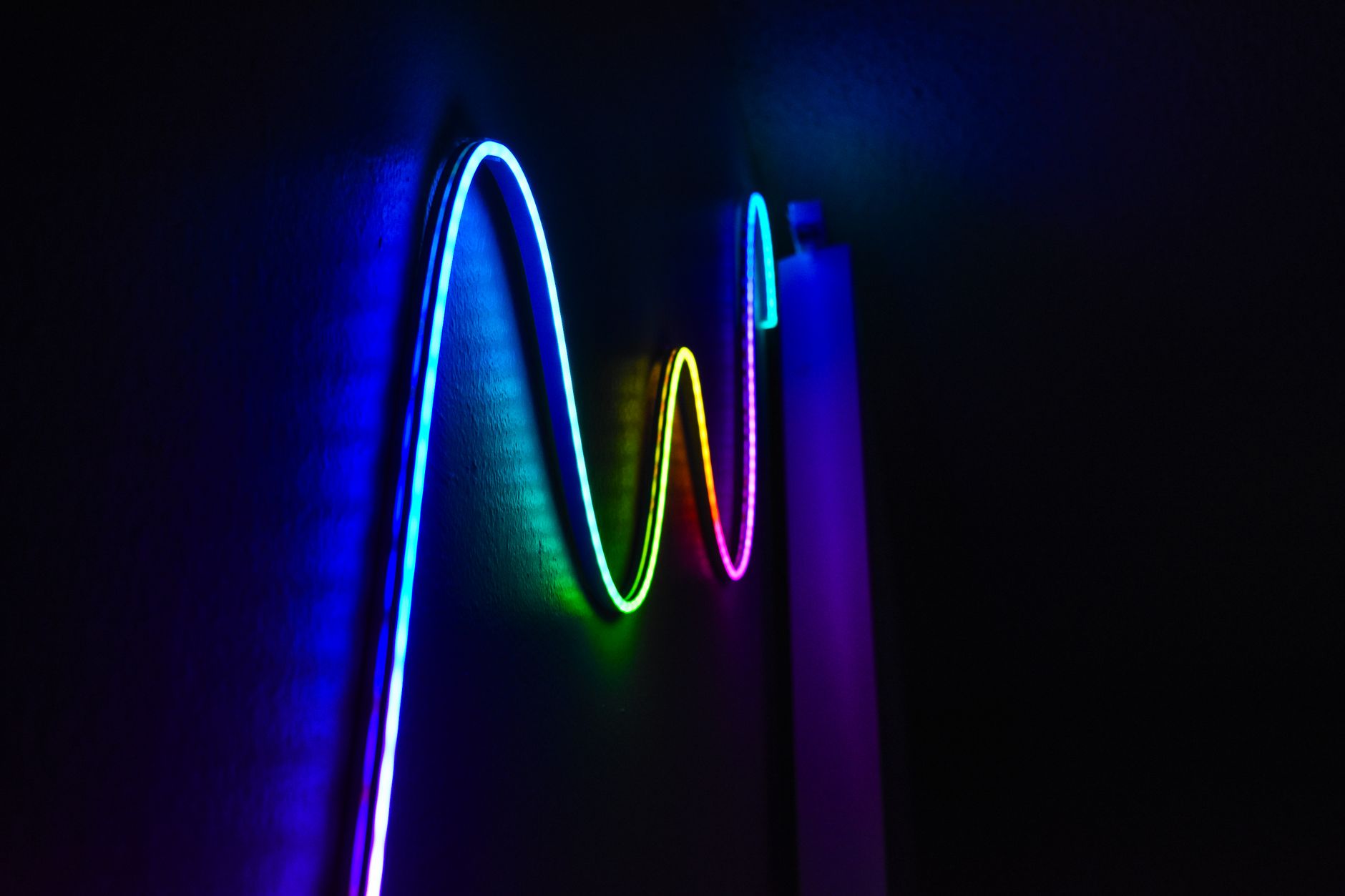
Govee, a company known for its vibrant and feature-rich smart lighting solutions, has once again pushed the envelope. Their new multicolor ceiling light transcends traditional lighting fixtures by incorporating a capability that allows it to function as a low-resolution display. This isn't about watching Netflix on your ceiling; it's about subtle, dynamic visual cues that blend into the environment.
Imagine a ceiling light that can display a gentle animation to signal a new email, show the real-time weather forecast as abstract patterns, or even visualize your smart home's energy consumption with a shifting color gradient. This approach is rooted in the concept of 'ambient computing' – where technology fades into the background, providing information and assistance without requiring explicit interaction. The ceiling, often an overlooked surface, becomes a canvas for ambient data.
RGBIC Technology Explained
Central to Govee's advanced lighting capabilities is its RGBIC technology. Unlike standard RGB (Red, Green, Blue) lighting, where an entire strip or fixture displays a single color at any given time, RGBIC (Red, Green, Blue, Independent Control) allows for individual control over specific segments or chips within the lighting fixture. This means different parts of the light can display different colors simultaneously, creating dynamic, flowing patterns and animations.
In the context of a ceiling light functioning as a low-res display, RGBIC is indispensable. It enables the light to create distinct zones of color, form basic shapes, or render abstract representations of data across its surface. This granular control is what differentiates Govee's offering from a simple color-changing light, paving the way for its new 'screen' functionality.
Bridging Illumination and Information
The novelty of Govee's ceiling light lies in its dual role: providing high-quality ambient illumination while simultaneously acting as a subtle informational interface. This integration could significantly impact productivity and daily routines. Instead of constantly checking a phone or a smart speaker, users might receive non-intrusive visual notifications. For instance, a soft blue wave could indicate a meeting starting in 15 minutes, or a warm orange glow could signify an impending sunset.
This approach moves away from the intrusive nature of screen-based notifications and towards a more organic, environmental form of communication. It aligns with the growing desire for technology to be more helpful and less demanding, allowing users to stay informed without being constantly tethered to a digital device.
Smart Lighting's Impact on Productivity & Well-being
Beyond novelty, the true value of advanced smart lighting, especially those with dynamic capabilities, lies in its profound impact on human well-being and productivity. Light is not just for seeing; it is a powerful biological regulator.
Circadian Rhythm and Human-Centric Lighting
Our bodies operate on a roughly 24-hour cycle known as the circadian rhythm, heavily influenced by natural light exposure. Exposure to bright, blue-rich light in the morning helps us feel alert, while warmer, dimmer light in the evening signals our bodies to produce melatonin and prepare for sleep. Disruptions to this rhythm, often caused by artificial lighting or excessive screen time, can lead to sleep problems, reduced cognitive function, and even long-term health issues.
Human-centric lighting (HCL) systems leverage this understanding by dynamically adjusting color temperature and intensity throughout the day to mimic natural light patterns. A 2012 study highlighted by Harvard Medical School emphasized the critical role of light in regulating our internal clock and overall health. Advanced smart lights, particularly those with a wide spectrum of tunable white and color options, are ideal for implementing HCL principles, optimizing alertness during the day and promoting restful sleep at night.
Enhancing Focus and Relaxation
The ability to precisely control lighting environments has tangible benefits for productivity and mental state. For focused work, cooler white light (around 5000K-6500K) can enhance alertness and cognitive performance. Conversely, warmer tones (2700K-3000K) are conducive to relaxation, social interaction, and winding down in the evening. With RGBIC technology, specific zones in a room could be lit differently, creating a dedicated 'focus' area with cool white light while another area remains softly lit for a more relaxed ambiance.
Moreover, the subtle, low-res display capabilities of lights like Govee's could offer visual cues for mindfulness or focus techniques. Imagine a gentle pulsing light indicating a breathing exercise, or a slow color transition to mark a productivity interval. These non-verbal, environmental signals can subtly guide our behavior without the harsh interruption of a screen.
Integrating with the Smart Home Ecosystem: Challenges & Opportunities
The true power of any smart device is realized through its integration into a broader ecosystem. For smart lighting, this means seamless compatibility with voice assistants, smart home hubs, and other connected devices.
The Promise of Interoperability (e.g., Matter)
Historically, one of the biggest frustrations for smart home enthusiasts has been the fragmented ecosystem, with different brands relying on proprietary protocols. This has often led to compatibility headaches and a complex setup process. However, the industry is moving towards greater standardization with initiatives like Matter.
Matter, an open-source connectivity standard backed by Apple, Google, Amazon, and other major players, aims to create a universal language for smart home devices. Lights that support Matter will be able to communicate effortlessly with any Matter-certified hub or device, regardless of brand. This promises a future where a Govee ceiling light could seamlessly integrate with a Philips Hue system, an Amazon Echo, or an Apple HomeKit setup, enhancing user experience and unlocking new automation possibilities. As Matter adoption gains traction, the value proposition of advanced smart lighting will only increase, allowing for more sophisticated, cross-device automations.
Privacy and Security Considerations
As smart devices become more embedded in our homes, concerns around privacy and security naturally amplify. A ceiling light that can display information, potentially connected to external data sources, raises new questions. What data is it collecting? How is that data secured? Who has access to it?
Reputable manufacturers like Govee are generally diligent about data encryption and user privacy policies, but it's crucial for consumers to remain vigilant. Users should ensure strong passwords, enable multi-factor authentication where available, and be aware of the permissions granted to smart home apps. The more our environment becomes 'smart,' the more critical it is to prioritize the security of that intelligence. Regulatory bodies are also beginning to address these issues, with frameworks like GDPR in Europe influencing global best practices for IoT device data handling.
Market Trends and the Future of Ambient Computing
The introduction of lights with display capabilities is not an isolated event; it's a symptom of larger market trends pushing towards more ambient, less intrusive forms of technology. We are moving beyond the era of distinct gadgets and into an age where our environments themselves become intelligent interfaces.
Statistics on Smart Home Adoption & Lighting
The trajectory towards ambient computing is supported by robust growth in the smart home sector. Here's a quick look at some key statistics:
- Smart Home Market Size: Expected to reach $277.4 billion by 2027 (MarketsandMarkets, 2022).
- Smart Lighting Segment Growth: Projected to grow at a Compound Annual Growth Rate (CAGR) of 20.5% from 2023 to 2030 (Grand View Research, 2023).
- Average Number of Connected Devices per Home: Estimated to be around 10-15 devices by 2025 in technologically advanced regions (Statista).
- Consumer Adoption of Voice Assistants: Over 50% of adults in countries like the US and UK regularly use voice assistants, which often control smart lighting (Pew Research, 2023).
- Energy Efficiency Driver: A 2023 survey by Deloitte found that energy savings remain a top motivator for smart home adoption, with smart lighting playing a significant role.
These figures underscore a broad consumer embrace of smart technologies. The transition from active, screen-centric interactions to passive, environmental cues is a natural evolution. As AI capabilities advance, we can expect smart lighting to become even more personalized and predictive, learning our habits and preferences to proactively optimize our environments.
The ceiling, with its expansive, unobtrusive presence, is an ideal surface for this new wave of ambient information. We might see further integration with augmented reality overlays, sophisticated motion sensing, and even health monitoring, all delivered through the seemingly simple medium of light. The future of productivity and well-being could well be illuminated.
Key Takeaways
- Govee's new multicolor ceiling light represents a significant step towards ambient computing, blending illumination with low-resolution information display.
- RGBIC technology is crucial for dynamic lighting and rudimentary display functions, enabling precise control over color segments.
- Advanced smart lighting, particularly human-centric lighting (HCL), has measurable benefits for circadian rhythm regulation, productivity, and sleep quality.
- Interoperability standards like Matter are vital for the widespread adoption and seamless integration of complex smart lighting systems into the broader smart home ecosystem.
- While offering convenience and enhanced living, these innovations necessitate careful consideration of privacy and data security.
Expert Analysis: The biMoola Perspective
From our vantage point at biMoola.net, the Govee multicolor ceiling light is more than just a new product; it's a harbinger of a profound shift in how we interact with technology and our environment. For too long, the promise of the smart home has been hampered by a focus on individual gadgets and often clunky interfaces. This ceiling light, with its ambient display capabilities, moves us closer to a truly intuitive and integrated smart living experience.
We see two primary implications. Firstly, it represents a mature evolution of human-computer interaction. As screens proliferate, the potential for digital fatigue increases. Devices that can convey information subtly, without demanding our explicit attention or interrupting our flow, are invaluable for productivity and mental well-being. Imagine a world where your home gently nudges you with visual cues – a subtle shift in ceiling light to remind you about an upcoming appointment, a specific color pulse indicating a change in air quality, or an animation mirroring the tranquility of a distant thunderstorm to aid relaxation. This moves beyond mere convenience to genuinely enhancing our quality of life by reducing cognitive load.
Secondly, this innovation highlights the burgeoning potential of the 'ceiling plane' as a primary interface in ambient computing. We've largely focused on walls and tabletops, but the ceiling offers an expansive, typically unobstructed canvas for diffused light and information. Combined with advancements in AI and sensor technology, this could lead to highly personalized and predictive environments that anticipate our needs before we even articulate them. The challenge, of course, will be to ensure these intelligent environments are truly helpful, not intrusive, and that the underlying data privacy and security measures are robust. The future of productivity isn't just about faster computers; it's about smarter, more empathetic environments, and Govee's latest offering is a compelling step in that direction.
Q: How does a low-resolution display on a ceiling light differ from a regular smart display?
A low-resolution display on a ceiling light, like Govee's, is designed for ambient information, not detailed content consumption. Unlike a smart display (e.g., Google Nest Hub, Amazon Echo Show) which features a high-resolution screen for video, images, and text, the ceiling light offers subtle visual cues using patterns, colors, and basic animations. Its purpose is to provide quick, non-intrusive updates or set a mood without requiring direct eye contact or interaction, blending into the room's overall aesthetic rather than becoming a focal point.
Q: Can these smart ceiling lights truly improve sleep or productivity?
Yes, when implemented correctly, smart ceiling lights can significantly improve sleep and productivity, especially through Human-Centric Lighting (HCL). By dynamically adjusting color temperature and intensity throughout the day to mimic natural daylight, these lights can support your body's natural circadian rhythm. Brighter, cooler light in the morning and during work hours can enhance alertness and focus, while warmer, dimmer light in the evening promotes melatonin production, aiding in relaxation and better sleep. The subtle ambient displays can also offer visual cues for focus techniques or winding down, further contributing to well-being.
Q: Are smart ceiling lights energy efficient?
Generally, yes. Most modern smart ceiling lights utilize LED technology, which is significantly more energy-efficient and has a longer lifespan than traditional incandescent or fluorescent bulbs. While the additional 'smart' features (like Wi-Fi connectivity and display capabilities) consume a small amount of power, the overall energy savings from LED lighting typically outweigh this. Furthermore, smart features like motion detection, scheduling, and automatic dimming can further reduce energy consumption by ensuring lights are only on when needed and at optimal brightness.
Q: What are the main challenges for integrating these advanced smart lights into an existing smart home?
The primary challenge has historically been interoperability – getting devices from different brands to communicate seamlessly. However, new industry standards like Matter are rapidly addressing this by providing a unified communication protocol. Other challenges include ensuring robust Wi-Fi connectivity across your home, managing potential security vulnerabilities (though reputable brands prioritize this), and the initial complexity of setup and configuration for advanced automation routines. As the smart home ecosystem matures, these challenges are expected to diminish, making integration more user-friendly and reliable.
Sources & Further Reading
- Statista: Smart Lighting - Worldwide
- Harvard Medical School (via Harvard Gazette): Lighting the Way to Better Sleep
- Grand View Research: Smart Lighting Market Size, Share & Trends Analysis Report
- MarketsandMarkets: Smart Home Market - Global Forecast to 2027
Disclaimer: This article is for informational purposes only and does not constitute medical advice. Consult a healthcare professional for personalized health guidance.
Comments (0)
To comment, please login or register.
No comments yet. Be the first to comment!


