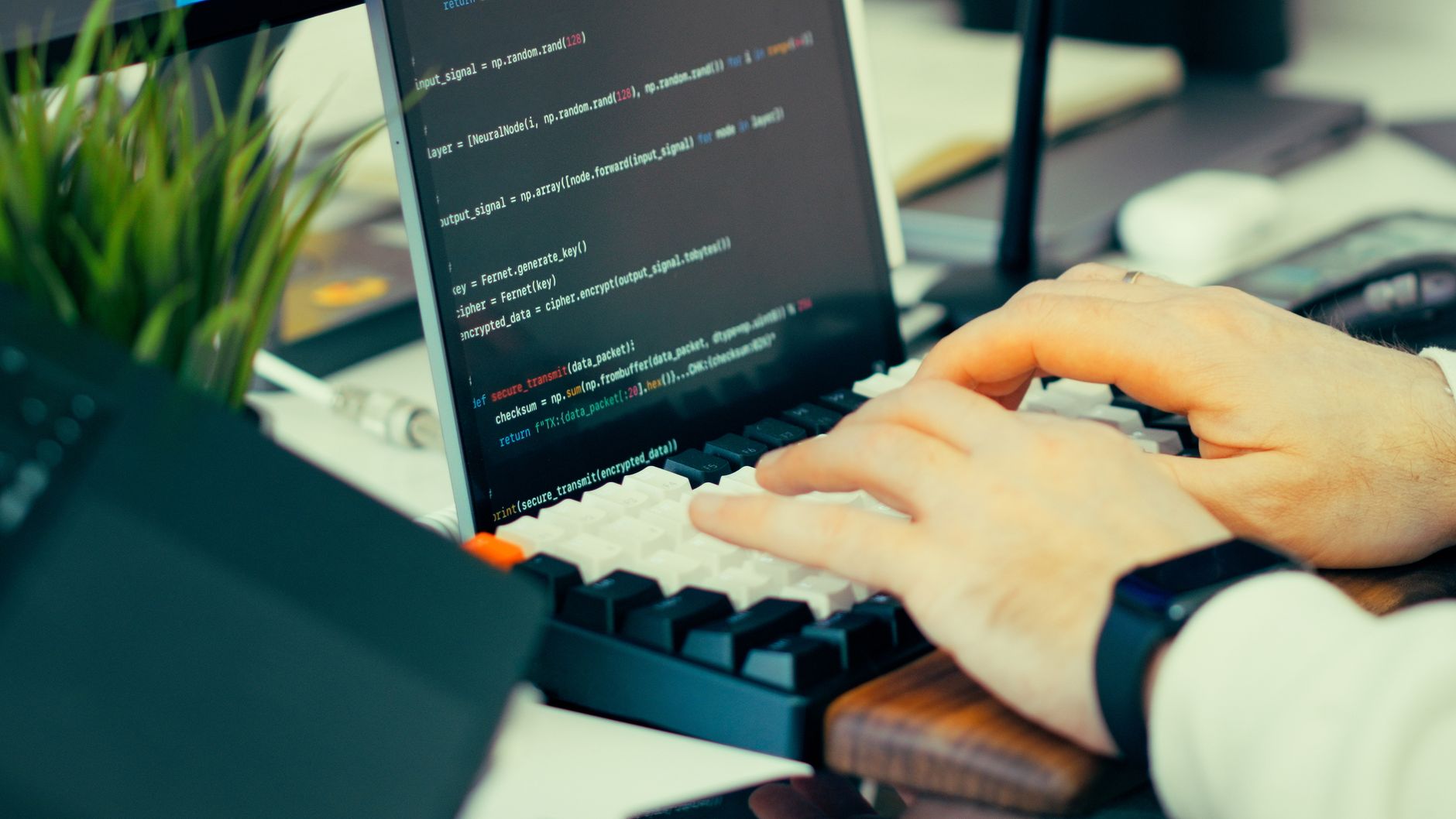
In an increasingly interconnected world, where our lives are intricately woven into the fabric of the internet, the idea of digital autonomy often feels like a distant dream. From smart thermostats to voice assistants, our homes are brimming with devices constantly communicating with cloud servers, collecting data, and often, becoming obsolete faster than we can say 'firmware update.' This relentless push towards pervasive connectivity raises crucial questions about data privacy, digital resilience, and the sustainability of our tech consumption habits.
It's within this context that truly innovative, 'cyberpunk' projects emerge, challenging the status quo and offering alternative visions for our digital future. One such project, spearheaded by security expert Richard Osgood, recently captivated the tech community: transforming a common smart bulb into an entirely self-contained, offline digital library. This isn't just a clever hack; it's a profound statement about reclaiming control over our information and creating resilient, privacy-first digital ecosystems. At biMoola.net, we believe this ingenuity holds significant lessons for AI & Productivity, Health Technologies, and Sustainable Living. Join us as we delve into the implications of Osgood's project and explore how we can all foster greater digital autonomy.
The Pervasive Connectivity Paradox: Smart Tech vs. Digital Sovereignty
The global smart home market is projected to reach an astounding $200 billion by 2028, with millions of devices entering our homes annually. From controlling lighting and climate to monitoring security and even brewing coffee, these devices promise convenience and efficiency. Yet, beneath the glossy veneer of 'smart,' lies a complex web of data collection, potential vulnerabilities, and an increasing reliance on external infrastructure.
Every interaction with a cloud-connected smart device typically involves data transmission to a manufacturer's server. This data, often anonymized but sometimes personal, fuels AI algorithms that personalize our experiences, but also raises alarms for privacy advocates. The Electronic Frontier Foundation (EFF) consistently highlights the privacy implications of smart devices, urging consumers to understand what data is being collected and how it's being used. Furthermore, the reliance on cloud infrastructure means these devices can be rendered useless if internet access is lost, a server goes down, or a company decides to cease support for an older product. This creates a fragility that undermines true digital autonomy.
Richard Osgood's Ingenious Offline Library Project
Richard Osgood's project stands as a beacon of ingenuity against this backdrop of pervasive, often vulnerable, connectivity. His creation repurposes a commodity smart bulb, typically designed for simple lighting control via an app, into something far more powerful and independent: an offline, self-contained digital library.
The Concept: A Bulb's New Purpose
At its core, Osgood's innovation is about transforming a 'dumb' smart device into a 'wise' one. Instead of relying on external servers, the smart bulb itself hosts an entire collection of digital information. Imagine a light source that, when connected to your device via its own local Wi-Fi signal, offers access to thousands of books, articles, or educational resources without ever touching the internet.
This concept is reminiscent of early 'sneakernet' ideas or local area networks, but miniaturized and embedded within a common household object. It's a testament to the power of open-source thinking and the inherent hackability of modern electronics. By giving a device a completely new, offline-first function, Osgood demonstrates a pathway to digital self-sufficiency.
Technical Underpinnings (High-Level)
While the full technical blueprint is complex, the underlying principles are elegant. Many smart bulbs are powered by low-cost, low-power microcontrollers like the ESP32 or ESP8266, which also come equipped with Wi-Fi capabilities. Osgood exploited these latent capabilities:
- Reprogramming the Microcontroller: The existing firmware, designed for cloud connectivity, was replaced with custom firmware. This new software transforms the bulb's Wi-Fi module from a client connecting to your home router into a self-contained access point.
- Onboard Storage: A critical component is the addition of a small, discreet storage medium, likely a microSD card, directly integrated into the bulb's housing. This card is pre-loaded with the digital library content.
- Local Web Server: The custom firmware also hosts a tiny web server. When a device (like a smartphone or laptop) connects to the bulb's Wi-Fi network, it can access a web interface hosted directly on the bulb, allowing users to browse and download content.
The genius lies in the 'internet-free' aspect. The bulb acts as its own miniature network and content server, completely isolated from the broader internet. This ensures unparalleled privacy and resilience.
Beyond the Bulb: The Broader Implications of Digital Autonomy
Osgood's project, while specific, opens up a broader discussion about digital autonomy – the ability of individuals and communities to control their digital experiences, data, and access to information without undue external reliance. For biMoola.net, this resonates deeply with themes of AI, productivity, and sustainable living.
Resilience in a Connected World
Our increasing reliance on an always-on internet infrastructure creates points of vulnerability. Natural disasters, cyberattacks, or even localized power outages can disrupt access to essential information. A 2023 report by the World Economic Forum on digital trust and resilience highlighted the urgent need for robust, decentralized information systems.
Offline digital libraries, whether in a smart bulb or a larger dedicated device, offer a powerful layer of resilience. Imagine a community data hub that stores emergency protocols, medical guides, educational materials, or vital local information, accessible even when the internet is down. For productivity, this means uninterrupted access to critical resources, fostering continuous learning and work regardless of external connectivity issues.
Battling Digital Divide and Data Poverty
While often discussed in terms of internet access, the digital divide also encompasses 'data poverty' – the lack of affordable, relevant digital content. In many parts of the world, internet access is either prohibitively expensive, unreliable, or non-existent. Devices like Osgood's smart bulb could provide localized, curated information hubs that circumvent these barriers.
Educational institutions in remote areas, for instance, could deploy such bulbs containing textbooks, historical documents, or scientific papers, making invaluable resources accessible to students without requiring costly internet subscriptions. This approach aligns with sustainable development goals by empowering communities through localized information access.
Sustainable Tech: Repurposing & E-Waste Reduction
The project also offers a compelling vision for sustainable technology. The rapid obsolescence of smart devices contributes significantly to the global e-waste crisis. A 2022 UN report estimated that 53.6 million metric tons of e-waste are generated annually, with only 17.4% formally recycled. Many smart devices, still perfectly functional from a hardware perspective, are discarded because their cloud services are discontinued or their original software is no longer supported.
Global E-Waste Snapshot & Smart Home Growth
- Annual E-Waste Generation: Approximately 53.6 million metric tons (UN, 2022)
- Recycling Rate: Only ~17.4% of e-waste formally recycled (UN, 2022)
- Smart Home Market Size: Projected to reach $200 billion by 2028 (Statista, 2023)
- Average Smart Devices per Home (US, 2024): ~15-20 devices (IoT Analytics, 2024)
- Life Expectancy of Smart Devices: Often 2-5 years before planned obsolescence or lack of support.
Repurposing projects like Osgood's breathe new life into 'obsolete' hardware. Instead of contributing to landfill, a smart bulb that might otherwise be discarded becomes a valuable tool. This exemplifies the principles of a circular economy, extending the lifespan of electronics and reducing the demand for new resource extraction. It's a practical application of 'reduce, reuse, recycle' within the digital realm, showcasing how clever engineering can transform waste into functional assets for sustainable living.
Challenges and Ethical Considerations
While the concept is exciting, implementing widespread offline digital libraries presents its own set of challenges and ethical questions:
- Technical Barrier: Reprogramming smart devices requires significant technical expertise. While open-source communities are thriving, this remains a niche skill.
- Content Curation: Who decides what content goes into these libraries? Ensuring accuracy, relevance, and diversity of information is crucial, especially in an offline context where content cannot be easily updated.
- Scalability and Maintenance: Deploying and maintaining many such devices, especially in public or community settings, would require robust infrastructure and support systems.
- Security (Even Offline): While offline, a device still has a Wi-Fi access point. Proper security measures are needed to prevent unauthorized access or content injection.
- Intellectual Property: Distributing copyrighted material, even offline, raises legal questions. Such projects would need to rely heavily on public domain content, open-source educational resources, or licensed material.
These challenges are not insurmountable but require careful consideration and collaborative efforts from technologists, educators, and policymakers.
Key Takeaways
- Digital Autonomy is Possible: Richard Osgood's smart bulb project demonstrates how commodity hardware can be repurposed for privacy-focused, internet-independent information access.
- Resilience through Decentralization: Offline digital libraries enhance digital resilience, providing access to vital information even during internet outages or censorship.
- Sustainable Tech Practices: Repurposing existing smart devices combats e-waste and promotes a circular economy model for electronics.
- Bridging the Digital Divide: Localized, offline information hubs can empower communities with limited internet access, fostering education and digital inclusion.
- Rethink Your Smart Home: The project encourages consumers and developers to consider the full lifecycle and potential for repurposing smart devices, prioritizing privacy and longevity.
Expert Analysis: biMoola.net's Take
At biMoola.net, we view Richard Osgood's smart bulb library as more than just a clever proof-of-concept; it's a powerful ideological statement. In an era where AI is increasingly moving towards the 'edge' – processing data locally on devices rather than solely in the cloud – this project exemplifies a similar push for localized data and functionality. It underscores the potential for AI-driven intelligence to exist outside the traditional internet-connected paradigm, fostering a future where personal data remains truly personal.
From a productivity standpoint, the ability to access vast amounts of curated information instantly and reliably, without the distractions or vulnerabilities of the wider internet, is invaluable. Imagine an AI tutor running locally on such a device, providing personalized learning without data leakage. For health technologies, the implications are equally profound: securely storing and sharing medical information within a local, private network, or providing remote communities with offline access to health guides and telemedicine resources.
Perhaps most importantly, this project offers a tangible example of sustainable living in the digital age. It challenges the 'upgrade-or-discard' mentality perpetuated by many tech companies. By seeing existing hardware not as endpoints but as platforms for new possibilities, we can drastically reduce our ecological footprint. It's a call to action for consumers to demand more open, hackable, and repurposable technology, and for manufacturers to design with longevity and circularity in mind. Osgood's smart bulb isn't just illuminating a room; it's illuminating a path towards a more private, resilient, and sustainable digital future.
Frequently Asked Questions
Q: How does an offline digital library provide more privacy than a regular online one?
A: An offline digital library, like the smart bulb project, operates entirely disconnected from the internet. This means there's no data being transmitted to external servers, no IP addresses being tracked, and no user activity being logged by third parties. Your access to the content is local and private, reducing the risk of surveillance, data breaches, or unwanted data collection that is inherent in most internet-connected services.
Q: What kind of content can be stored in such a compact offline library?
A: Despite its small size, modern storage solutions like microSD cards can hold vast amounts of data. A 1TB microSD card, for instance, can store hundreds of thousands of e-books, thousands of academic papers, a significant collection of audio files, or even compressed video lectures. The content typically focuses on text-based material due to its smaller file size, making it ideal for educational resources, classic literature, instructional manuals, or community information archives.
Q: Is it difficult for an average person to convert their smart devices like this?
A: Currently, converting smart devices for such advanced, custom purposes typically requires significant technical expertise in electronics, embedded systems programming, and networking. It often involves soldering, flashing custom firmware, and understanding low-level hardware interactions. While the open-source community provides excellent resources, it's not a beginner-friendly project. However, the underlying principles could inspire future commercial products or open-source kits that simplify the process for broader adoption.
Q: How does this project contribute to sustainable living and reducing e-waste?
A: This project directly contributes to sustainable living by promoting the repurposing and extended use of existing electronics. Instead of discarding a smart bulb when its original purpose is no longer desired or supported by the manufacturer, it's given a new, valuable function. This reduces the demand for new products, conserves raw materials, and decreases the amount of electronic waste (e-waste) ending up in landfills. It embodies the circular economy principle of 'reuse' rather than 'replace.'
Sources & Further Reading
- Statista - Smart Home Market Revenue Worldwide
- Electronic Frontier Foundation (EFF) - Don't Forget Your Data Privacy in a Smart Home
- World Economic Forum (WEF) - Digital Trust and Resilience Initiatives
- UN E-waste Monitor (various years) - For e-waste statistics.
- IoT Analytics - Smart Home & IoT Device Statistics (various reports).
Disclaimer: For informational purposes only. Consult a healthcare professional.
Comments (0)
To comment, please login or register.
No comments yet. Be the first to comment!