AI Tools

Pioneers in AI Visual Generation: A Guide to Midjourney, DALL-E 3, and Ideogram 2026

Pioneers in AI Visual Generation: A Guide to Midjourney, DALL-E 3, and Ideogram 2026

Redefine Your Creativity: The Rise of AI Visual Generation in 2026

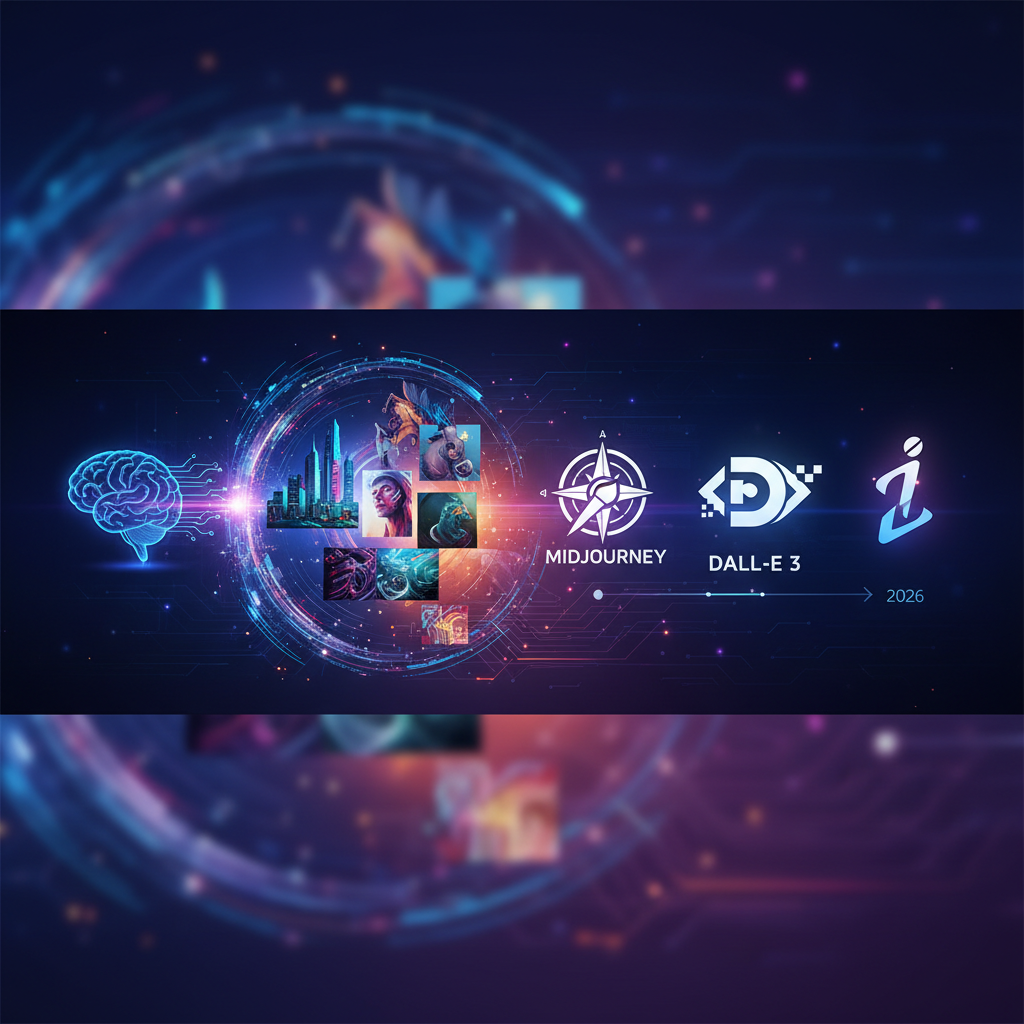
Artificial intelligence continues to radically change the world of visual production. By 2026, we are able to generate visuals of complexity and quality unimaginable just a few years ago, all within seconds. We are no longer confined to hours-long design processes or costly stock photo libraries to transform an idea into a concrete visual. Leading tools such as Midjourney, DALL-E 3, and Ideogram AI are pushing the boundaries of our creativity.

In this detailed guide, we will compare these three colossal tools, explore each one's unique strengths and applications, learn the most effective prompt writing techniques, and discuss the opportunities and legal framework concerning the commercial use of AI visuals. Get ready, because 2026 marks the beginning of a new era in AI-powered visual production!

Why is AI Visual Generation So Important?

In the digital age, content is the key to competition. Visual content, in particular, is the most powerful way to stand out in this competitive landscape. However, producing high-quality and original visuals through traditional methods is both time-consuming and costly. This is where AI visual tools come into play. As of 2026, these tools have evolved beyond mere 'toys' to become indispensable assistants for professional designers, marketers, content creators, and entrepreneurs alike.

  • Speed and Efficiency: You can generate dozens of different visual variations in just a few seconds.
  • Cost Savings: Reduces the need for stock image subscriptions or outsourced designers.
  • Infinite Creativity: You can visualize anything you can imagine and easily experiment with different styles and concepts.
  • Accessibility: Even those without design knowledge can produce professional-quality visuals.

Key AI Visual Tools: A Closer Look at Midjourney, DALL-E 3, and Ideogram

While there are many AI visual generators on the market, let's focus on the three most popular and effective tools of 2026:

Midjourney: The Pioneer of Artistic Expressions

Midjourney is unrivaled, especially in generating artistically and aesthetically stunning visuals. It often produces more 'dreamlike' and 'cinematic' outputs. Although its Discord-based interface might require an adaptation period for some users initially, it offers deep control and a wide variety of styles. Its 2026 versions have made significant improvements in consistency and character referencing. If your project requires an artistic touch, a unique atmosphere, or a surrealist aesthetic, Midjourney should be your first choice.

DALL-E 3: Master of Detail and Integration

Developed by OpenAI, DALL-E 3 stands out with its text comprehension capabilities and mastery of detail. It can interpret complex and specific prompts wonderfully and is much more successful than other tools in writing text within visuals. Its direct accessibility through ChatGPT Plus or Microsoft Copilot allows you to seamlessly integrate it into your content production workflow. If you need clear, intelligible visuals with text for marketing materials, product prototypes, or blog posts, DALL-E 3 is ideal for you.

Ideogram AI: For Your Text-Centric Visual Needs

Ideogram AI specializes particularly in logo design, typography, and accurate text embedded within visuals. Unlike the errors other tools make with text, Ideogram flawlessly visualizes the words and sentences you specify. For text-heavy projects such as brand identity creation, social media posters, or header images, Ideogram saves you time and effort. It is one of the most cost-effective and accessible options among alternatives for producing quality and readable visuals with text.

The Art of Prompt Writing in 2026: The Secret to Getting the Best Visuals from AI

Getting the best results from AI visual generation depends on knowing the right prompt writing techniques. In 2026, prompt engineering has become a specialization in itself. Here are some invaluable tips:

Fundamental Principles of Prompt Creation:

  • Be Detailed: The more specific you are, the better the result. Describe objects, colors, lighting, composition, emotion... everything.
  • Specify the Style: Define the desired artistic style using keywords like 'photorealistic', 'oil painting', 'anime', 'cyberpunk', 'minimalist'.
  • Provide References: You can ask it to mimic the style of specific artists, photographers, or film directors by using their names.
  • Use Negative Prompts: Specify unwanted elements with phrases like '--no [undesired element]' or 'vile, ugly, deformed'.
  • Aspect Ratio: Adjust the visual's aspect ratio, especially in Midjourney, with commands like '--ar 16:9'.

Advanced Prompt Techniques and Practical Examples:

When writing prompts, think like a storyteller. Describe every detail, every emotion of the visual. For example:

Wrong Prompt: A city photo.

Correct Prompt (for Midjourney): An futuristic cyberpunk city at night, neon lights reflecting on wet streets, flying cars, rainy atmosphere, depth of field, cinematic lighting, 8K, highly detailed, by Blade Runner 2049 art director, --ar 16:9

Correct Prompt (for DALL-E 3): A sleek, minimalist logo for a tech startup called 'Synergy Solutions'. The logo should feature the words 'Synergy Solutions' in a modern sans-serif font, with a subtle abstract icon representing collaboration and growth. Use a color palette of deep blue and silver.

Correct Prompt (for Ideogram AI): A vibrant social media post for a coffee shop, with a steaming cup of latte art in the foreground. Text overlay: 'Your Daily Dose of Happiness!' in a playful, handwritten font. Green and brown color scheme.

Remember that different tools react differently to prompts. DALL-E 3 understands natural language processing better, while Midjourney is more sensitive to aesthetic terms. Ideogram, on the other hand, will never disappoint you with text placement.

Commercial Success with AI Visuals: Opportunities and Legal Framework

In 2026, AI visual generation offers tremendous commercial opportunities for businesses and individuals. However, the legal and ethical framework related to the use of this technology is also rapidly evolving.

Commercial Use Cases:

  • Marketing and Advertising: Campaign visuals, banners, social media posts.
  • Website and Blog Content: Header images, illustrations, in-article visuals.
  • Brand Identity: Logo designs, brand guide visuals, typography experiments.
  • Product Development: Concept designs, prototypes, packaging visuals.
  • E-commerce: Product images, promotional graphics.
  • Education and Publishing: Book illustrations, presentation graphics.

Legal and Ethical Dimensions:

The commercial use of AI-generated visuals brings new questions to the fore regarding copyright and intellectual property. Most countries and platforms tend to attribute the copyright of AI-generated works directly to a human. This means that as the person who wrote the prompt that created the visual, you generally become the copyright holder.

  • Originality and Copyright: Ensure that the visual is completely original. Do not mimic another artist's work.
  • Licensing: Always review the commercial terms of use for the AI tool you are using. Most tools permit commercial use of visuals generated with a subscription.
  • Transparency: Especially for news or critical content, stating that AI created the visuals is an ethical approach.
  • Deepfake: Avoid generating misleading or malicious visuals.

Keep in mind that legal regulations are evolving rapidly. Therefore, it is wise to check current regulations and platform policies before using AI visuals in your projects.

Looking to the Future: AI Visual Generation in 2026 and Beyond

The year 2026 marks the entry into the golden age of AI visual generation. Here are some trends awaiting us in the coming period:

  • Real-time Generation: Visuals will be generated and modified instantly, in milliseconds.
  • 3D and Video Integration: Beyond static visuals, generating dynamic 3D models and videos with AI will become standard.
  • Hyper-Personalization: Instant, personalized visual content generation based on consumer preferences.
  • Ethical AI and Transparency: More robust tools and standards that make the origin and production process of AI visuals transparent.
  • AI Assistant Integration: Deeper integration of visual generation tools into our daily workflows, such as automatic visual suggestions when creating a presentation.

Conclusion: Elevate Your Creativity with AI

AI visual generation is not just a technological innovation, but also a powerful tool that transforms our forms of creative expression. With Midjourney's artistic depth, DALL-E 3's integration power, and Ideogram AI's text-centric capabilities, we know no bounds in visual production in 2026. Whether you are a marketer, a designer, or a content creator, these tools will save you time, reduce costs, and offer endless possibilities to turn your imagination into reality.

Remember, AI is just a tool; the real creative power is in your hands. Do not hesitate to try these tools, experiment with different prompts, and discover your own style. The future is shaped by AI-powered creativity!

Comments (0)

No comments yet. Be the first to comment!

biMoola Assistant
Hello! I am the biMoola Assistant. I can answer your questions about AI, sustainable living, and health technologies.