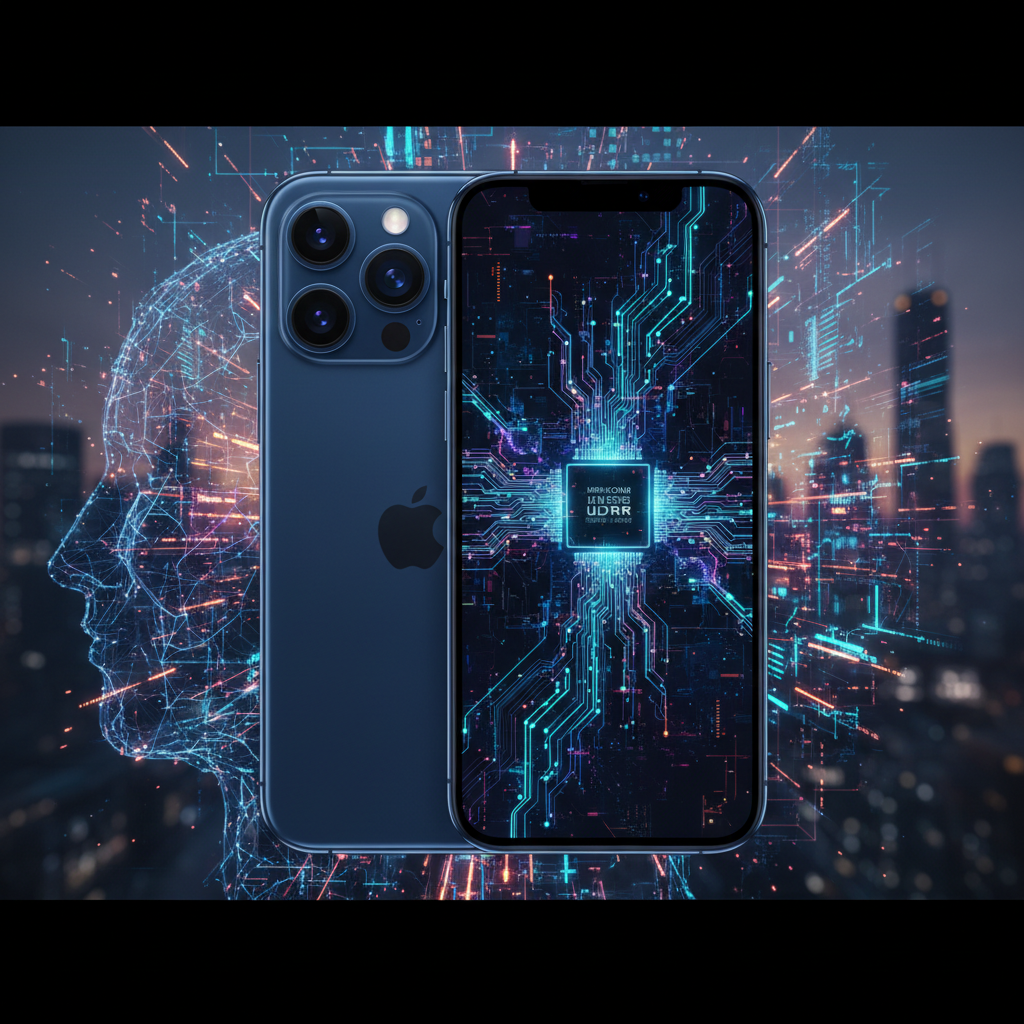
In the relentless march of technological innovation, few developments spark as much fervent discussion and tangible anticipation as the evolution of our primary computational companions: smartphones. We've largely settled into a familiar slate form factor, but whispers from the cutting edge of hardware design, exemplified by recent intriguing leaks surrounding devices like a potential 'iPhone Ultra,' paint a picture of a dramatic shift. This isn't merely about a bigger screen or a faster chip; it's about a foundational redesign of how we interact with information, driven by the powerful confluence of adaptable hardware and sophisticated Artificial Intelligence.
At biMoola.net, we've long tracked the convergence of AI and productivity, understanding that true breakthroughs often emerge from the synergy of seemingly disparate fields. Today, we stand on the precipice of a mobile revolution where foldable devices, reportedly boasting expansive canvases like a 7.7-inch screen and reimagined biometric security such as advanced Touch ID, are poised to become dynamic, AI-powered workstations. This article will delve into how these next-generation foldables, particularly those pushing the boundaries like the rumored 'Ultra' devices, are not just aesthetic novelties but essential tools for a new era of productivity, fueled by on-device AI and innovative form factors. We will explore the concrete benefits, the underlying technological shifts, and the practical implications for professionals, creatives, and everyday users alike.
The Form Factor Revolution: A Canvas for Productivity
For years, mobile productivity has been a story of compromise: either you carry a pocketable phone with limited screen real estate or a larger tablet that sacrifices portability. The advent of foldable technology fundamentally rewrites this narrative. Imagine a device that fits comfortably in your pocket, yet unfurls to reveal a canvas previously reserved for small tablets. This isn't merely about size; it's about versatile utility.
Beyond the Single Pane: The 7.7-Inch Advantage
The rumored 7.7-inch display for a device like the 'iPhone Ultra' is a game-changer for mobile productivity. Traditional smartphones, often capped around 6.7 inches, inherently limit multi-tasking capabilities. While split-screen modes exist, they often feel cramped. A 7.7-inch foldable, however, offers significantly more screen real estate, approaching the size of a small iPad mini. This larger canvas transforms the mobile experience from consumption-focused to creation-oriented. Consider a sales professional simultaneously viewing a client presentation, their CRM, and real-time market data on a single, expansive screen. Or a content creator editing video timelines with greater precision, without constantly zooming and panning. For biMoola.net's audience, who often juggle complex tasks on the go, this expanded digital workspace is invaluable for data analysis, detailed document review, and even light coding or design work.
Ergonomics Meets Efficiency: New Interaction Paradigms
The beauty of the foldable form factor extends beyond mere dimensions. Its ability to bend and hold various positions unlocks new ergonomic and efficient interaction paradigms. A 'tent mode' could be perfect for video conferencing or media consumption without a stand. A 'laptop mode,' where one half acts as a screen and the other as a virtual keyboard or trackpad, transforms the device into a mini-workstation, offering a more comfortable typing experience than a flat screen. This versatility means less reliance on external accessories, reducing digital friction and enhancing workflow fluidity. For instance, designers could use a half-folded device as a digital easel, or students could use it for distraction-free reading with one half and note-taking on the other. This adaptable design fundamentally changes the physical interaction with digital tools, leading to more intuitive and less fatiguing use over extended periods.
On-Device AI: Your Personalized Productivity Co-Pilot
The true power of these next-generation foldables isn't just in their adaptable screens; it's in the intelligent core that powers them. While cloud-based AI has dominated headlines, the future of truly personalized and efficient productivity lies increasingly in on-device AI.
The Era of Edge Computing: Intelligence Where You Need It
On-device AI, or edge computing, brings computational power directly to your hand. Instead of sending all your data to distant servers for processing, which introduces latency and privacy concerns, tasks are handled by the device's specialized silicon – think Apple's custom A-series chips or Qualcomm's dedicated AI engines. This ensures instantaneous responses for critical AI functions like real-time language translation, advanced image processing, and proactive task management. As a 2024 analysis by IDC highlighted, smartphones with dedicated AI accelerators are expected to comprise over 80% of the premium segment by 2026, signaling a rapid shift towards these sophisticated on-device capabilities. For productivity, this means your device can learn your habits, anticipate your needs, and offer hyper-personalized assistance without a constant internet connection, significantly boosting efficiency in remote or low-connectivity environments.
Intelligent Task Management and Contextual Awareness
Imagine an AI that doesn't just passively listen for commands but proactively helps you manage your day. This is the promise of advanced on-device AI. It can learn your communication patterns, intelligently filter notifications based on urgency and context, and even draft responses to emails based on your style. For example, if you're in a meeting (detected by your calendar and location), your device could automatically silence non-urgent notifications and summarize incoming messages for later review. A 2023 study published in MIT Technology Review discussed how breakthroughs in federated learning enable AI models to improve directly on devices without central data collection, enhancing both privacy and personalization. This contextual awareness extends to document creation, where the AI could suggest relevant data points or formatting based on the project you're working on, dramatically reducing the time spent on mundane tasks and allowing you to focus on high-value creative work.
Seamless Integration: The Ecosystem Advantage
A truly productive device doesn't operate in a vacuum. Its value is amplified by its ability to seamlessly integrate into a broader digital ecosystem, connecting various tools and platforms. Foldables, with their enhanced capabilities, are uniquely positioned to serve as central hubs in this interconnected world.
Bridging Device Gaps: Your Digital Command Center
A powerful foldable like the 'iPhone Ultra' could become the nexus of your personal and professional digital life, effortlessly bridging the gaps between your wearables, smart home devices, cloud services, and even your desktop computer. Imagine initiating a video call on your folded phone, then seamlessly transferring it to the larger, unfolded screen for better viewing, and then to your desktop monitor as you arrive at your office. This fluid handoff, orchestrated by intelligent on-device AI, eliminates the friction of switching devices, making your workflow continuous and uninterrupted. Furthermore, enhanced connectivity standards like Wi-Fi 7 and advanced Bluetooth will ensure that data syncs instantly, whether it's health data from a smartwatch influencing your daily schedule or smart home controls integrated into your productivity dashboard.
Beyond Biometrics: The Evolution of Secure Access
The return or enhancement of features like Touch ID on a device as advanced as the rumored 'iPhone Ultra' isn't just about convenience; it's about rethinking secure access for a high-stakes mobile workstation. While Face ID is excellent, Touch ID offers different ergonomic advantages on a foldable, potentially integrated into the power button or under the flexible display. This re-imagined biometric authentication can go beyond simply unlocking the device. It could enable secure, context-aware access to sensitive applications, authenticate payments with a simple touch regardless of screen orientation, and even trigger specific privacy modes based on who is using the device or where it is being used. For example, a quick fingerprint could grant access to corporate VPNs, while a different print could activate a guest profile. This granular control over security, driven by faster, more reliable biometrics, is crucial for professionals handling confidential information on the go, providing both efficiency and peace of mind.
Real-World Impact: Transforming Professional Landscapes
The theoretical capabilities of next-gen foldables and integrated AI translate directly into tangible benefits across diverse professional landscapes. These devices are poised to be more than just communication tools; they are platforms for creation, analysis, and collaboration.
Creative Professionals Reimagined
For graphic designers, digital artists, and video editors, the expanded, high-resolution screen of a foldable, especially when paired with a stylus, opens up unprecedented possibilities. Complex software interfaces become more manageable, allowing for precise edits on the go. Imagine sketching out concepts on the 7.7-inch display during a commute, or making real-time color corrections to a video timeline without being tethered to a desktop. The on-device AI could assist with object recognition, intelligent cropping, and even generating preliminary drafts based on verbal prompts, significantly accelerating creative workflows that previously required dedicated workstations.
Business Agility and Data Visualization
In the fast-paced business world, access to real-time data and the ability to act upon it swiftly is paramount. Foldables offer a superior platform for mobile dashboards, complex spreadsheet interaction, and dynamic data visualization. A marketing analyst could present interactive data models directly from their pocket-sized device, unfurling it to engage their audience. For financial professionals, secure access to trading platforms and detailed analytical tools is enhanced by the larger screen and robust on-device security. AI-driven insights could automatically highlight trends or anomalies in large datasets, allowing for quicker, more informed decision-making even when away from the office. A 2023 report from Pew Research Center on digital habits underscored the increasing demand for seamless digital experiences across devices, a demand foldables are uniquely positioned to meet.
The Future of Learning and Research
The academic and research sectors also stand to benefit immensely. Interactive textbooks, AI-powered research assistants that summarize lengthy articles or suggest relevant papers, and dynamic note-taking applications become more powerful on a larger, adaptable screen. Students could split their screen between a lecture recording and a note-taking app, or researchers could juxtapose multiple academic papers for comparative analysis. The ability to quickly annotate, highlight, and cross-reference information, augmented by an AI that understands context, fundamentally transforms study and research methodologies, making them more efficient and engaging.
Navigating the New Frontier: Challenges and Considerations
While the future of AI-powered foldables for productivity is bright, it's crucial to address the practical challenges and considerations that come with such transformative technology.
Durability and Longevity: The Flexible Frontier
The primary concern for many consumers eyeing foldable devices has been durability. Early generations faced issues with screen creasing and hinge longevity. However, manufacturers are rapidly iterating, with improved hinge designs, ultra-thin glass, and advanced material science. Future devices, like the rumored 'iPhone Ultra,' will likely incorporate these advancements to offer robust, reliable hardware that can withstand daily use. As the technology matures, expect greater resilience, potentially even exceeding the durability of traditional glass-slab phones in certain aspects due to their flexible nature.
Digital Well-being and Screen Time: The Double-Edged Sword
The enhanced capabilities and seamless integration of these devices also bring a heightened need for digital well-being management. A device that can do more, more efficiently, might tempt users into extended screen time. It's imperative that both users and developers prioritize features that promote healthy digital habits, such as intelligent notification management, screen time limits, and integration with mindfulness apps. The goal of AI is to free up human capacity, not to create endless digital dependency.
Data Privacy in an AI-First World: The On-Device Advantage
As AI becomes more integrated into every aspect of our digital lives, data privacy concerns naturally escalate. This is where on-device AI truly shines. By processing sensitive personal and professional data locally on the device, rather than sending it to cloud servers, the risk of data breaches and unauthorized access is significantly reduced. This architectural choice is a cornerstone of trust for productivity tools. Future foldables will likely boast enhanced secure enclaves and advanced encryption for AI processing, ensuring that your personalized productivity assistant remains just that: personal and private.
Sources & Further Reading
Q: Will foldable phones truly replace laptops for productivity?
A: While next-gen foldables with their larger screens and powerful on-device AI significantly enhance mobile productivity, completely replacing a laptop depends heavily on the user's specific needs. For light to moderate tasks like document editing, presentations, communication, and content consumption, they are increasingly capable substitutes. However, for highly intensive tasks such as professional video rendering, complex software development, or extensive data analysis requiring larger screens and dedicated peripherals, laptops or desktop workstations will likely retain their edge. Foldables are best seen as highly capable complements, offering unparalleled flexibility and portability for many professional workflows.
Q: How does on-device AI differ from cloud AI, and why is it better for productivity?
A: On-device AI (also known as edge AI) processes data directly on your smartphone, utilizing its powerful, specialized chips. Cloud AI, conversely, sends data to remote servers for processing. The key advantages of on-device AI for productivity include significantly reduced latency, meaning faster responses and real-time assistance (e.g., instant language translation or personalized suggestions). More crucially, on-device AI offers enhanced privacy and security, as sensitive data never leaves your device. This is vital for professional use where confidentiality is paramount, enabling truly personalized and context-aware assistance without compromising your data.
Q: What are the main privacy concerns with advanced mobile AI, and how do foldables address them?
A: The main privacy concerns with advanced mobile AI revolve around how personal data is collected, stored, and used to train AI models and provide personalized services. Cloud-based AI can raise questions about data sovereignty and the potential for breaches. Foldables, particularly those emphasizing on-device AI, mitigate these concerns by processing much of your sensitive data locally. This approach ensures that your usage patterns, personal preferences, and potentially confidential professional information remain on your device, under your control. Manufacturers are also increasingly implementing secure enclaves and robust encryption protocols directly into the hardware to protect AI-driven insights, making these devices inherently more private for productivity tasks.
Q: What should I look for in a productivity-focused foldable device?
A: When evaluating a productivity-focused foldable, prioritize several key features. First, look for a large, high-resolution unfolded display (like the rumored 7.7-inch) that offers ample screen real estate for multitasking. Second, check for a powerful, modern processor with dedicated AI acceleration to ensure smooth on-device AI performance and responsiveness. Third, assess the battery life, as larger screens and AI tasks can be power-intensive. Fourth, consider stylus support, which can significantly enhance note-taking, sketching, and precise interaction. Finally, examine the ecosystem integration – how well it works with your other devices and cloud services – and the strength of its biometric security features, such as a re-imagined Touch ID, for secure and efficient access.
Key Takeaways
- Expansive & Adaptable Screens: Next-gen foldables with larger displays (e.g., 7.7 inches) transcend traditional smartphone limitations, offering a versatile canvas for enhanced multitasking and content creation in various modes.
- Powerful On-Device AI: The integration of advanced, localized AI processing chips empowers these devices to act as personalized, context-aware co-pilots, offering real-time assistance and predictive insights without relying solely on cloud services.
- Seamless Ecosystem Integration: Foldables are becoming central hubs in our digital lives, effortlessly connecting with other devices and services to create a fluid, uninterrupted workflow across personal and professional domains.
- Enhanced Security & Privacy: On-device AI processing and sophisticated biometrics (like re-imagined Touch ID) bolster data privacy and secure access, crucial for professionals handling sensitive information.
- Transformative Professional Impact: From creative design and complex business analytics to advanced learning and research, these devices are set to fundamentally redefine mobile productivity, enabling more efficient and versatile work on the go.
Disclaimer: For informational purposes only. Consult a healthcare professional.
Expert Analysis: biMoola.net's Take
At biMoola.net, we've observed countless cycles of technological hype, but the current trajectory of foldable devices, particularly those integrating advanced on-device AI, feels fundamentally different. The buzz around a device like a potential 'iPhone Ultra' with its specific rumored features – a 7.7-inch screen, enhanced Touch ID – isn't just about a new gadget; it's a leading indicator of a profound shift in personal computing. For too long, the smartphone has been a powerful, yet spatially constrained, tool. Foldables break this constraint, and when married with the contextual intelligence of on-device AI, they create something truly transformative.
Our analysis suggests that the real revolution isn't merely the ability to fold a screen, but the *purpose* it serves in an increasingly complex digital landscape. This form factor, combined with AI that anticipates needs and intelligently manages information locally, will empower users to achieve unprecedented levels of mobile productivity. We foresee a future where the line between a phone, a tablet, and even a light laptop blurs into a single, adaptable entity. The privacy benefits of on-device AI are not to be understated; in an era of heightened data sensitivity, this local processing capability builds a crucial foundation of trust that cloud-only solutions often struggle to match.
However, the success of this paradigm shift hinges on several factors. Software developers must embrace these new form factors and AI capabilities, designing applications that truly leverage the expanded screen real estate and intelligent assistance. Furthermore, while durability concerns are diminishing, manufacturers must continue to innovate in materials science to ensure these premium devices offer long-term reliability. Ultimately, the 'iPhone Ultra' and its counterparts represent more than just cutting-edge hardware; they represent a bold vision for how technology can genuinely augment human capabilities, freeing us from digital friction and enabling a more flexible, intelligent approach to work and life. The era of the truly productive pocket computer is not just coming; it's unfolding before our eyes.
Statistics & Data Comparison
The market for foldable devices, while still nascent compared to traditional smartphones, is experiencing explosive growth, underpinned by rapidly advancing technology. This growth trajectory, combined with the increasing integration of powerful AI capabilities, paints a clear picture of their future impact on productivity.
A 2023 report by Counterpoint Research projected foldable smartphone shipments to reach 101.5 million units by 2027, growing at a Compound Annual Growth Rate (CAGR) of
Comments (0)
To comment, please login or register.
No comments yet. Be the first to comment!