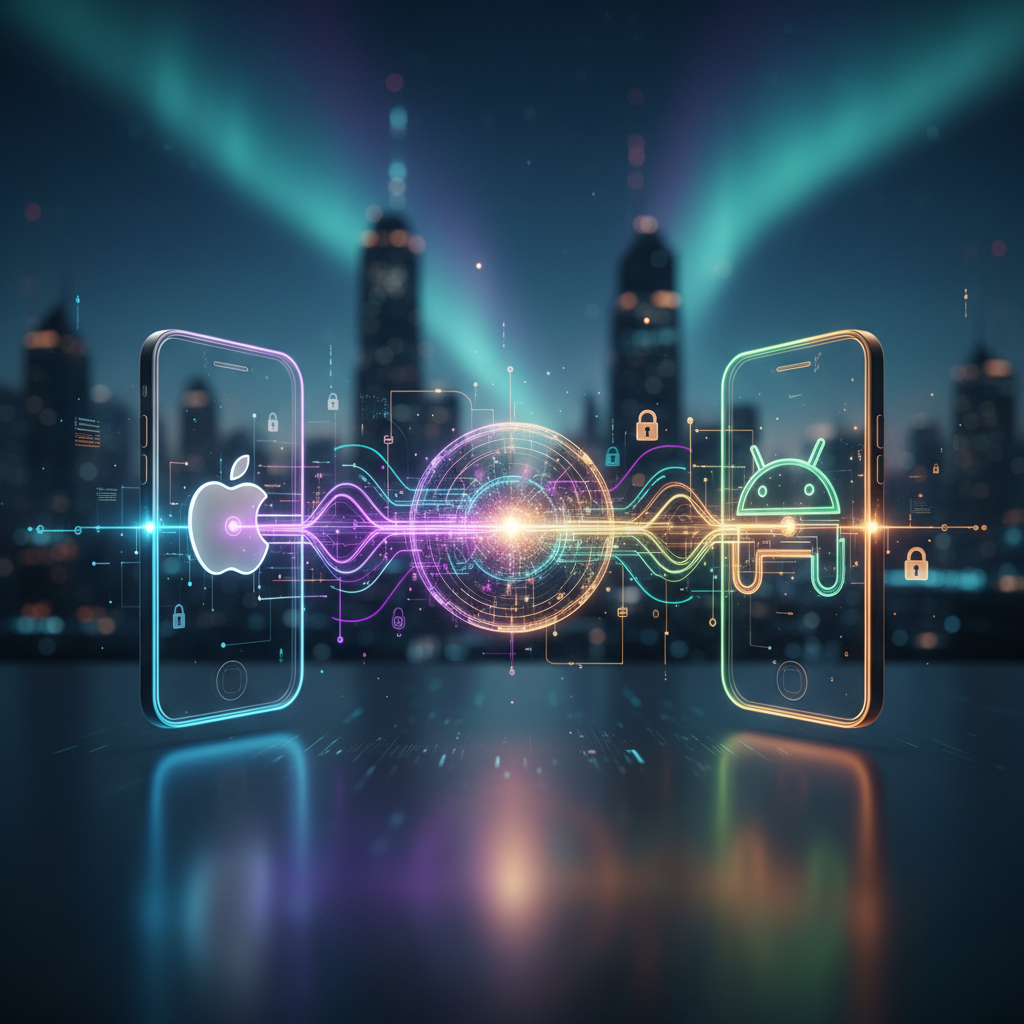
In an announcement that resonates deeply across the digital landscape, Apple has confirmed that its upcoming iOS 26.5 update will introduce end-to-end encryption (E2EE) for RCS (Rich Communication Services) messages exchanged between iPhones and Android devices. For users navigating the complex world of digital communication, this represents a significant leap forward in privacy and interoperability. This article will delve into the technical underpinnings of this development, dissect Apple's historical stance on messaging, explore the practical implications for everyday users, and offer biMoola.net’s expert analysis on what this means for the future of digital wellness and communication standards.
For years, the chasm between iPhone and Android messaging—symbolized by the dreaded “green bubble”—has been a source of both social friction and legitimate security concerns. With iOS 26.5, Apple is not just integrating a new messaging protocol; it is fundamentally altering the privacy paradigm for millions of cross-platform conversations. Prepare to understand why this update is more than a simple feature addition, but a critical evolution in our digital interactions.
The Dawn of Secure Cross-Platform Messaging
The news that Apple will bring end-to-end encryption to RCS messaging for iPhone-to-Android conversations with iOS 26.5 marks a pivotal moment in the history of mobile communication. This isn't merely an incremental update; it's a strategic shift that addresses long-standing user demands, evolving industry standards, and increasing regulatory pressure. For decades, the default fallback for messages between an iPhone and an Android device has been SMS (Short Message Service) or MMS (Multimedia Messaging Service) — archaic technologies born in the early days of mobile phones, notoriously lacking in modern security features like encryption.
A Long-Awaited Shift
While iMessage conversations between Apple users have long enjoyed end-to-end encryption and rich features, messages crossing the platform divide have remained vulnerable. This created a bifurcated messaging experience: secure and feature-rich within the Apple ecosystem, but insecure and feature-poor when communicating with Android users. The introduction of E2EE for RCS directly tackles this disparity, extending a crucial layer of privacy to a vast new segment of digital conversations. This move is particularly significant given that over 3.7 billion people globally use smartphones, with Android commanding a 70.9% market share as of January 2024, meaning a substantial portion of the world's mobile users will benefit from this enhanced security.
Understanding the Pillars: RCS and End-to-End Encryption
To fully grasp the magnitude of Apple's announcement, it's essential to understand the two core technologies at play: RCS and End-to-End Encryption.
What is RCS? More Than Just SMS 2.0
Rich Communication Services (RCS) is often dubbed the “SMS killer” or “SMS 2.0.” Developed by the GSMA (Global System for Mobile Communications Association), RCS aims to modernize the standard messaging experience offered by mobile carriers. Unlike SMS, which is limited to 160 characters of plain text, and MMS, which struggles with media quality and size, RCS brings a suite of advanced features reminiscent of popular over-the-top (OTT) messaging apps like WhatsApp or Signal. These include:
- Read Receipts: Knowing when your message has been seen.
- Typing Indicators: Seeing when the other person is typing a response.
- High-Resolution Media Sharing: Sending crisp photos and videos without significant compression.
- Larger File Transfers: Sharing documents and other files more efficiently.
- Enhanced Group Chats: More robust group messaging capabilities.
- Location Sharing: Directly within the messaging interface.
- Improved Reliability: Using data networks rather than traditional cellular channels for message delivery, which can be more stable and efficient.
Google has been a primary advocate for RCS, implementing it widely across Android devices through its Messages app. However, without Apple's adoption, its full potential for cross-platform seamlessness remained unfulfilled.
The Imperative of End-to-End Encryption
End-to-End Encryption (E2EE) is the gold standard for secure digital communication. In simple terms, E2EE ensures that only the sender and the intended recipient can read the messages. The messages are encrypted on the sender’s device and remain encrypted as they travel through servers and networks, only being decrypted on the recipient’s device. This means that internet service providers, mobile carriers, governments, or even the messaging service provider itself cannot access the content of the conversation.
This contrasts sharply with client-server encryption, where messages are encrypted during transit to a server but are then decrypted and stored on the server before being re-encrypted for delivery to the recipient. While better than no encryption, client-server models leave a vulnerability point at the server level, where data could theoretically be accessed or compromised. The Electronic Frontier Foundation (EFF) has long championed E2EE as a critical component of digital privacy and freedom of expression.
By bringing E2EE to RCS, Apple is not just enhancing features; it's fortifying the privacy of cross-platform communications, ensuring that conversations between iPhones and Androids are as private as those within iMessage or other dedicated E2EE platforms.
Apple's Historic Messaging Stance and the Shift
Apple's decision to embrace E2EE for RCS was not made in a vacuum. It represents a significant departure from years of maintaining a distinct, often exclusive, messaging ecosystem.
The Green Bubble Legacy
For over a decade, the “blue bubble” of iMessage has been a defining feature of the iPhone experience. It signified secure, feature-rich communication, leveraging Apple's proprietary infrastructure. Conversely, messages from Android users appeared as “green bubbles,” signaling a fallback to the less secure, feature-limited SMS/MMS protocol. This distinction wasn't merely aesthetic; it often carried social weight, particularly among younger demographics in certain regions, and created a perceived hierarchy of messaging experiences. Apple CEO Tim Cook famously responded to a question about addressing the green/blue bubble divide by suggesting, “Buy your mom an iPhone,” underscoring the company's previous reluctance to bridge the gap.
The Pressure Mounts: Regulatory and Public Opinion
Several factors have coalesced to compel Apple's shift:
- Regulatory Scrutiny: The European Union's Digital Markets Act (DMA), enacted in 2022, is a prime example. The DMA aims to ensure fair and open digital markets, potentially designating platforms like iMessage as “gatekeepers” that must offer interoperability with rival services. While iMessage was initially not designated as a gatekeeper service under the DMA, the legislative pressure to open up closed ecosystems has been palpable.
- Android's Relentless Push: Google has been campaigning for Apple to adopt RCS for years, often publicly highlighting the security and feature disparity. This sustained advocacy kept the issue in the public consciousness.
- Consumer Demand for Privacy: With growing awareness of data privacy and cybersecurity threats, consumers are increasingly demanding more secure communication options by default. The unencrypted nature of SMS/MMS became an untenable standard for cross-platform communication in an era defined by digital surveillance and data breaches.
This confluence of regulatory pressure, competitor advocacy, and evolving consumer expectations ultimately led Apple to commit to RCS adoption, with the crucial addition of end-to-end encryption, first announced in late 2023 for a 2024 rollout.
Practical Implications for Users: What Changes with iOS 26.5?
For the average iPhone and Android user, the iOS 26.5 update will bring tangible improvements to their cross-platform messaging experience.
Enhanced Privacy by Default
The most significant change is the automatic application of end-to-end encryption to messages sent between iPhones and Android phones using RCS. This means:
- Confidential Conversations: Your texts, photos, and videos sent to Android users will be protected from eavesdropping by third parties, including carriers and messaging providers.
- Peace of Mind: Users will no longer have to worry that their cross-platform messages are inherently less secure than their iMessage conversations. This aligns with biMoola.net's focus on digital wellness, reducing anxiety associated with insecure communication.
Features Beyond SMS
Beyond security, users will enjoy a more modern messaging experience:
- Rich Media: Send and receive high-quality photos and videos without pixelation or size limitations previously imposed by MMS.
- Typing Indicators & Read Receipts: See when your Android contacts are typing and when they’ve read your messages, mirroring the iMessage experience.
- Improved Group Chats: Expect more reliable group messaging with Android users, including naming groups, adding/removing participants, and a more stable experience than legacy MMS group chats. \
- Larger File Sharing: The ability to send larger files, which is particularly useful for productivity and sharing documents on the go.
The Caveats and Remaining Gaps
While a massive step forward, it's important to note what won't change:
- iMessage Exclusivity Persists: iMessage-to-iMessage communication will remain distinct, with its unique features like tapbacks, message effects, and seamless integration across Apple devices. RCS will specifically improve the iPhone-to-Android messaging experience, not merge iMessage and Android messages into a single, undifferentiated platform.
- “Blue” vs. “Green” Bubbles: The visual distinction between iMessage (blue) and non-iMessage (green) conversations is expected to remain, although messages sent via RCS from an iPhone to an Android device will likely have a different visual indicator than the current SMS/MMS green bubbles, possibly a different shade or an explicit “RCS” label, indicating the secure and feature-rich connection.
- Carrier Dependence: RCS is still a carrier-based protocol. While Apple and Google are implementing it, its full functionality can sometimes be influenced by carrier support. However, Google's Jibe Mobile platform has largely bypassed traditional carrier dependencies for its implementation, and Apple's adoption is expected to follow a similarly robust standard.
Broader Industry Impact and the Future of Digital Communication
Apple's embrace of E2EE RCS sets a new precedent and will likely have ripple effects across the entire digital communication landscape.
A New Standard for Interoperability?
This move could catalyze greater interoperability among messaging platforms. By adopting a widely accepted standard like RCS (and crucially, enhancing it with E2EE), Apple signals a potential shift away from proprietary, walled-garden communication towards a more open, yet secure, ecosystem. This might encourage other platforms to consider standardized, E2EE-enabled protocols for cross-platform communication, rather than relying solely on their proprietary solutions.
The Role of Digital Wellness
From a digital wellness perspective, this update is profoundly positive. Unencrypted communication exposes users to potential surveillance, data breaches, and a general lack of control over their personal conversations. By making secure communication the default for a significant portion of the global population, Apple contributes to a healthier, more trustworthy digital environment. Users can communicate across platforms with greater confidence, reducing privacy-related anxieties.
Global Messaging App Usage & E2EE Adoption
Messaging applications are integral to daily life, with billions relying on them for personal and professional communication. The shift towards end-to-end encryption for core messaging protocols is critical for safeguarding this ubiquitous activity.
- 5+ Billion Users: As of early 2024, the number of global mobile messaging app users is estimated to exceed 5 billion, underscoring the massive scale of digital communication.
- 70% of Smartphone Owners: A 2023 report from eMarketer indicated that over 70% of smartphone owners regularly use messaging apps, highlighting their pervasive integration into daily routines.
- WhatsApp & Signal: Leading E2EE apps like WhatsApp and Signal have demonstrated the viability and user demand for secure communication, with WhatsApp alone boasting over 2 billion active users globally by 2023, all protected by E2EE based on the Signal Protocol.
- Pre-RCS “Green Bubble” Vulnerability: Before Apple's move, an estimated 1.5 billion iPhone users communicated with Android users primarily via unencrypted SMS/MMS, representing billions of insecure messages exchanged daily.
- RCS Adoption Growth: Google announced that over 800 million users were actively using RCS messaging via Google Messages by late 2023, showcasing the protocol's growing reach even before Apple's integration.
Sources: Statista, eMarketer, Company Reports (WhatsApp, Google)
Key Takeaways
- Enhanced Privacy by Default: iOS 26.5 will bring end-to-end encryption to RCS messages between iPhones and Androids, securing cross-platform communication that was previously unencrypted via SMS/MMS.
- Modernized Cross-Platform Features: Users will gain access to rich media sharing, typing indicators, read receipts, and improved group chats when messaging Android devices.
- Response to Pressure: Apple's decision is influenced by regulatory demands (e.g., EU's DMA) and sustained advocacy from Google and privacy groups for a more open and secure messaging standard.
- Significant Industry Shift: This move sets a new precedent for interoperability and security in mobile messaging, potentially encouraging other platforms towards standardized E2EE protocols.
- Digital Wellness Boost: By securing billions of messages, the update contributes to greater digital confidence and reduces anxieties associated with insecure personal communications.
Our Take: A Critical Step Towards a More Secure Digital Ecosystem
At biMoola.net, we view Apple's integration of E2EE RCS in iOS 26.5 as a watershed moment, not just for the company, but for the broader digital ecosystem and the pursuit of digital wellness. For too long, the messaging divide between iOS and Android has been more than a technical inconvenience; it has been a social barrier and a glaring security vulnerability. While Apple's adoption of RCS might have been compelled by external pressures rather than purely altruistic motives, the outcome for users is unequivocally positive.
This move is a strong validation of the principle that fundamental security features, like end-to-end encryption, should not be exclusive or optional; they should be the default, especially for widely used communication channels. The fact that billions of cross-platform messages were previously transmitted without this basic protection is a testament to how far we still need to go in prioritizing user privacy by design. With iOS 26.5, Apple is effectively closing a significant privacy gap, moving countless conversations from the digital equivalent of an open postcard to a sealed, private letter.
However, it’s crucial to maintain a nuanced perspective. While this is a monumental step, it doesn't eliminate all digital privacy concerns. Users still need to be diligent about their overall security practices, understanding that while the transport layer of their messages is now more secure, the endpoints (the devices themselves) and the apps they use still require attention. Furthermore, the nuances of RCS implementation and whether Apple's version fully aligns with the open-source spirit of some E2EE protocols will be important to observe.
Ultimately, this development champions a future where interoperability does not come at the expense of security. It challenges the notion of “walled gardens” in communication and paves the way for a more unified, and critically, more secure global messaging standard. As advocates for productivity, health technologies, and sustainable living, we believe that robust digital privacy is foundational to all these pillars. A secure digital life is a prerequisite for effective productivity and peace of mind, making this update a genuine win for everyone.
Frequently Asked Questions
Q: Does this mean iMessage and Android messages are now the same?
A: Not entirely. While the introduction of E2EE for RCS significantly improves the privacy and feature set of messages between iPhones and Android phones, iMessage itself remains a distinct, proprietary Apple service for communication between Apple devices. Messages sent from an iPhone to an Android phone via RCS will be more secure and feature-rich than old SMS/MMS, but iMessage-exclusive features like advanced tapbacks, message effects, and seamless continuity across all Apple devices (Mac, iPad, Watch) will likely remain unique to iMessage-to-iMessage conversations. This update primarily elevates the baseline for cross-platform messaging.
Q: How will I know if my messages are end-to-end encrypted with an Android user?
A: Specific visual indicators will be part of the iOS 26.5 update. Just as iMessage conversations have blue bubbles, and unencrypted SMS/MMS conversations have green bubbles, RCS messages with E2EE will likely feature a different visual cue. Google's Messages app for Android already shows a lock icon to indicate E2EE status. Apple will integrate a similar clear indicator, potentially a distinct color, a small lock icon, or a text label within the conversation interface, to confirm that the chat is leveraging the secure RCS protocol.
Q: Will this affect my group chats if they include both iPhone and Android users?
A: Yes, in a positive way. Historically, group chats involving both iPhone and Android users would default to the less reliable and unencrypted MMS standard. With E2EE RCS, these mixed-device group chats will benefit from significantly improved features like higher-quality media sharing, more reliable delivery, typing indicators, and crucially, end-to-end encryption. This will bring the experience closer to what iMessage users enjoy in their group chats, enhancing both functionality and privacy for these cross-platform discussions.
Q: Does this change anything for apps like WhatsApp or Signal?
A: No, this update does not affect messaging apps like WhatsApp, Signal, Telegram, or other third-party services. These applications operate independently of the native Messages app on iOS and Android. They have their own proprietary or open-source end-to-end encryption protocols (e.g., Signal Protocol for WhatsApp and Signal) and continue to provide secure communication within their respective platforms. Apple's integration of E2EE RCS specifically addresses the security and feature parity of the default SMS/MMS replacement for direct iPhone-to-Android communication.
Sources & Further Reading
Disclaimer: This article is for informational purposes only and does not constitute medical advice. Consult a healthcare professional for any health concerns or before making any decisions related to your health or treatment.
", "excerpt": "Apple's iOS 26.5 update brings end-to-end encryption to RCS messages between iPhones and Androids, a pivotal shift for cross-platform privacy and features." } ```
Comments (0)
To comment, please login or register.
No comments yet. Be the first to comment!