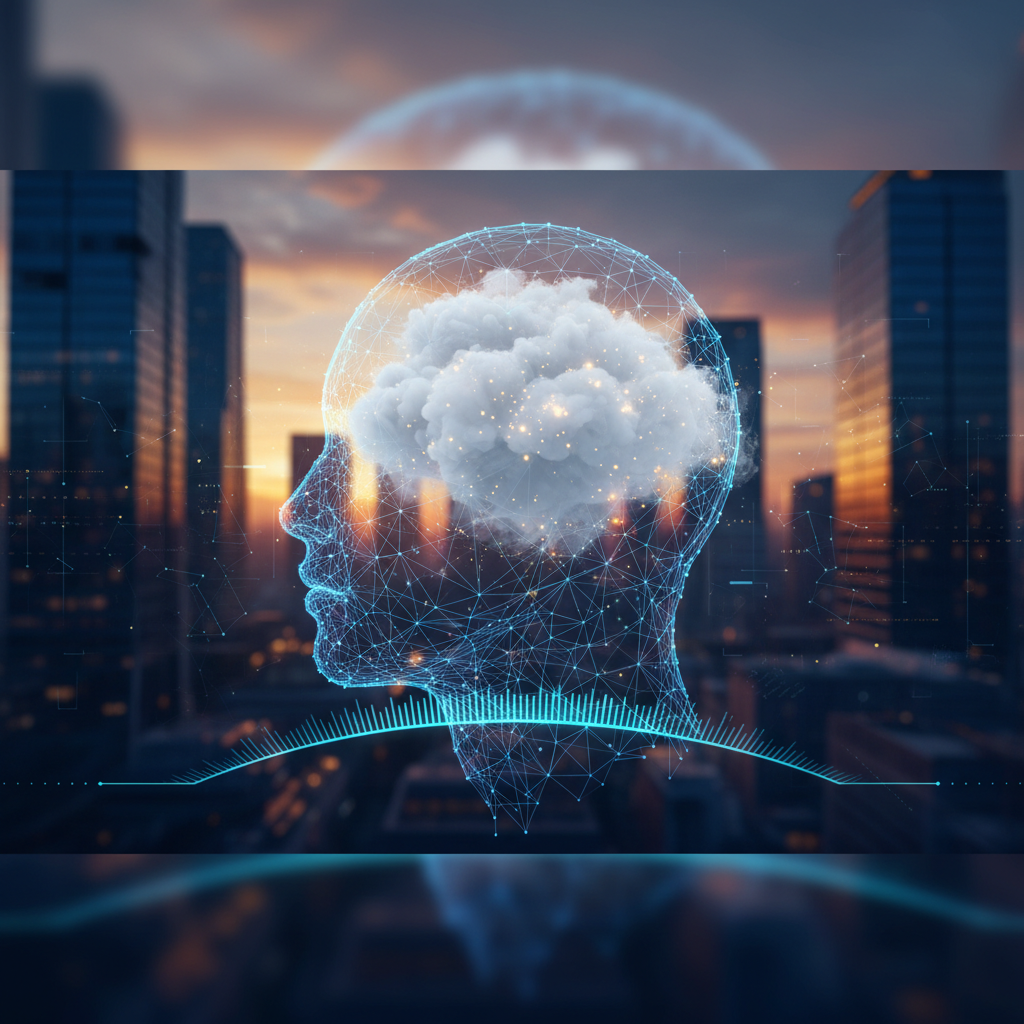
In the rapidly evolving landscape of artificial intelligence, creativity is no longer an exclusive domain of human artists. Generative AI models have democratized art creation, transforming text prompts into breathtaking visuals. But what happens when this power isn't just individual, but *collective*? Imagine an AI canvas, open to everyone, where every participant adds a brushstroke, guided by algorithms. This isn't science fiction; it's a burgeoning reality, and as fascinating as it is, it's quickly proving to be a wild, untamed frontier. At biMoola.net, we've been closely tracking these developments, and the emerging narrative from platforms fostering collaborative AI art is both exhilarating and, at times, alarming. This article will delve deep into the mechanics, implications, and future of these dynamic digital canvases, offering a critical analysis of their potential and pitfalls.
You'll learn why these projects are captivating millions, what happens when a collective vision (or lack thereof) takes over an AI model, the profound ethical questions that arise regarding ownership and content, and crucially, how creators, businesses, and platform developers can responsibly navigate this exciting, yet chaotic, new era of art and technology.
The Allure of the Infinite Canvas: Understanding Collaborative AI Art
The concept of collaborative art is as old as humanity itself, from ancient cave paintings to modern murals. However, integrating Artificial Intelligence into this process introduces entirely new dimensions. Unlike traditional digital art where an artist controls every pixel, collaborative AI art often involves a shared dataset, a sequence of prompts, or an evolving image state that multiple users can influence. The underlying technology typically leverages advanced generative models, such as Diffusion Models or Generative Adversarial Networks (GANs), which learn from vast datasets of images and then synthesize new ones based on input prompts or existing visual information.
At its core, a collaborative AI art project might begin with an initial image or concept. Subsequent users then contribute by:
- Prompt Chaining: Adding new textual prompts that modify the existing image or generate a successor image in a sequence.
- Iterative Refinement: Using an existing image as a seed, and then applying slight variations or stylistic changes via new prompts.
- Community Curation: Voting on generated images, with the most popular ones becoming the basis for future iterations.
- Generative Storytelling: Where each image builds upon the narrative implied by the previous one.
This dynamic creates what we call an 'infinite canvas' – a digital space that continuously evolves, reflecting the collective (and often contradictory) input of its participants. The appeal is undeniable: it democratizes creativity, allows for unexpected juxtapositions, and fosters a sense of shared ownership in a grand, digital experiment. It's a testament to the power of distributed creativity, amplified by algorithmic capabilities. The global market for generative AI, valued at approximately $11.3 billion in 2023, is projected to reach over $50 billion by 2028, according to Statista, indicating a massive appetite for these technologies, collaborative or otherwise.
Beyond Solo Creation: The Mechanics of Shared AI Visions
To truly grasp the implications of collaborative AI art, it's essential to understand the underlying technical architecture that makes it possible. It’s more than just people typing prompts into a shared chat; it involves sophisticated system design.
Architectural Approaches to Multi-User Generation
Collaborative AI art platforms can employ several structural models:
Sequential Generation: This is perhaps the most common approach, akin to a game of 'telephone' for images. One user generates an image, and another uses that image as an input (along with a new prompt) to generate the next iteration. This creates a linear evolution, often leading to dramatic transformations over time.
Branching Narratives: Some platforms allow users to 'fork' a generated image, creating multiple parallel evolutions from a single point. This can lead to diverse storylines and stylistic explorations from the same origin.
Additive Layering: Similar to how layers work in Photoshop, users might be able to add elements to a shared canvas. While direct pixel manipulation is usually restricted to maintain AI generation, users might prompt the AI to add a specific object, texture, or style overlay onto an existing scene.
Real-time Co-creation: More ambitious systems might allow multiple users to influence a single image's generation in real-time, perhaps by adjusting parameters or providing simultaneous prompts that the AI attempts to reconcile.
The Role of Prompt Engineering in Collective Art
Prompt engineering – the art and science of crafting effective text inputs for generative AI – becomes particularly complex and crucial in collaborative settings. A single poorly worded prompt can derail an entire artistic direction. Conversely, a cleverly crafted prompt can elevate the collective piece to new heights. The challenge lies in harmonizing diverse individual prompt styles and intentions into a coherent (or enjoyably incoherent) whole. Developers often implement mechanisms like:
- Prompt Weighting: Giving certain prompts or users more influence.
- Constraint-based Prompting: Defining boundaries within which subsequent prompts must operate.
- Contextual Awareness: AI models that attempt to maintain stylistic or thematic consistency across generations based on previous prompts.
The success of these platforms hinges on their ability to manage this complex interplay between human intent and algorithmic interpretation, all while maintaining a semblance of control and coherence.
When Creativity Goes Viral: The \"Unforeseen Consequences\" Phenomenon
The enthusiasm for collaborative AI art often collides with an inherent unpredictability. The 'getting out of hand' sentiment reported by early adopters highlights a core tension: the desire for emergent creativity versus the need for control and predictability. This phenomenon manifests in several ways, some delightful, others deeply problematic.
The Positive Chaos: Emergent Aesthetics and Collective Intelligence
On the positive side, the unconstrained nature can lead to truly novel and surprising artistic outcomes. When hundreds or thousands of minds contribute, even indirectly, the resulting imagery can transcend individual creative limitations, revealing emergent aesthetics that no single artist could have conceived. This 'collective intelligence' applied to art can be a powerful force for innovation, pushing the boundaries of what AI-generated art can be. Think of it as a global brainstorm where the AI acts as a mediator, interpreting and synthesizing disparate ideas into visual form. Projects like Google's DeepDream, though not explicitly collaborative in the user-input sense, demonstrated how algorithms could 'dream' unexpected visuals, a principle that, when combined with human iteration, leads to fascinating evolution.
The Negative Chaos: Degeneration, Misuse, and the Loss of Intent
However, the lack of central control also opens the door to significant challenges:
Degenerative Art: Without guardrails, sequential generation can quickly devolve. An initial beautiful landscape might become an abstract mess or a distorted figure after just a few iterations, as users intentionally or unintentionally steer it away from its original aesthetic.
Intentional Misuse: The anonymity and openness of some platforms make them ripe for the generation of offensive, hateful, or inappropriate content. Users might intentionally introduce prompts designed to create shocking or harmful images, challenging content moderation efforts.
Loss of Original Vision: For the initial creator, watching their artistic seed mutate beyond recognition can be frustrating. The 'art' becomes less about individual expression and more about the chaotic interplay of countless inputs.
Technical Strain: Managing and rendering an ever-evolving, high-resolution canvas with thousands of contributions can place immense strain on computational resources, leading to performance issues and scalability challenges.
The Reddit thread mentioned in our source likely points to this dual nature – the initial fascination quickly turning into a struggle to contain the unforeseen directions of collective input. It highlights the inherent tension between absolute freedom and responsible creation in digital spaces.
Ethical Quandaries and Governance Gaps in Open AI Ecosystems
The "getting out of hand" phenomenon in collaborative AI art isn't just about visual aesthetics; it's a profound indicator of complex ethical and governance challenges that are still largely unaddressed in the nascent AI space.
Who Owns What? Attribution and Copyright in Collective AI Art
One of the most pressing issues is the question of ownership and attribution. When an image is generated through a chain of prompts and iterations from dozens or even hundreds of users, who is the 'author'? Is it the person who initiated the chain? Every contributor? The AI model itself? Or is it a collective work with no single owner? Existing copyright laws are ill-equipped to handle this distributed authorship. For example, the U.S. Copyright Office has stated that it will only register works that include human authorship, leaving a significant legal void for purely AI-generated or heavily AI-assisted collaborative works. This ambiguity creates a fertile ground for disputes and disincentivizes commercial use, as establishing clear rights is nearly impossible.
The Moderation Minefield: Preventing Harmful Content
The potential for misuse in open, collaborative AI art platforms is immense. Generative models, even with safety filters, can be coaxed into creating deepfakes, propagating misinformation, or generating hateful, violent, or sexually explicit content. As users collaboratively push the boundaries, moderation becomes a Herculean task. Traditional content moderation relies on human review and sophisticated algorithms, but the sheer volume and the emergent nature of AI-generated content make it incredibly difficult to catch everything. A 2023 report from the IEEE highlighted that ethical AI development, particularly concerning content moderation and bias, is among the top challenges facing developers and policymakers.
Bias Amplification and Unintended Consequences
AI models are trained on vast datasets, and if these datasets contain biases (e.g., gender stereotypes, racial biases), the AI will replicate and even amplify them. In a collaborative setting, if users unknowingly or intentionally steer the AI towards biased outputs, the issue becomes compounded. An innocent prompt can, through several iterations, lead to an image that reflects harmful stereotypes, potentially without any single user intending such an outcome. This 'death by a thousand small biases' can lead to serious ethical repercussions and damage public trust in AI technologies.
Strategic Imperatives: Leveraging Collaborative AI Responsibly
Despite the challenges, the promise of collaborative AI art is too significant to ignore. For creators, businesses, and platform developers, the path forward lies in strategic, responsible innovation.
For Platform Developers: Designing for Safety and Creativity
Developers hold the primary responsibility for shaping these environments. This involves:
Robust Moderation Systems: Implementing advanced AI-powered content filters augmented by human review. This includes real-time detection of harmful prompts and outputs, and clear reporting mechanisms.
Attribution Mechanisms: Developing transparent systems to track contributions, perhaps using blockchain or similar technologies, to provide a granular history of authorship. This could involve assigning 'contribution shares' or dynamic watermarks.
Community Guidelines & Enforcement: Clear, enforceable rules that outline acceptable content and behavior, with consequences for violations. Education for users on ethical AI use is also critical.
Creative Constraints & Tools: Offering optional tools that allow initial creators to set stylistic boundaries or thematic guidelines for subsequent contributors, providing a middle ground between total control and complete chaos.
Transparency: Clearly communicating the AI's capabilities, limitations, and the data it was trained on to users.
For Creators and Artists: Embracing the New Paradigm
Artists should view collaborative AI as a new medium, not a replacement for traditional art. Practical advice includes:
Experiment and Explore: Engage with these tools to understand their unique creative potential. Treat them as a form of performance art or a social experiment.
Define Your Intent: If you initiate a collaborative project, consider what level of control or chaos you are comfortable with. Clearly state your intentions for the piece.
Understand the Risks: Be aware that your contributions might be used in ways you didn't anticipate, and full ownership might be elusive. Prioritize projects on platforms with clear terms of service regarding ownership and content.
Document Your Process: Keep a record of your prompts and contributions. This can be crucial for establishing your input should attribution become a question.
For Businesses: Reputation Risk and Opportunity
Companies considering integrating collaborative AI into marketing, design, or product development must proceed with caution:
Brand Safety First: Thoroughly vet any platform or tool to ensure robust content moderation and ethical guidelines are in place. A single inappropriate image generated under your brand's umbrella can cause significant reputational damage.
Clear IP Strategy: Develop a clear strategy for intellectual property, especially for user-generated content via AI. Legal counsel is essential.
Community Engagement: Use collaborative AI to foster community, allowing users to co-create with your brand in controlled environments. This can boost engagement and loyalty when managed correctly.
Looking Ahead: Crafting a Sustainable Future for AI Creativity
The trajectory of collaborative AI art points towards an increasingly sophisticated interplay between human intention and algorithmic generation. The 'getting out of hand' phase is a necessary learning curve, prompting essential discussions about technology governance and creative ethics. The future will likely see:
Hybrid Models and Governed Collaboration
We'll likely move towards more hybrid models where collaborative elements are balanced with stricter governance. This could involve curated communities, tiered access with varying levels of creative freedom, or AI systems that learn preferred aesthetic styles and nudge subsequent generations towards those while still allowing for emergent creativity. Imagine a platform where an 'AI curator' actively guides the collective artwork to maintain a certain theme or quality, intervening when content deviates too far from established guidelines.
The Evolution of Digital Rights and Attribution
The legal and ethical frameworks around AI-generated content, especially collaborative pieces, are still in their infancy. We can anticipate significant developments in digital rights management. Technologies like digital watermarking, non-fungible tokens (NFTs) to denote contributions, and evolving copyright laws will be crucial in defining ownership and attribution in these complex creative ecosystems. Institutions like the World Intellectual Property Organization (WIPO) are already engaging in dialogues about these challenges.
Human-AI Symbiosis: A New Creative Frontier
Ultimately, the goal isn't to replace human creativity but to augment it. Collaborative AI art, at its best, fosters a unique symbiosis between human imagination and algorithmic capability. It pushes us to redefine 'artist' and 'art,' challenging traditional notions of control and originality. The lessons learned from projects that have gone 'out of hand' are invaluable, highlighting the need for thoughtful design, ethical considerations, and a continuous dialogue about the kind of digital creative spaces we want to build. As a 2024 Stanford University study on the societal impact of AI highlighted, the integration of AI into creative industries necessitates not just technological advancement, but also societal adaptation and robust ethical frameworks to ensure equitable and responsible innovation.
Key Takeaways
- Collaborative AI art is an emergent field allowing multiple users to influence AI-generated images, fostering unique collective creativity.
- The 'getting out of hand' phenomenon stems from the unpredictable nature of collective input, leading to both emergent aesthetics and potential for misuse or degeneration.
- Significant ethical and governance challenges exist, particularly concerning copyright, attribution, content moderation, and bias amplification.
- Responsible development requires robust moderation, transparent attribution systems, and clear community guidelines from platform creators.
- For artists and businesses, understanding the risks and opportunities, while embracing ethical engagement, is crucial for navigating this new creative frontier.
Expert Analysis: biMoola.net's Perspective
At biMoola.net, we view the 'getting out of hand' narrative surrounding collaborative AI art not as a bug, but as a critical feature of its current evolutionary stage. It is a powerful, if sometimes chaotic, demonstration of the emergent properties that arise when sophisticated AI meets unconstrained human input at scale. This isn't just about pixels on a screen; it's a real-time experiment in collective intelligence and decentralized governance. The very 'messiness' reveals the profound philosophical questions at the heart of human-AI collaboration: Who is truly creating? Who owns the outcome? And, what does it mean for art to be a continuous, fluid process rather than a static artifact?
Our analysis suggests that this chaotic phase is essential. It forces developers to confront the limitations of purely technical solutions for ethical problems and pushes legal frameworks to adapt to the realities of distributed digital creation. For businesses, the lesson is clear: brand safety and ethical AI deployment must be baked in from the ground up, not layered on as an afterthought. For individual creators, it's an invitation to participate in a grand experiment, understanding that relinquishing control can sometimes lead to unexpected masterpieces, but also requires a higher tolerance for unpredictability. The true innovation here isn't just the AI's ability to generate images, but its capacity to mediate complex, dynamic human collaboration in ways previously unimaginable. The challenge, and the opportunity, lies in harnessing this energy without stifling its inherent, unpredictable magic.
Q: What is the main difference between individual and collaborative AI art creation?
A: Individual AI art creation typically involves a single user providing prompts or parameters to an AI model to generate an image, maintaining full control over the process and output. Collaborative AI art, however, involves multiple users contributing, sequentially or simultaneously, to an evolving AI-generated piece. This shared input means that the final artwork reflects a collective influence, often leading to emergent and sometimes unpredictable outcomes that are not solely attributable to one individual's vision.
Q: How do platforms prevent the creation of harmful or inappropriate content in collaborative AI art?
A: Preventing harmful content is a significant challenge for collaborative AI art platforms. They typically employ a multi-layered approach: (1) AI-powered content filters that detect and block problematic prompts or generated images based on keywords or visual patterns. (2) Human moderators who review flagged content and establish community guidelines. (3) User reporting mechanisms that allow the community to flag inappropriate contributions. (4) Some platforms may also implement restrictions on certain keywords or themes, or require user authentication to deter malicious activity. However, no system is foolproof, and ongoing vigilance is required.
Q: Who owns the copyright of an image created by multiple users via collaborative AI?
A: This is a complex and largely unresolved legal question. Current copyright laws generally require human authorship for a work to be protected. When an image is the result of numerous human prompts interpreted by an AI, direct ownership can be ambiguous. Some legal interpretations might consider it a collective work, potentially owned by the platform or requiring an agreement among all significant contributors. Many platforms address this in their Terms of Service, often stating that users grant the platform a broad license or that the output is considered public domain. As AI art evolves, new legal frameworks or interpretations will be necessary to clarify intellectual property rights in these collaborative scenarios.
Q: Can collaborative AI art be used productively in professional or business settings?
A: Absolutely, with careful management. In professional settings, collaborative AI art can be a powerful tool for brainstorming, ideation, and rapid prototyping. For example, design teams could collectively explore visual concepts, marketing teams could generate diverse ad creatives, or architects could quickly iterate on structural aesthetics. The key is to implement clear objectives, maintain appropriate moderation, and have explicit agreements on intellectual property. Using it in controlled, managed environments where contributors are known and guidelines are strict can harness its creative power while mitigating risks.
Sources & Further Reading
Disclaimer: For informational purposes only. Consult a healthcare professional for medical advice. This article discusses technological developments and their societal implications, not health outcomes.
", "excerpt": "Explore the captivating world of collaborative AI art, its unpredictable evolution, and the ethical challenges it poses for creators and platforms." } ```
Comments (0)
To comment, please login or register.
No comments yet. Be the first to comment!