Energy Saving

Future Water Technologies: Sustainable Living with Smart Faucets and Greywater

Future Water Technologies: Sustainable Living with Smart Faucets and Greywater

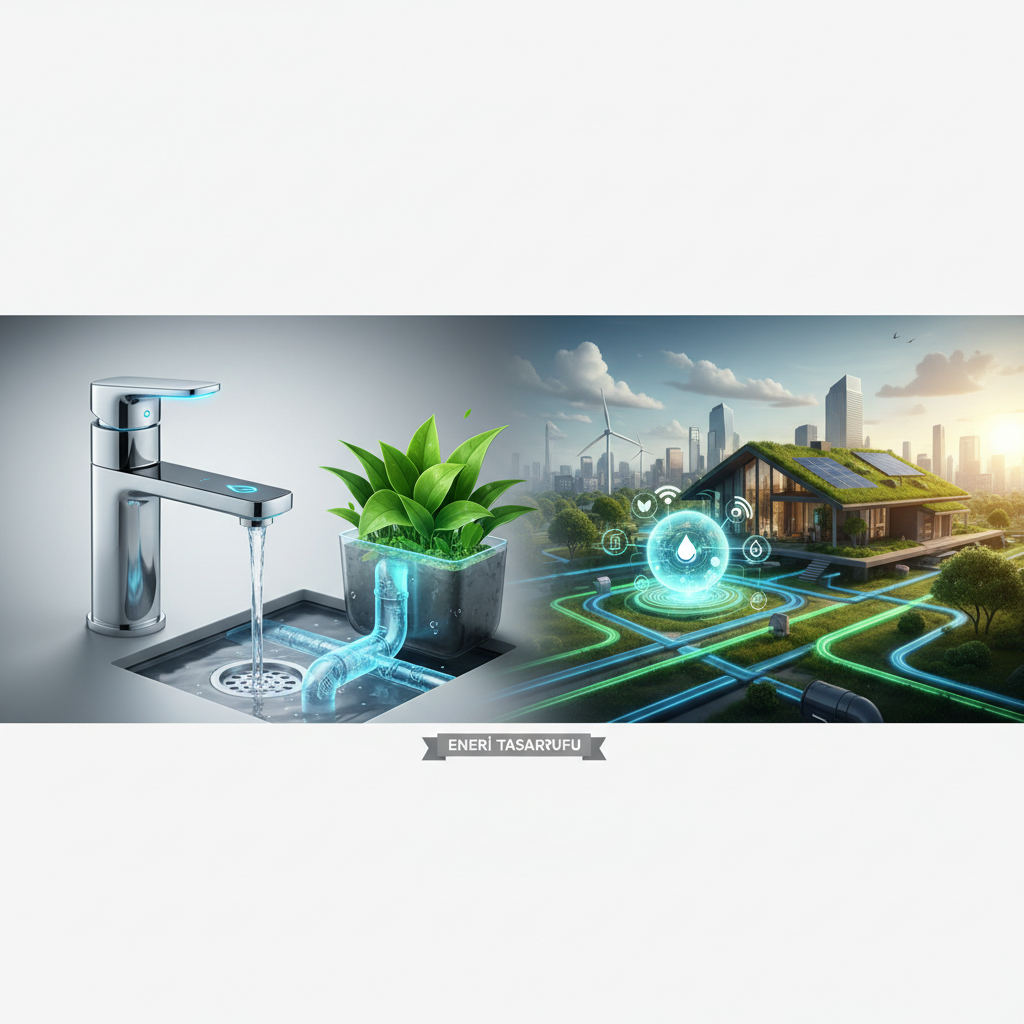
Welcome to 2026! Our planet is under increasing pressure regarding water resources. Scientists and environmental activists have been warning for years: water scarcity has become a harsh reality in many regions, beyond just a threat. However, instead of despairing, we are focusing on technological solutions developed to overcome this challenge. In this article, we will examine two important innovations that enable us to manage our water consumption smartly, smart faucets and greywater systems, from a 2026 perspective.

Is a Water Crisis Looming? What's the Situation in 2026?

As of 2026, the combination of global warming, irregular precipitation regimes, and increasing population has severely strained freshwater resources. Recent reports from the United Nations show that a quarter of the world's population still lives under water stress. This situation necessitates urgent action from everyone, from individuals to governments, regarding water conservation. The idyllic notion of infinite freshwater has long evaporated, replaced by a stark reality: water is a finite and increasingly precious resource. Droughts, once considered regional anomalies, are now persistent features across continents, impacting agriculture, ecosystems, and urban centers. Simultaneously, population growth continues, particularly in already water-stressed areas, intensifying competition for dwindling supplies. This isn't just an environmental issue; it's an economic, social, and geopolitical challenge, driving innovation and demanding immediate, scalable solutions.

In response to this pressing global challenge, technological advancements have moved from conceptual designs to mainstream applications. The focus has shifted from merely reducing consumption to optimizing every drop and reusing water resources previously considered waste. This proactive stance is critical, as projections from leading research institutions indicate that by 2030, global water demand could exceed supply by 40%. It's within this context that technologies like smart faucets and greywater systems are no longer luxuries but essential components of sustainable living, offering tangible pathways to resilience and responsible resource management.

Smart Faucets: The Intelligent Gateway to Water Conservation

In 2026, the humble faucet has undergone a remarkable transformation, evolving from a simple water dispenser into a sophisticated, intelligent appliance. Smart faucets are at the forefront of household water conservation, integrating advanced sensors, connectivity, and often artificial intelligence to minimize waste and provide users with unprecedented control and insight into their water usage.

How Smart Faucets Work and Their Core Features

At their core, smart faucets utilize a combination of technologies to optimize water flow and temperature. Key features include:

  • Motion and Proximity Sensors: The most common feature, allowing touchless operation. Water flows only when hands or objects are detected, eliminating wasteful running water during tasks like brushing teeth, washing hands, or shaving. This alone can account for significant savings.
  • Precise Flow Control: Beyond simple on/off, many smart faucets offer variable flow rates, often controlled via an app or voice command. Some models can dispense exact quantities of water (e.g., "dispense 250ml of water"), ideal for cooking or filling kettles, preventing overflow and unnecessary usage.
  • Temperature Memory and Control: Users can pre-set desired water temperatures, which the faucet remembers. Advanced models can heat water to the exact temperature almost instantly, reducing the energy wasted waiting for hot water to arrive and minimizing the cold water runoff.
  • Usage Monitoring and Analytics: This is where the "smart" truly shines. Integrated sensors track water consumption in real-time, sending data to a connected smartphone app. Users can view daily, weekly, or monthly usage patterns, identify peak consumption times, and set conservation goals. This data empowers behavioral change by making invisible consumption visible.
  • Leak Detection: Some high-end smart faucets incorporate micro-leak detection capabilities, alerting homeowners to drips or small leaks that might otherwise go unnoticed for extended periods, preventing significant water loss and potential property damage.
  • Voice Activation and App Integration: Seamless integration with smart home ecosystems (like Google Home or Amazon Alexa) allows for hands-free operation and custom commands. Users can say, "Alexa, dispense 2 cups of warm water," or "Hey Google, turn off the kitchen faucet."

Benefits Beyond Basic Conservation

The advantages of smart faucets extend beyond simply saving water:

  • Significant Water Savings: Industry data from 2025 suggests that households adopting smart faucets can reduce their potable water consumption by 15-25%, particularly in high-use areas like kitchens and bathrooms. This translates to thousands of gallons saved annually per household.
  • Energy Efficiency: By reducing the amount of hot water wasted, smart faucets also lead to substantial energy savings, lowering utility bills and reducing a home's carbon footprint.
  • Enhanced Hygiene: Touchless operation minimizes the spread of germs and bacteria, a particularly valued feature in a post-pandemic world.
  • Convenience and Accessibility: Hands-free operation is a boon for busy cooks, individuals with mobility challenges, or anyone carrying multiple items. Pre-set temperatures add a layer of comfort and efficiency.
  • Behavioral Nudging: The real-time data and consumption reports provided by smart faucets serve as powerful motivators, encouraging users to adopt more water-conscious habits by showing them the direct impact of their actions.

Practical Tips for Adopting Smart Faucets

For those considering upgrading to smart faucets in 2026, here are some practical tips:

  • Start Strategically: Begin by replacing faucets in high-traffic areas like the kitchen and main bathroom, where the impact on water and energy savings will be most immediate.
  • Leverage the Data: Don't just install it; engage with the accompanying app. Analyze your usage patterns and set realistic conservation goals. Share insights with your household to foster collective responsibility.
  • Integrate with Your Smart Home: If you have other smart devices, explore how your smart faucet can integrate. For instance, linking it to your smart lighting system could provide visual cues for water temperature.
  • Regular Maintenance: Like any smart device, sensors and connectivity modules require occasional cleaning and software updates to ensure optimal performance.
Editorial Transparency: This article was produced with AI writing assistance and reviewed by the biMoola editorial team for accuracy, factual integrity, and reader value. We follow Google's helpful content guidelines. Learn about our editorial standards →
B

biMoola Editorial Team

Senior Editorial Staff · biMoola.net

The biMoola editorial team specialises in AI & Productivity, Health Technologies, and Sustainable Living. Our writers hold backgrounds in technology journalism, biomedical research, and environmental science. All published content is fact-checked and reviewed against authoritative sources before publication. Meet the team →

Comments (0)

No comments yet. Be the first to comment!

biMoola Assistant
Hello! I am the biMoola Assistant. I can answer your questions about AI, sustainable living, and health technologies.