Prompt Engineering

Few-Shot Learning 2026: Get Maximum Performance from AI with Little Data!

Few-Shot Learning 2026: Get Maximum Performance from AI with Little Data!

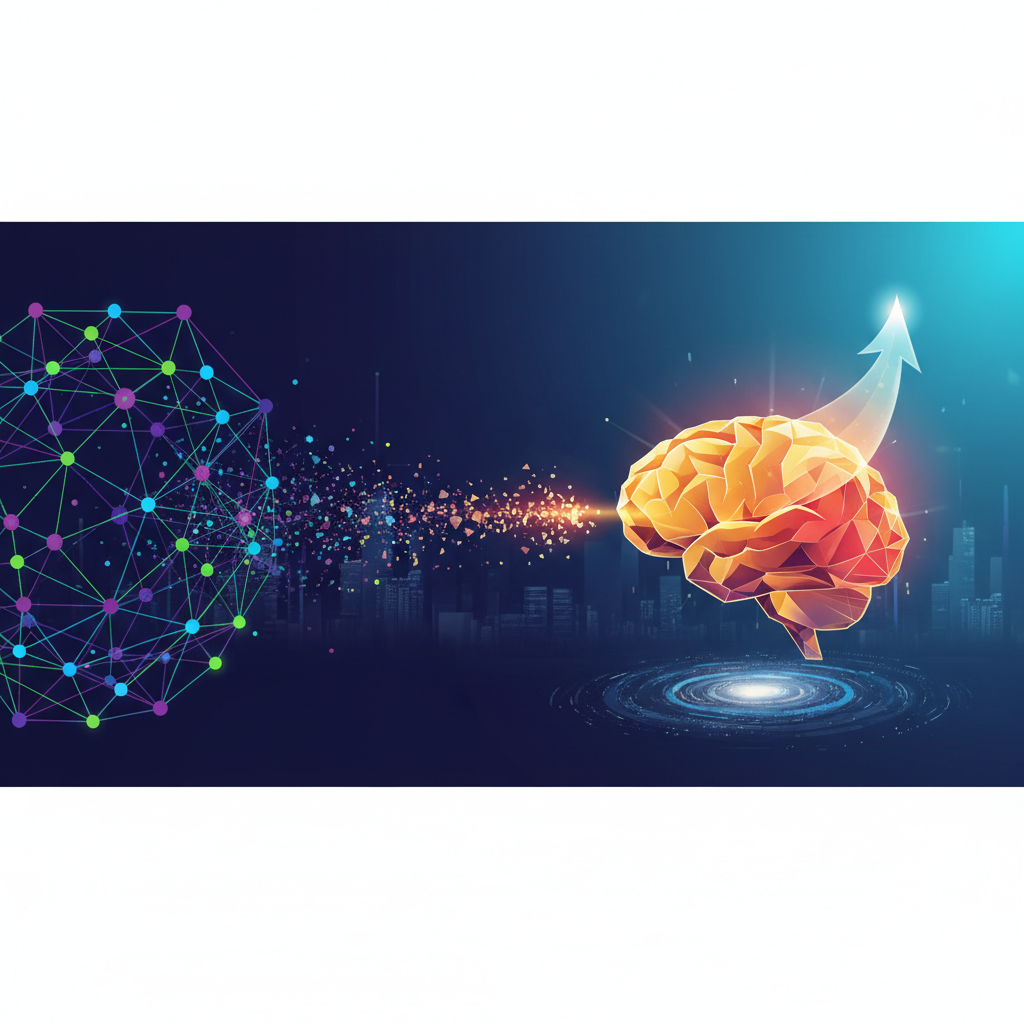
As we arrive in 2026, artificial intelligence (AI) has permeated every corner of our lives and the business world. However, there's a fundamental problem behind this revolution: the enormous datasets required to train AI models. Collecting millions of labeled data for every scenario is costly, time-consuming, and often impossible. This is precisely where Few-Shot Learning (FSL), an approach that has revolutionized the field, especially in Prompt Engineering, comes to our rescue. In this article, from a 2026 perspective, we will delve into what Few-Shot Learning is, why it has become so critical, and its future potential.

In an era where AI is becoming more sophisticated every day, traditional deep learning models typically require thousands, or even millions, of labeled examples. But what if we don't have that much data? Or what if we need to adapt quickly to a new task? Few-Shot Learning offers a human-like solution to these questions. Humans can often grasp a new subject or concept with just a few examples. FSL aims to imbue AI models with this capability. Fundamentally, it enables the model to perform a specific task with a very small number of new examples, by utilizing its pre-learned knowledge.

What is Few-Shot Learning? The Art of Making Do with Little in AI

Few-Shot Learning is a revolutionary answer to the data scarcity problem in artificial intelligence. While traditional machine learning models are typically trained with thousands or tens of thousands of examples, FSL models gain the ability to distinguish a new concept or class with just a few (generally 1 to 5) examples. This provides a significant advantage, especially in niche areas, emerging trends, or sectors dealing with sensitive data (e.g., healthcare).

"In 2026, Few-Shot Learning is the key to the democratization of AI and its large-scale customization. The necessity of collecting data with large budgets will no longer slow down AI adaptation."

Why is Few-Shot Learning Indispensable in 2026?

  • Data Scarcity and Cost: The high cost and time loss associated with collecting labeled data are minimized with FSL. Finding data for rare events in specialized fields used to be like a treasure hunt.
  • Rapid Adaptation: In the 2026 world, where market dynamics and technological advancements are rapidly changing, the ability for AI models to adapt to new tasks or products in seconds is vital. FSL makes this flexibility possible.
  • Customized AI Solutions: Every business or user has unique needs. FSL opens the door to rapidly adapting even general models to personal or corporate requirements with just a few examples.
  • Ethics and Privacy: Working with less data can, in some cases, reduce data privacy concerns and pave the way for more ethical AI applications.

Fundamental Techniques of Few-Shot Learning and Prompt Engineering

There are various techniques underlying Few-Shot Learning. As of 2026, these techniques are combined with Prompt Engineering to multiply the efficiency obtained from AI models.

Metric Learning: Measuring Similarity

This approach focuses on teaching the model to learn the distance or similarity between different data points. When a new example arrives, the model tries to determine which class in the training set this example is closer to. Structures like Siamese Networks and Prototypical Networks are frequently used in this field. It is powerful in areas such as image recognition and biometric verification.

Meta-Learning: Learning to Learn

Meta-Learning is based on the principle of "learning to learn." By training on different tasks, the model develops a learning strategy that can quickly adapt to new and unprecedented tasks. Algorithms like MAML (Model-Agnostic Meta-Learning) allow the model to be initialized in a way that it can optimize a new task in a few steps. Prompt Engineering can make these meta-learning processes even more efficient; for example, prompts can be used to guide the model in determining the most suitable "learning strategy" for a new task.

Pre-trained Models and Prompting: Transferring Knowledge

One of the most popular and effective ways of Few-Shot Learning today is to leverage large-scale pre-trained models (Large Language Models - LLMs or Vision Transformers). These models are trained on massive datasets from the internet and possess a broad general knowledge. In Few-Shot Learning scenarios, this general knowledge of the models is adapted to a specific task with new and limited examples.

This is where Prompt Engineering plays a crucial role. Creating correct prompts, supported by a few examples, that best guide the expected output from the model, maximizes the FSL performance of these large models. For instance, for a text classification task, the model is first presented with a few examples ("This text is positive: [text example 1]"; "This text is negative: [text example 2]") and then asked to classify a new text. This allows the model to "fine-tune" its pre-acquired general language understanding for the specific task.

Application Areas of Few-Shot Learning in 2026

Few-Shot Learning has had a transformative impact across many sectors by 2026:

  • Healthcare Sector: Building reliable models for diagnosing rare diseases with a small number of examples, personalized treatment recommendations.
  • E-commerce and Retail: Developing rapid recommendation systems for newly released or niche product categories, instantaneous adaptation to customer preferences.
  • Autonomous Systems and Robotics: Autonomous vehicles quickly adapting to rare road conditions or robots adapting to new tasks with a few demonstrations.
  • Natural Language Processing (NLP): Translation in low-resource languages, chatbots quickly adapting to new industry terminology or customer feedback.
  • Manufacturing and Quality Control: Learning to detect defects in special parts produced in small batches with a small number of examples.

Challenges and Future Perspective of FSL

Despite the great potential promised by Few-Shot Learning, there are also some challenges. Especially the risk of overfitting with a small number of examples, the selection of examples, and ensuring the model's ability to generalize to new tasks are important issues. In 2026, researchers are working on more robust meta-

Comments (0)

No comments yet. Be the first to comment!

biMoola Assistant
Hello! I am the biMoola Assistant. I can answer your questions about AI, sustainable living, and health technologies.