In an era defined by rapid technological advancement and a growing consciousness around planetary health, one industry continues to exert an outsized, often hidden, environmental toll: fast fashion. The allure of trend-driven, inexpensive clothing available at the click of a button or a quick trip to the mall has reshaped our wardrobes and our expectations. But as we look towards 2026 and beyond, the true cost of this convenience is becoming undeniably clear, urging a collective re-evaluation of how we consume and produce clothing.
This article delves deep into the environmental footprint of fast fashion, unraveling the complex web of resource depletion, pollution, and waste it creates. More importantly, it explores the burgeoning landscape of sustainable alternatives and practical strategies for consumers and industry alike, paving the way for a more responsible and resilient fashion future. We’ll arm you with data-driven insights and actionable advice, helping you navigate your choices in an increasingly complex market.
The Unseen Treadmill: Deconstructing the Fast Fashion Model
To understand the problem, we must first define its engine: fast fashion. This business model thrives on mass production of inexpensive, trend-replicating garments delivered to consumers at an accelerated pace. Traditionally, fashion houses operated on seasonal collections; fast fashion brands, however, introduce new styles weekly, sometimes even daily, creating a constant cycle of consumption and disposal.
From Runway to Rack in Weeks: The Need for Speed
The core innovation of fast fashion was shortening the lead time from design conception to in-store availability. Technologies like supply chain optimization, data analytics predicting trends, and flexible manufacturing allowed brands to respond almost instantaneously to new styles seen on runways or social media. This speed comes at a price:
- Overproduction: To maintain constant novelty, brands often produce more than they can sell, leading to significant unsold inventory.
- Low Quality: Garments are often made from cheaper, lower-quality materials and construction techniques, designed to last only a few wears before falling apart or going out of style.
- Planned Obsolescence: The entire model is predicated on encouraging consumers to buy frequently and dispose equally fast, driven by transient trends.
By 2026, this model, while still dominant, faces increasing scrutiny. Consumer awareness, amplified by social media and scientific reports, is growing, pushing for transparency and accountability.
A World of Waste: Fast Fashion's Staggering Environmental Footprint
The environmental impacts of fast fashion are multi-faceted and alarming. From the farm to the landfill, every stage of a garment's life cycle contributes to planetary degradation.
Water Depletion and Pollution: The Thirsty Industry
Textile production is incredibly water-intensive. Consider these facts:
- Cotton Cultivation: A single cotton t-shirt can require up to 2,700 liters of water to produce, equivalent to what one person drinks in 2.5 years. Conventional cotton farming also heavily relies on pesticides and insecticides, which contaminate water sources and harm biodiversity.
- Dyeing and Finishing: The vibrant colors that define fast fashion trends come at a steep cost. Dyeing processes use vast quantities of water and often discharge untreated wastewater laden with toxic chemicals (heavy metals, dyes, formaldehyde) into rivers, particularly in developing countries. Research suggests that textile dyeing is responsible for up to 20% of global industrial water pollution.
- Microplastic Contamination: A significant portion of fast fashion relies on synthetic fibers like polyester, nylon, and acrylic. Every time these garments are washed, tiny plastic microfibers shed, entering our waterways, oceans, and ultimately the food chain. Studies indicate that synthetic textiles are a major source of microplastic pollution in marine environments.
Carbon Emissions and Climate Change: Fueling the Crisis
The journey of a fast fashion garment from raw material to consumer's closet is a carbon-intensive one:
- Manufacturing Energy: The production of textiles, especially synthetic ones, requires significant energy, often sourced from fossil fuels. Estimates suggest the fashion industry is responsible for 4-10% of global greenhouse gas emissions annually – a figure projected to rise substantially if current trends continue.
- Global Supply Chains: Raw materials are sourced from one country, fabric milled in another, cut and sewn in a third, and then shipped globally to retailers and consumers. This intricate, globe-trotting supply chain necessitates extensive air, sea, and road freight, each contributing substantially to carbon emissions.
- End-of-Life: When garments are discarded, they contribute to emissions in landfills (methane from decomposing natural fibers) or through incineration (releasing CO2 and other pollutants).
Textile Waste Epidemic: Overwhelmed Landfills
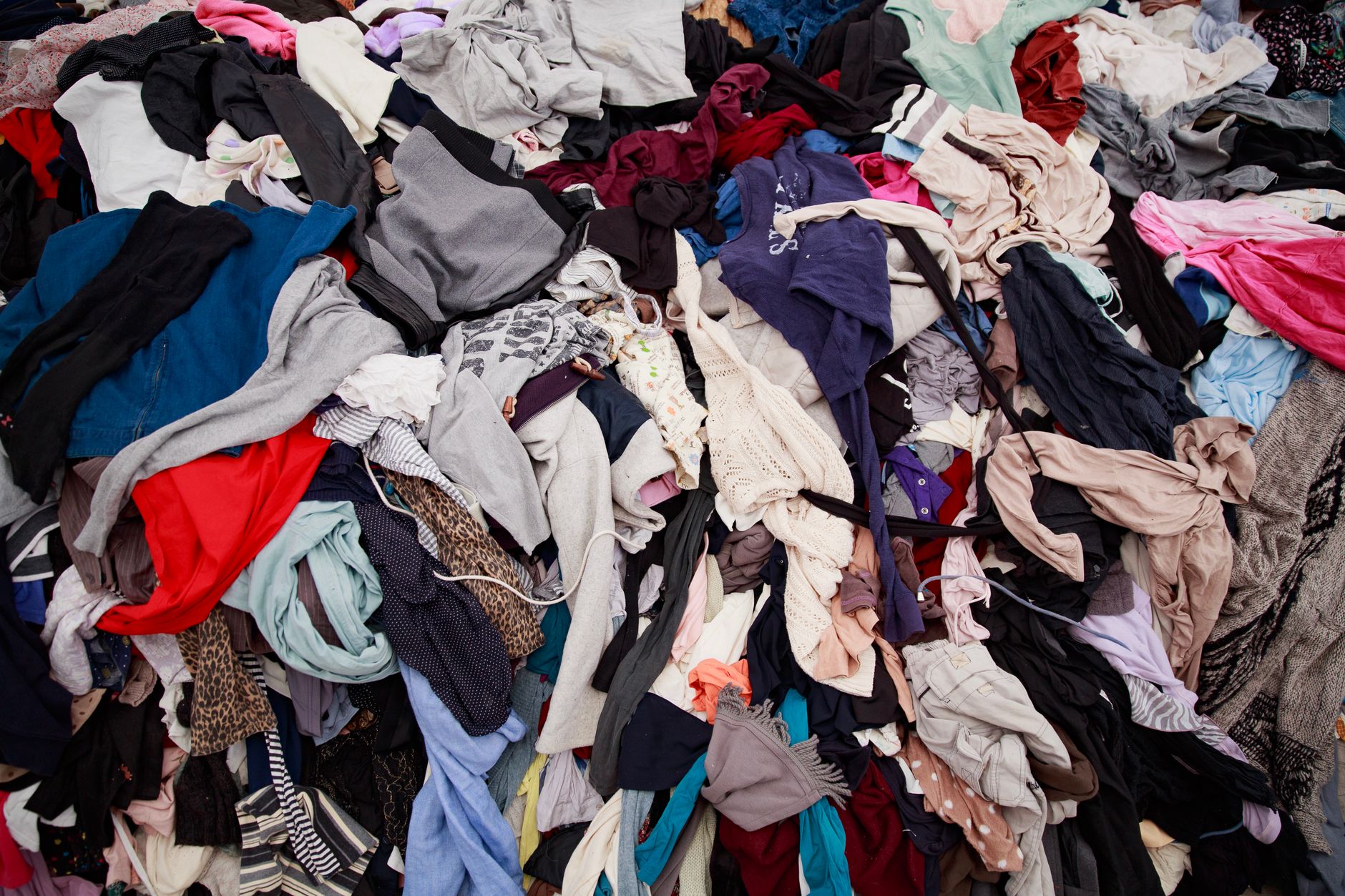
The sheer volume of clothing produced and discarded is staggering. The average consumer now buys 60% more clothing than 15 years ago but keeps each garment for half as long. This leads to:
- Massive Landfill Contributions: In many developed nations, a significant percentage of discarded clothing (up to 85% in some regions) ends up in landfills, where it can take hundreds of years to decompose, releasing greenhouse gases and leaching chemicals into the soil and groundwater.
- Low Recycling Rates: Despite efforts, textile recycling remains challenging. Blended fabrics (e.g., cotton-polyester) are difficult to separate, and the infrastructure for effective fiber-to-fiber recycling is still nascent. Only a small fraction of clothing is truly recycled into new garments.
Chemical Contamination: A Toxic Legacy
Beyond dyes, numerous chemicals are used throughout the fashion supply chain:
- Pesticides: As mentioned, conventional cotton farming is one of the most pesticide-intensive agricultural practices globally.
- Finishing Agents: Garments are often treated with chemicals for wrinkle resistance, water repellency, stain resistance, and colorfastness. These can include formaldehyde, phthalates, and PFCs, which are harmful to manufacturing workers, local communities, and can persist in the environment and even be absorbed by consumers through skin contact.
“The fashion industry’s current trajectory is simply unsustainable. We are depleting natural resources, polluting our planet, and creating mountains of waste at an alarming rate. A paradigm shift is not just desirable; it’s imperative.” - Dr. Anya Sharma, Environmental Economist specializing in supply chain sustainability.
Shifting Gears: Embracing a Circular Fashion Future
The good news is that viable, sustainable alternatives are not only emerging but gaining significant traction. Moving towards a circular economy in fashion means designing out waste and pollution, keeping products and materials in use, and regenerating natural systems.
The 'Buy Less, Choose Well' Mantra
This is arguably the most impactful shift a consumer can make. Instead of chasing fleeting trends:
- Invest in Quality: Choose well-made garments from durable materials that are designed to last. Consider cost per wear rather than upfront price.
- Opt for Timeless Pieces: Build a versatile wardrobe of classic styles that transcend seasonal trends.
- Consider Material Choices: Prioritize natural fibers like organic cotton, linen, hemp, or innovative eco-friendly synthetics made from recycled materials (e.g., recycled polyester made from PET bottles) or biodegradable alternatives (Tencel, Lyocell, Modal).
Second-Hand, Vintage, and Pre-Loved: Extending Life Cycles
The resale market is booming, and for good reason:
- Thrifting and Consignment: Explore local thrift stores, charity shops, and consignment boutiques. You can find unique pieces and give garments a second life.
- Online Marketplaces: Platforms like Poshmark, Depop, Vinted, and The RealReal offer vast selections of pre-owned clothing, making sustainable shopping more accessible.
- Rental Services: For special occasions or to experiment with new styles without commitment, clothing rental services (e.g., Rent the Runway, Nuuly) provide access to high-quality garments for a fraction of their purchase price, fostering an 'access over ownership' mindset.
Repair, Repurpose, Upcycle: Creativity for Sustainability
Don't discard; mend and reimagine:
- Basic Repairs: Learning simple sewing skills (e.g., mending a seam, replacing a button, darning a hole) can significantly extend the life of your clothes.
- Repurpose: An old t-shirt can become a cleaning rag; worn jeans can become shorts or a tote bag. Get creative!
- Upcycling: Transforming old garments into new, higher-value items. This can range from DIY projects to supporting designers who specialize in upcycled fashion.
Supporting Ethical and Sustainable Brands: Voting with Your Wallet
Research and choose brands committed to transparency and responsible practices:
- Certifications: Look for certifications like GOTS (Global Organic Textile Standard) for organic cotton, Fair Trade Certified for ethical labor, or OEKO-TEX for safe textiles free from harmful chemicals.
- Transparency: Brands that openly share their supply chain information, manufacturing processes, and environmental impact reports are often more trustworthy.
- Innovative Materials: Support brands experimenting with cutting-edge sustainable materials like mushroom leather, pineapple leather (Piñatex), bio-based synthetics, or closed-loop recycling systems.
Empowering Your Wardrobe: Practical Steps for 2026 and Beyond
Making sustainable fashion choices doesn't require a complete overhaul overnight. It's a journey of small, conscious decisions. Here are actionable steps you can take:
- Conduct a Wardrobe Audit: Go through your closet. What do you truly wear? What can be repaired, donated, or repurposed? Understand your existing inventory before buying new.
- Embrace the 30 Wears Rule: Before buying a new item, ask yourself if you will wear it at least 30 times. If not, reconsider. This simple rule encourages mindful purchasing.
- Learn Basic Care & Repair: Extend garment life by following care labels, washing less frequently, and air-drying. Learn to sew on a button, fix a hem, or patch a hole.
- Explore Clothing Swaps & Rentals: Organize or participate in clothing swaps with friends. For special occasions, explore rental services instead of buying a one-off outfit.
- Research Before You Buy: Use apps or websites that rate brands on their sustainability practices (e.g., Good On You). Look beyond greenwashing claims.
- Support Policy Changes: Advocate for legislation that promotes extended producer responsibility (EPR) for textile waste, improved labor laws, and stricter environmental regulations for the fashion industry. Your voice contributes to systemic change.
- Challenge the Narrative: Be critical of constant trend cycles and marketing that encourages overconsumption. Share your sustainable fashion journey with others to inspire positive change.
The Road Ahead: Innovation, Policy, and Collective Action in 2026
The momentum towards sustainable fashion is building, driven by innovation, evolving consumer demands, and increasing regulatory pressure. By 2026, we anticipate several key developments:
- Technological Advancements: Breakthroughs in fiber-to-fiber recycling technologies are becoming more scalable, allowing old textiles to be processed into new, high-quality fibers. AI and blockchain are being deployed to enhance supply chain transparency and traceability, verifying ethical and environmental claims.
- Increased Corporate Responsibility: More brands are setting ambitious sustainability targets, investing in circular business models, and collaborating across the industry to address shared challenges. The pressure from consumers and investors will continue to drive this shift.
- Government Policies: Legislators globally are beginning to implement policies to curb textile waste, promote recycling, and enforce stricter environmental standards in manufacturing. The EU's Textile Strategy and similar initiatives are setting a precedent for extended producer responsibility.
- Consumer Empowerment: The educated consumer of 2026 will be a powerful force. With greater access to information and tools, individuals will increasingly demand sustainable and ethical products, driving market changes from the ground up.
While challenges remain, the collective effort of conscious consumers, innovative businesses, and proactive policymakers offers a hopeful vision for a fashion industry that serves both people and the planet.
Key Takeaways
- Fast fashion's model of rapid production and consumption leads to significant environmental damage, including massive water depletion and pollution, high carbon emissions, and overwhelming textile waste.
- Synthetic fibers contribute to microplastic pollution, while chemical dyes and finishes harm ecosystems and human health.
- Sustainable alternatives focus on extending garment life through buying less, choosing quality, and embracing second-hand, rental, repair, and upcycling.
- Supporting ethical and transparent brands that prioritize eco-friendly materials and fair labor practices is crucial.
- Individual actions, such as wardrobe audits, following the '30 wears rule,' and learning basic repair skills, contribute significantly to a more sustainable wardrobe.
- The future of fashion in 2026 and beyond will be shaped by technological innovations in recycling, increased corporate responsibility, and evolving government policies, all driven by informed consumer demand.
FAQ Section
Q1: Is all affordable clothing fast fashion?
A: Not necessarily, but there's a strong correlation. Fast fashion is characterized by its speed, trend-replication, and often, low prices that don't reflect true production costs. However, some brands might offer affordable clothing without following the aggressive trend cycle or sacrificing quality to the same extent. The key differentiator is the business model: how quickly they turn over styles, the volume of production, and their transparency regarding manufacturing practices. Always research a brand's ethos and supply chain if affordability is a concern, but sustainability is also a priority.
Q2: How can I identify a truly sustainable brand amidst all the 'greenwashing'?
A: Identifying truly sustainable brands requires vigilance. Look beyond vague claims like 'eco-friendly' or 'conscious collection.' Instead, seek out brands that are transparent about their entire supply chain, from raw materials to manufacturing processes. Look for specific certifications (e.g., GOTS for organic textiles, Fair Trade for labor, B Corp for overall social and environmental performance). Check if they use genuinely sustainable materials (like organic cotton, recycled polyester, Tencel), have closed-loop production systems, offer repair services, or provide take-back programs. A truly sustainable brand will often have detailed information readily available on their website, backed by third-party audits.
Q3: What's the single biggest environmental impact of fast fashion that I should be most concerned about?
A: While all impacts are critical, the sheer volume of textile waste coupled with its resource-intensive production is arguably the most concerning. The constant cycle of 'wear once, throw away' means that vast amounts of water, energy, and chemicals are expended to create garments that quickly end up in landfills, where they persist for centuries, releasing methane and leaching toxins. The low utilization rate of garments before disposal magnifies the environmental cost of every single item produced.
Q4: Does donating clothes to charity shops always help, or can it sometimes contribute to the problem?
A: Donating clothes to charity shops is generally a better option than sending them directly to landfill, as it extends their life cycle. However, it's not a complete solution. Many donations, especially those of low quality or out of fashion, still end up as waste because charity shops can only sell a fraction of what they receive. A significant portion of unsold donated clothing is often exported to developing countries, where it can overwhelm local markets and contribute to waste problems there. The most impactful actions are to buy less, buy better, wear items longer, and repair them. When donating, ensure items are in good, wearable condition.
Conclusion
The environmental cost of fast fashion is no longer a hidden secret; it's a critical challenge demanding our immediate attention. From depleting water resources and escalating carbon emissions to overflowing landfills and pervasive chemical pollution, the industry's current trajectory is unsustainable. Yet, the narrative is shifting. As we move into 2026 and beyond, the power to foster change lies increasingly with informed consumers, innovative businesses, and proactive policy-makers. By embracing a mindset of 'buy less, choose well,' supporting circular economy models, and demanding transparency, we can collectively steer the fashion world towards a more responsible, resilient, and ultimately, sustainable future, ensuring our wardrobes reflect not just personal style, but also a deep respect for our planet.
Comments (0)
To comment, please login or register.
No comments yet. Be the first to comment!