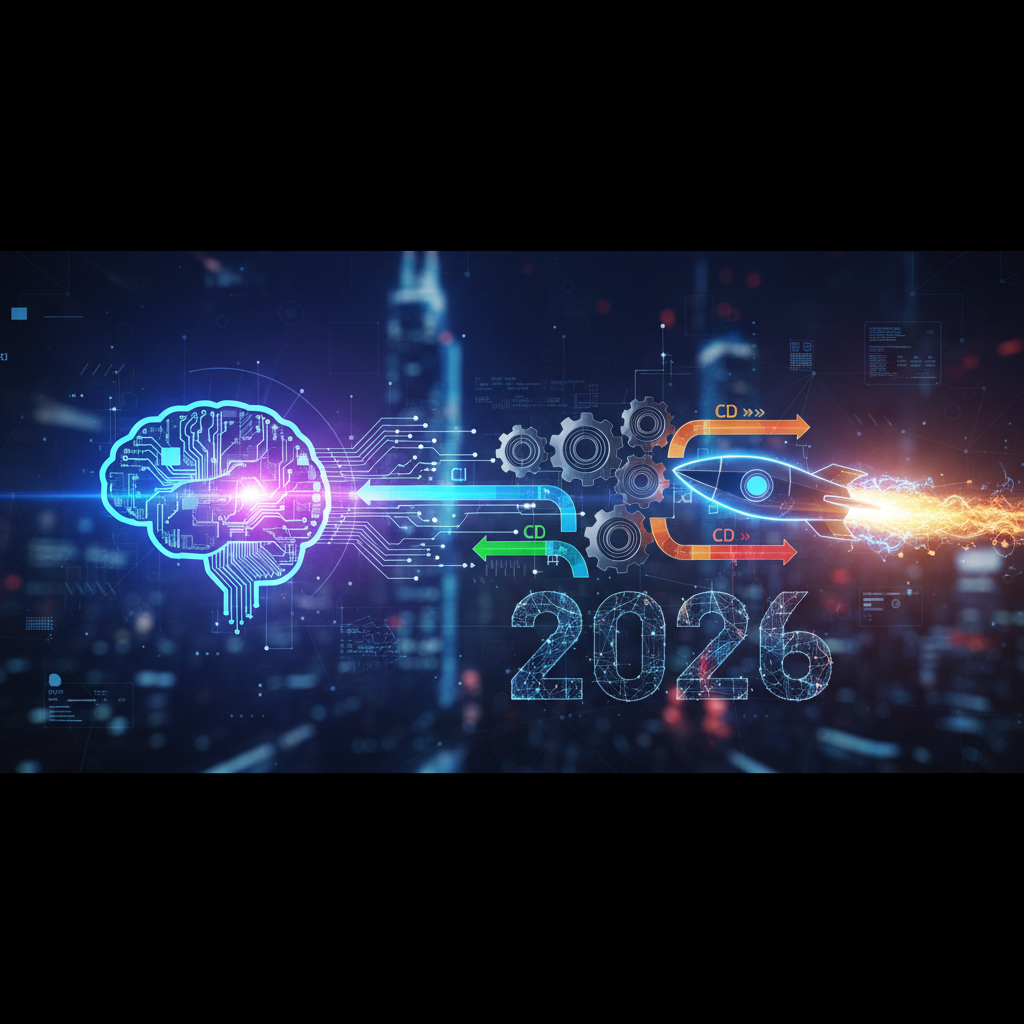
In the relentless current of technological evolution, software development in 2026 has transformed into an intensely dynamic, fast-paced, and demanding domain. Organizations are locked in a perpetual race to deliver innovation to market with unprecedented speed, maintain impeccable software quality, and ensure the unwavering reliability of their systems. In this hyper-competitive landscape, DevOps automation has not merely become a best practice; it is the fundamental infrastructure upon which modern software delivery thrives. Particularly when seamlessly integrated with advanced Continuous Integration (CI), Continuous Delivery/Deployment (CD) pipelines, and sophisticated artificial intelligence (AI)-powered testing processes, DevOps forms the indispensable backbone of contemporary development methodologies.
This article delves into how these interwoven technologies are defining the future of software development, offering an authoritative perspective on the strategies and innovations that propel organizations toward unstoppable development in 2026.
The Evolving Landscape of Software Development: Why DevOps Automation is Paramount
The year 2026 finds us navigating a software ecosystem characterized by extreme complexity and accelerated demand. Gone are the days when monolithic applications and lengthy release cycles were acceptable. Today, the market demands continuous innovation, instantaneous feedback, and resilience against ever-present threats. This paradigm shift has been driven by several key factors:
- Hyper-Scalability and Cloud-Native Architectures: The widespread adoption of microservices, serverless computing, and containerization (like Kubernetes) necessitates intricate orchestration and management, which manual processes simply cannot handle at scale.
- Global and Distributed Teams: Development is no longer confined to single locations. Global teams working across time zones require synchronized, automated pipelines to maintain efficiency and consistency.
- Increased Security Threats: The expanding attack surface of interconnected systems demands that security be 'shifted left' – integrated into every stage of the development lifecycle, not as an afterthought.
- Pressure for Speed and Quality: Consumers and businesses alike expect flawless, continuously updated software. Downtime or buggy releases can lead to significant financial losses and reputational damage.
In response to these challenges, DevOps automation emerges as the critical enabler, designed to minimize human error and maximize efficiency across the entire software development lifecycle (SDLC)—from ideation and coding to testing, deployment, and operation. Traditional, siloed approaches struggle to cope with the sheer volume and velocity of changes inherent in modern software. By contrast, DevOps automation provides the necessary agility, speed, and control to manage this complexity, transforming it from a hurdle into a competitive advantage.
Recent industry reports underscore this shift. According to the 2022 State of DevOps Report by DORA (DevOps Research and Assessment), elite performers in DevOps are 26 times more likely to achieve their organizational goals than low performers, highlighting the direct link between automation maturity and business success. Furthermore, Gartner predicted in 2023 that by 2026, 90% of global organizations will have implemented some form of DevOps practices, up from less than 50% in 2020, solidifying its status as an indispensable pillar for business continuity and sustained competitive edge.
CI/CD Pipelines: The Unsung Heroes of Agile Delivery
At the very heart of DevOps automation are Continuous Integration (CI) and Continuous Delivery/Deployment (CD) pipelines. By 2026, these concepts are far from being a luxury reserved for tech giants; they are foundational tools for development teams of all sizes, operating as the circulatory system of software engineering. They orchestrate the seamless flow of code from commit to production, ensuring rapid merging, automated testing, and secure, repeatable deployment processes from end-to-end.
The efficacy of CI/CD pipelines stems from their ability to enforce several critical practices:
- Frequent Code Integration: Developers regularly integrate small code changes into a shared main repository. This practice minimizes integration conflicts, making it easier to detect and resolve issues early in the development cycle, significantly reducing the 'integration hell' often associated with large, infrequent merges.
- Automated Testing at Scale: Following every code commit, the pipeline automatically triggers a comprehensive suite of tests. This includes unit tests, integration tests, API tests, security scans, and increasingly, AI-powered functional and performance tests. This immediate feedback loop catches bugs as soon as they are introduced, drastically cutting down on debugging time and costs later on.
- Automated Build and Deployment Preparation: Once tests pass, the software is automatically built, packaged into deployable artifacts (e.g., containers, executables), and prepared for deployment. This can range from staging environments for further validation to direct production deployment, depending on the CD strategy.
- Shortened Feedback Loops: The entire process is designed for speed. Developers receive instant feedback on the quality and functionality of their code changes, allowing for rapid iteration and correction. This fosters a culture of continuous improvement and ownership.
The synergy between modern CI/CD tools and complementary technologies has amplified their power. Containerization platforms like Docker and orchestration systems like Kubernetes provide consistent environments from development to production, eliminating 'it works on my machine' problems. Infrastructure as Code (IaC) tools such as Terraform and Pulumi allow infrastructure provisioning to be treated as code, enabling version control, automation, and repeatability. Furthermore, GitOps principles, which use Git repositories as the single source of truth for declarative infrastructure and applications, enhance the security, auditability, and reliability of deployments, making them even more predictable and robust in 2026.
The impact on organizational performance is profound. A 2021 report by Puppet's State of DevOps found that high-performing organizations leveraging CI/CD methodologies deploy code 208 times more frequently than low performers, with 106 times faster lead times from commit to deploy. This illustrates that CI/CD is not just about efficiency; it's about transforming a company's ability to innovate and respond to market demands.
AI's Transformative Role: Intelligent Automation Across the DevOps Lifecycle
One of the most significant advancements revolutionizing DevOps automation by 2026 is the pervasive integration of Artificial Intelligence. The traditional bottlenecks of manual processes—slowness, high cost, and susceptibility to human error—have become increasingly untenable, especially with the complexity of modern, distributed systems. AI has emerged as the intelligent orchestrator, elevating quality assurance and operational efficiency to unprecedented levels.
AI-Powered Testing: Intelligent Quality Assurance
AI's initial major inroads into DevOps were in testing, where its capabilities have been truly transformative:
- Intelligent Test Case Generation: AI algorithms can analyze application code, user behavior patterns, and historical defect data to automatically generate optimized test cases, including edge cases often missed by human testers. This significantly increases test coverage and efficiency.
- Self-Healing Tests: With the dynamic nature of UI elements and backend APIs, tests often break due to minor changes. AI-powered tools can detect these UI changes and automatically adapt test scripts, reducing maintenance overhead and false negatives, ensuring continuous validation.
- Predictive Defect Detection: By analyzing commit histories, code complexity, and developer activity, AI can predict areas of code most likely to contain defects, allowing teams to prioritize testing efforts and 'shift left' quality assurance even further.
- Performance Testing Optimization: AI can simulate realistic user loads, identify performance bottlenecks, and suggest optimizations based on historical data and real-time system metrics, moving beyond simple stress testing to intelligent, adaptive performance analysis.
The market for AI in software testing reflects its growing importance. Grand View Research estimated in its 2023 analysis that the global AI in testing market size is projected to reach over $11 billion by 2030, growing at a CAGR of 28.3%, underscoring the rapid adoption and value proposition of these technologies.
AI Beyond Testing: Orchestrating the Entire SDLC
AI's influence extends far beyond quality assurance, permeating virtually every stage of the DevOps lifecycle:
- Code Generation and Assistance: Tools like GitHub Copilot (launched 2022) have evolved considerably. By 2026, AI assistants are embedded in IDEs, offering intelligent code completion, suggesting best practices, refactoring code, and even generating entire boilerplate functions or modules based on natural language prompts, accelerating development speed and reducing cognitive load.
- AIOps (Artificial Intelligence for IT Operations): AI algorithms analyze vast streams of operational data (logs, metrics, traces) to detect anomalies, predict potential incidents before they occur, and even automate remediation steps. This proactive approach significantly reduces Mean Time To Recovery (MTTR) and Mean Time To Detect (MTTD), ensuring system stability and availability. For instance, a major financial institution reported reducing critical incident response times by 40% through early adoption of AIOps platforms in 2024.
- DevSecOps Integration with AI: AI augments security by identifying vulnerabilities in code, configurations, and deployed systems. It can perform intelligent threat modeling, analyze security logs for suspicious patterns, and even suggest patches or configuration changes, making security an integral and automated part of the pipeline rather than a separate, often manual, gate.
- Intelligent Release Orchestration: AI can analyze historical deployment data, performance metrics, and business impact to optimize release schedules, recommend canary deployments or blue/green strategies, and even automate rollbacks when anomalies are detected post-deployment, minimizing risk and maximizing successful releases.
By integrating AI across these phases, organizations achieve a truly intelligent and self-optimizing development pipeline, where systems learn, adapt, and improve continuously, pushing the boundaries of what's possible in software engineering.
Beyond AI and CI/CD: Emerging Trends and Technologies in 2026 DevOps
While AI and CI/CD form the foundational pillars, the DevOps landscape in 2026 is also shaped by several other rapidly maturing and emerging trends that are further enhancing automation, efficiency, and developer experience:
- Platform Engineering: This trend focuses on building and maintaining internal developer platforms (IDPs) that abstract away infrastructure complexities, providing developers with self-service capabilities for deploying, managing, and observing their applications. Instead of developers configuring Kubernetes clusters or CI/CD pipelines directly, they interact with a streamlined platform. Gartner predicted in 2023 that 80% of large organizations will adopt Platform Engineering strategies by 2026, recognizing its potential to accelerate delivery and enhance developer productivity by providing 'paved roads' for application deployment.
- FinOps: Cost Optimization in Cloud-Native Environments: As cloud spending continues to soar, FinOps has become a critical discipline. It's an operational framework that brings financial accountability to the variable spend model of cloud, leveraging data-driven approaches to understand cloud costs, optimize resource utilization, and make financial decisions. Automated FinOps tools, often AI-enhanced, monitor cloud usage in real-time, identify waste, and recommend or automatically implement cost-saving measures without impacting performance.
- Enhanced Observability: Moving beyond traditional monitoring, observability focuses on understanding the internal state of a system by analyzing its external outputs (logs, metrics, traces). In 2026, advanced observability platforms leverage AI and machine learning to correlate vast amounts of data, predict issues, understand complex interdependencies in microservice architectures, and provide deeper insights into application and infrastructure health, enabling faster incident resolution and proactive maintenance.
- Chaos Engineering as a Standard Practice: Proactively injecting failures into a system to test its resilience has moved from niche practice to a standard component of mature DevOps. Automated chaos engineering platforms simulate real-world outages (e.g., network latency, service degradation, resource exhaustion) in controlled environments, allowing teams to identify weaknesses and build more robust, fault-tolerant systems before they impact customers.
- Shift-Left Security and DevSecOps Automation: Security is no longer a separate phase but an intrinsic part of the pipeline. Automated security tools perform static and dynamic application security testing (SAST/DAST), software composition analysis (SCA), and infrastructure as code (IaC) security scanning early and continuously. AI-driven security orchestration, automation, and response (SOAR) platforms automate threat detection and incident response, ensuring that security is woven into every commit, build, and deployment.
- Low-Code/No-Code (LCNC) Integration: While not for core engineering, LCNC platforms are increasingly integrated into DevOps pipelines for accelerating the development of internal tools, prototypes, and specific business logic components. This allows for rapid iteration and deployment of certain application layers, freeing up skilled developers for more complex tasks and democratizing parts of the development process.
- GreenOps / Sustainable Software Engineering: With growing environmental concerns, GreenOps focuses on optimizing the energy consumption and carbon footprint of software and its infrastructure. Automated tools analyze resource utilization, suggest more efficient coding practices, and recommend sustainable cloud regions or infrastructure configurations. This trend ensures that software development is not only efficient and performant but also environmentally responsible. A 2023 report by the Green Software Foundation indicated a 15% average reduction in energy consumption for early adopters by optimizing deployment strategies and infrastructure choices.
These trends, alongside AI and CI/CD, paint a picture of a holistic, intelligent, and highly automated DevOps ecosystem in 2026, where efficiency, resilience, and strategic business alignment are paramount.
Navigating the Challenges: Overcoming Obstacles to Full Automation
Despite the undeniable benefits, the journey toward comprehensive DevOps automation, especially with advanced AI integration, is not without its hurdles. Organizations aiming for unstoppable development in 2026 must proactively address these challenges:
- Cultural Resistance and Skill Gaps: Perhaps the most significant challenge is the human element. Shifting from traditional, siloed roles to a collaborative, automation-first DevOps culture requires significant change management, training, and upskilling. Developers, operations teams, and even leadership need to embrace new ways of working, learning tools like Kubernetes, IaC, and understanding AI's role. A lack of skilled talent in AI/ML and advanced automation remains a critical bottleneck for many.
- Toolchain Complexity and Integration Hell: The sheer number of tools available in the DevOps ecosystem can be overwhelming. Integrating various CI/CD platforms, testing frameworks, monitoring solutions, security tools, and AI services into a cohesive, interoperable pipeline can be complex and time-consuming. Maintaining these integrations as tools evolve adds another layer of difficulty.
- Security Concerns in Automated Pipelines: While automation enhances security through early detection, the pipelines themselves become critical targets. Malicious code injection, compromised credentials, or vulnerabilities in the automation tools themselves can have widespread impact. Ensuring the security of the pipeline itself, from source code to deployment, requires constant vigilance and robust security practices (e.g., least privilege, secrets management, regular audits).
- Cost of Implementation and Maintenance: Investing in advanced automation tools, AI infrastructure, cloud resources, and continuous training represents a substantial upfront and ongoing cost. Organizations need to carefully assess the Return on Investment (ROI) and manage budgets effectively to sustain their automation efforts.
- Legacy Systems Integration: Many enterprises still rely on legacy applications and infrastructure that are not inherently designed for modern cloud-native or highly automated environments. Integrating these older systems into a fast-paced DevOps pipeline can be extremely challenging, often requiring re-architecting, containerization, or building complex integration layers.
- Ethical Considerations and AI Governance: As AI becomes more embedded in decision-making within DevOps (e.g., automated code reviews, predictive incident response), ethical considerations around bias, transparency, and accountability become paramount. Ensuring AI systems are fair, explainable, and align with organizational values requires robust governance frameworks.
Overcoming these challenges requires a multifaceted strategy: fostering a learning culture, investing in comprehensive training programs, adopting open standards and API-first approaches for tool integration, implementing robust DevSecOps practices from day one, and prioritizing a clear, phased roadmap for automation with measurable KPIs. Building internal developer platforms (Platform Engineering) can also significantly mitigate toolchain complexity by providing opinionated, secure, and integrated workflows.
The Future is Automated: Strategic Imperatives for Organizations
As we look at 2026, the trajectory of software development is unequivocally towards increasingly intelligent and comprehensive automation. The convergence of DevOps principles with advanced CI/CD pipelines and pervasive AI integration is not merely an evolutionary step; it's a revolutionary leap that redefines what's possible in terms of speed, quality, and resilience in software delivery. For organizations to thrive in this automated future, several strategic imperatives stand out:
- Embrace a Culture of Continuous Automation: Automation should not be viewed as a one-time project but an ongoing organizational philosophy. Every manual, repetitive task is a candidate for automation, and teams should be empowered to identify and implement these efficiencies. This requires leadership buy-in and a cultural shift towards experimentation and continuous improvement.
- Invest in AI Literacy and Talent Development: Understanding and leveraging AI is no longer optional. Organizations must invest heavily in upskilling their workforce, from developers to operations engineers, in AI/ML concepts, MLOps, and the application of AI tools across the SDLC. Cultivating in-house expertise will be crucial for competitive differentiation.
- Prioritize Platform Engineering: To manage the complexity of diverse tools and accelerate developer velocity, establishing a robust internal developer platform is paramount. This 'paved road' approach provides standardized, self-service infrastructure and toolchains, allowing product teams to focus on innovation rather than infrastructure plumbing.
- Integrate Security by Design (DevSecOps): With accelerated deployment cycles, security can't be an afterthought. Embedding automated security checks, vulnerability scanning, and compliance validation throughout the CI/CD pipeline, often AI-enhanced, is critical to maintaining a strong security posture in a highly dynamic environment.
- Focus on Observability and AIOps: Beyond simply monitoring, organizations must strive for deep observability into their systems. Leveraging AIOps to analyze this data will be key to predicting and proactively resolving incidents, optimizing resource utilization, and ensuring a superior user experience.
- Measure, Learn, and Adapt: Continuous measurement of key performance indicators (KPIs) like deployment frequency, lead time for changes, mean time to recovery (MTTR), and change failure rate (CFR) is essential. Organizations must use these metrics to continuously identify bottlenecks, learn from successes and failures, and adapt their automation strategies accordingly.
The organizations that strategically embrace these imperatives will not only gain a decisive competitive advantage in 2026 but will also cultivate a resilient, innovative, and efficient development ecosystem capable of navigating the unpredictable demands of the digital age. The future of software development is automated, intelligent, and unstoppable.
Comparative Metrics: Traditional SDLC vs. DevOps Automated SDLC (2026 Perspective)
The following table illustrates the stark performance differences between traditional software development lifecycle approaches and a fully automated DevOps SDLC, as observed in high-performing organizations in 2026:
| Metric | Traditional SDLC (Pre-DevOps) | DevOps Automated SDLC (2026) | Improvement Factor |
|---|---|---|---|
| Deployment Frequency | Once every few months/quarters | Multiple times a day/on demand | 200x+ (DORA 2022) |
| Lead Time for Changes (Commit to Deploy) | Weeks to Months | Minutes to Hours | 100x+ (Puppet 2021) |
| Mean Time To Recovery (MTTR) | Hours to Days | Minutes | 24x+ (DORA 2022) |
| Change Failure Rate | 15-20% | 0-15% (Often <5%) | 3x+ reduction |
| Security Vulnerabilities Detected Late | High (often in production) | Low (shifted left, detected in CI) | Significant reduction |
| Developer Satisfaction | Low (manual toil, long waits) | High (self-service, fast feedback) | Boosted productivity/retention |
Our Take: The Inevitable Ascent of Intelligent Automation
At biMoola.net, our analysis of the evolving technological landscape consistently points to one undeniable truth: intelligent automation, spearheaded by DevOps, CI/CD, and AI, is not merely an option for forward-thinking enterprises in 2026; it is a fundamental requirement for survival and growth. The data speaks for itself. Organizations that have fully committed to these methodologies are not just incrementally better; they operate on a different plane of existence, marked by unparalleled agility, reliability, and innovation capacity.
However, it's crucial to temper this optimism with a pragmatic understanding of the journey involved. The transition to a fully automated, AI-driven DevOps model is complex. It demands more than just investing in the latest tools; it requires a profound cultural shift, a sustained commitment to continuous learning, and a strategic vision that spans across the entire organization. The real power of AI in DevOps isn't just in automating tasks, but in its ability to provide predictive insights, learn from patterns, and proactively optimize the entire development value stream. This cognitive layer elevates automation from mere script execution to intelligent orchestration.
The competitive chasm between organizations embracing this transformation and those clinging to outdated practices will only widen. Those who harness the power of AI-infused CI/CD to achieve 'unstoppable development' will be the ones shaping their industries, delivering value at an unprecedented pace, and delighting their customers with continuously evolving, high-quality software. The future is here, and it's intelligently automated.
Key Takeaways
- DevOps Automation is a Strategic Imperative: In 2026, automation across the SDLC, driven by DevOps principles, is essential for competitive advantage, enabling rapid innovation and resilience in complex, cloud-native environments.
- CI/CD Pipelines Form the Core: Continuous Integration and Continuous Delivery/Deployment are non-negotiable for agile software delivery, ensuring frequent code integration, automated testing, and secure, repeatable deployments with rapid feedback loops.
- AI Transforms Every Stage: Artificial Intelligence has moved beyond AI-powered testing to intelligent code assistance, AIOps for predictive operations, and AI-driven DevSecOps, making the entire development lifecycle smarter, faster, and more reliable.
- Emerging Trends Enhance the Ecosystem: Platform Engineering, FinOps, advanced Observability, Chaos Engineering, and GreenOps are maturing trends that further optimize developer experience, cost management, system resilience, and sustainability in 2026.
- Cultural Shift and Continuous Learning are Key: Overcoming challenges like cultural resistance, skill gaps, and toolchain complexity requires a strong focus on people, continuous training, strategic investment, and a commitment to adaptive, data-driven improvement.
Frequently Asked Questions About DevOps Automation in 2026
What is the primary ROI (Return on Investment) of implementing advanced DevOps automation?
The primary ROI stems from significantly reduced time-to-market for new features, improved software quality leading to fewer defects and happier customers, enhanced operational efficiency through less manual toil, and increased developer productivity and satisfaction. Studies often show a dramatic increase in deployment frequency and reduction in mean time to recovery, directly translating to business agility and cost savings.
How can an organization begin integrating AI into its existing DevOps practices?
Organizations can start by identifying pain points in their current DevOps lifecycle that AI can address. Common starting points include AI-powered testing tools for intelligent test case generation or self-healing tests, or implementing AIOps solutions for anomaly detection and predictive alerting in operations. A phased approach, starting with specific, high-impact areas, allows for learning and adaptation.
What are the common pitfalls to avoid when scaling DevOps automation?
Common pitfalls include neglecting cultural transformation and change management, focusing solely on tools without addressing processes, underinvesting in training and upskilling, failing to secure the automation pipeline itself, ignoring the integration complexities of a diverse toolchain, and not establishing clear metrics to measure progress and identify bottlenecks. A holistic strategy addressing people, process, and technology is crucial.
How does DevOps automation relate to cloud-native development in 2026?
DevOps automation is intrinsically linked to cloud-native development. Cloud-native architectures (microservices, containers, serverless) inherently demand automation for their deployment, scaling, and management. CI/CD pipelines, IaC, and AIOps are essential for handling the distributed nature and dynamic scaling of cloud-native applications, making DevOps automation the operating system for successful cloud-native strategies.
Sources & Further Reading
- Google Cloud: 2022 State of DevOps Report
- Puppet: State of DevOps Report (2021)
- Grand View Research: Artificial Intelligence in Software Testing Market Size, Share & Trends Analysis Report (2023 Update)
- Gartner: Predicts 2023: The Future of Cloud-Native Platforms (2023)
- The Green Software Foundation: State of Green Software Report (2023)
Comments (0)
To comment, please login or register.
No comments yet. Be the first to comment!