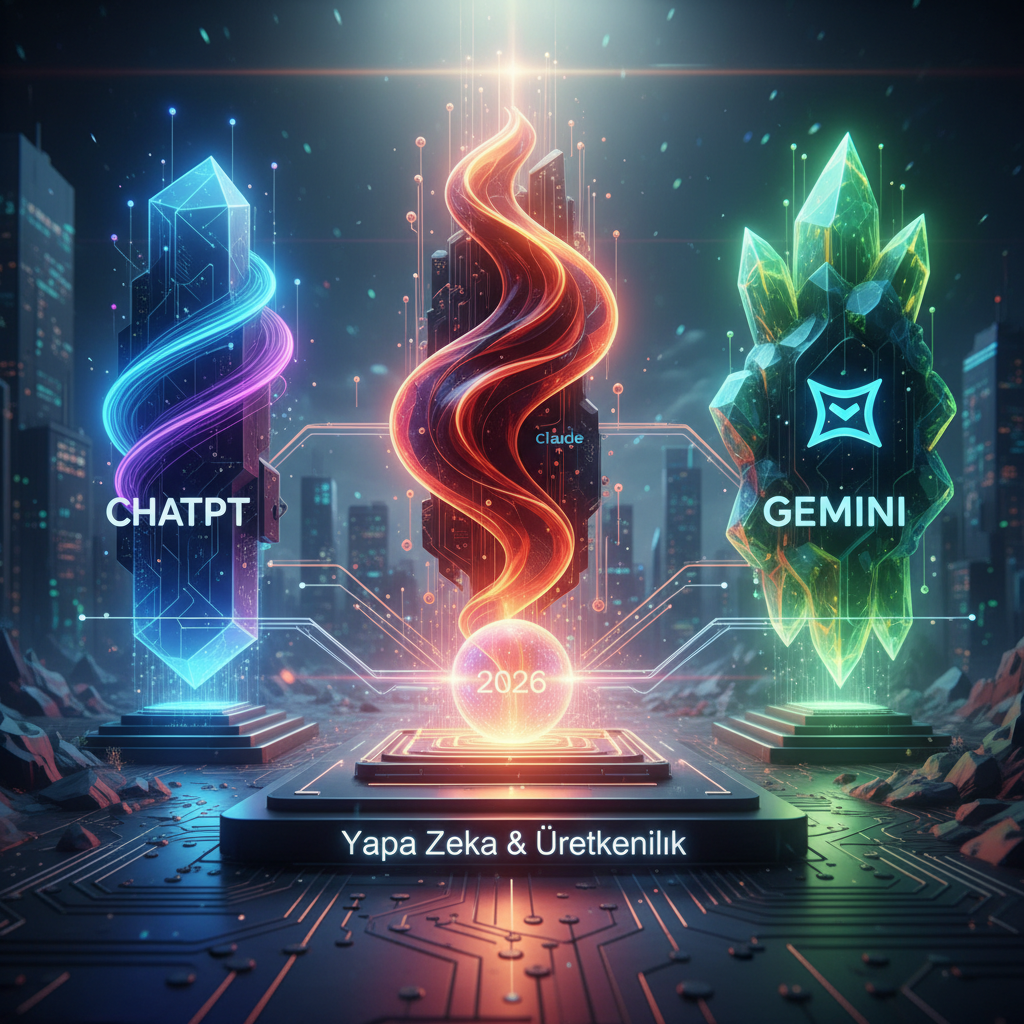
AI Competition in 2026: Which is the Best Choice Among ChatGPT, Gemini, and Claude?
The world of Artificial Intelligence (AI) is developing at an astonishing pace every single day. As we reach 2026, it wouldn't be wrong to predict that this development speed will increase even further. Specifically, chat-based AI tools, or AI chatbots, have become an indispensable part of our professional and personal lives. So, which of these revolutionary tools β ChatGPT, Gemini, or Claude β will be the right choice for you in 2026? As an experienced SEO specialist and content strategist, let's delve into the strengths and weaknesses, pricing models, and most suitable use cases for these three giants.
Why Are AI Chatbots So Important? The Key to the Future
Dialogue capabilities that we once only saw in science fiction movies are now at our fingertips. In 2026, these tools won't just answer questions; they can also solve complex problems, generate creative texts, write code, and even perform analyses on our behalf. This makes them indispensable for productivity, efficiency, and innovation. Choosing the right AI tool is critically important for gaining a competitive advantage in the business world, pushing the boundaries of personal development, or simply making your daily tasks easier.
ChatGPT: Strong Past, Bright Future, and Extensive Ecosystem
OpenAI's flagship ChatGPT is known for its general knowledge capabilities and wide range of applications. With GPT-5 or similar advanced models expected in 2026, it will offer even more sophisticated reasoning, context understanding, and creativity. Its strengths include a large user base, a rich plugin ecosystem, and the ability to create custom GPTs. This makes it adaptable to almost any task.
- Strengths: Versatility, coding, content creation, summarization, extensive plugin and custom GPT library, powerful API.
- Weaknesses: Occasionally generates inconsistent or "hallucinatory" false information (though this rate is decreasing), cost of advanced models.
- Use Cases: Writing SEO-friendly articles, creating marketing copy, debugging code, brainstorming, generating artistic texts.
- Pricing: While there's a free version, the most advanced features are accessed through ChatGPT Plus and enterprise solutions. In 2026, we are likely to see subscription models tailored to more specific needs.
Google Gemini: The Power of Knowledge and Ecosystem Integration
Google's Gemini model holds a unique position thanks to its vast knowledge base and deep integration with the Google ecosystem. In 2026, by forging even tighter links with Google Workspace (Gmail, Docs, Sheets, etc.), it will become an indispensable productivity tool, especially for corporate users. Its ability to access real-time information (thanks to Google Search integration) and multimodal (text, visual, audio) capabilities are its biggest advantages.
- Strengths: Real-time and up-to-date information access, seamless integration with Google products, multimodal capabilities, data analysis, and summarization.
- Weaknesses: Some inconsistencies experienced during its initial launch, sometimes less 'fluid' than ChatGPT for creative tasks.
- Use Cases: Market research, drafting emails, generating meeting summaries, data analysis, summarizing web pages, Google Ads optimization.
- Pricing: The basic version is free. Gemini Advanced and Google Workspace Enterprise AI add-ons are available for advanced features and higher capacity.
Claude: Secure, Context-Aware, and Ethical Communication
Developed by Anthropic, Claude stands out particularly for its security, ethical AI principles, and long-context understanding capability. In 2026, it will continue to be the preferred AI tool for professionals working with sensitive data and researchers needing to analyze long documents. Through its Constitutional AI approach, it aims to process user requests safely and within ethical boundaries.
- Strengths: Very long context windows (can process thousands of pages of text), focus on ethical and secure AI, understanding and summarizing complex texts, fewer 'hallucinations'.
- Weaknesses: Less common integrations and ecosystem compared to others, can be slower for some quick and simple tasks.
- Use Cases: Legal document analysis, academic research, reviewing long contracts, customer support scenarios, drafting policies, creative writing (especially long-form).
- Pricing: Billed via API access and different model sizes (Claude Opus, Sonnet, Haiku). Generally focused on high-capacity and secure enterprise use.
βIn 2026, choosing an AI will not just be about looking at a feature list; it will also depend on how well it integrates with your workflow and how securely it can keep your data.β
Pricing and Access in 2026: What to Expect?
All three platforms will continue to diversify their subscription models in 2026. They will generally offer a freemium model (basic features free) and tiered paid subscriptions (more capacity, speed, features). Enterprise solutions and API access will be a significant cost item for developers and large companies. Pricing will be shaped by the complexity of the AI model offered, the size of the context window, and integration capabilities. The important thing is that it provides value commensurate with its cost.
Which AI Tool is Best for You? Practical Selection Criteria and Examples
There is no single "best" AI tool; there is only the one that is most suitable for your needs. Here are some practical tips to consider when making your decision in 2026:
- Your Purpose: Will you be doing daily summaries, complex coding, or sensitive legal analyses?
- Ecosystem Preference: Do you heavily use the Google ecosystem? Or are you more interested in OpenAI's extensive plugin library?
- Your Budget: Are you looking for a free solution, or are you willing to pay for premium features?
- Data Security: How sensitive is the data you will be processing? Is Claude's ethical and security approach a priority for you?
- Context Length: Do you need to summarize or interact with thousands of pages of text?
Real-Life Examples:
- Content Marketer: ChatGPT Plus is ideal for generating creative texts, creating visuals, and conducting SEO keyword research. Gemini Advanced, on the other hand, can help you research current market trends and optimize your Google Ads campaigns.
- Software Developer: ChatGPT is very powerful for generating code, debugging, and learning about new APIs. Claude's long context capability can be valuable for analyzing lengthy documentation and creating system designs.
- Researcher/Lawyer: Claude is unparalleled for analyzing and summarizing long academic papers or legal documents and drawing reliable inferences.
- Project Manager: Thanks to Google Workspace integration, Gemini Advanced is an excellent AI tool for organizing emails, summarizing meetings, and creating project plans.
Conclusion: Experience and Decide for Yourself
In 2026, AI chatbots will no longer just be assistants; they will become your business partners. ChatGPT, Gemini, and Claude are each filled with unique capabilities and advantages. The most effective way to understand which tool is best for you is to try each one in your own use cases and build your own experiences. As the artificial intelligence revolution continues, choosing the right tool will give you significant momentum in achieving both your personal and professional goals. Now it's your turn: Which AI tool do you plan to use to take your productivity to the peak in 2026?
Comments (0)
To comment, please login or register.
No comments yet. Be the first to comment!