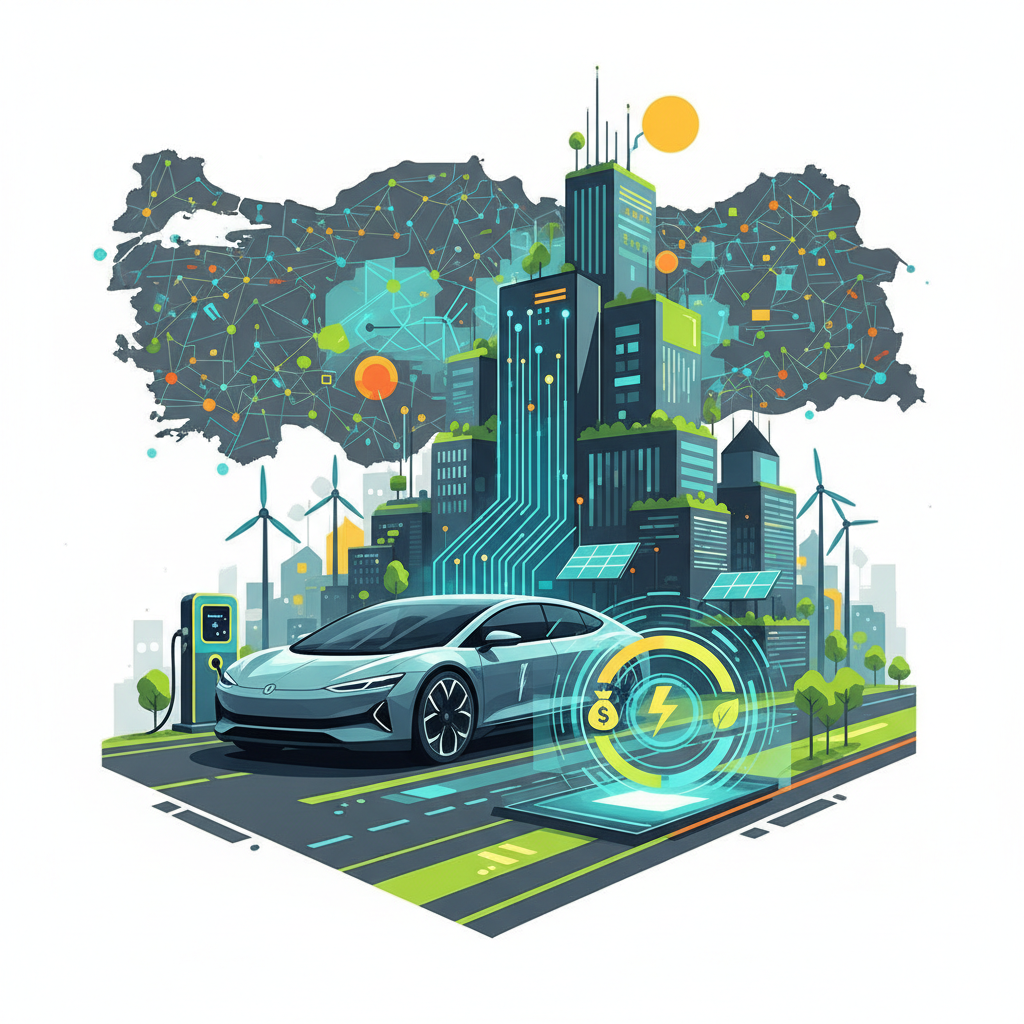
The Future of Driving Begins: A Guide to Transitioning to Electric Vehicles in 2026
Hello sustainable living enthusiasts and tech geeks! Welcome to 2026. Electric vehicles (EVs) are no longer just a trend; they have become an integral part of our roads and cities. Especially in Turkey, electric vehicle ownership is emerging as an increasingly attractive option every day. So, what does transitioning to an electric vehicle mean at this very moment? What are the costs, what is the charging infrastructure like, and how much is our carbon footprint on our planet truly shrinking? As an experienced SEO specialist and content strategist, I will delve into all these questions from a 2026 perspective in this guide. Get ready, let's step into the future driving experience together!
Turkey's Electric Vehicle Market in 2026: What Has Changed?
Compared to previous years, Turkey has reached significant maturity in the electric vehicle market in 2026. The various incentives provided by the government, the increasing market share of domestic production brands (especially TOGG), and the expanding model range of international brands offer consumers a rich variety of options in every segment. Rapid developments in battery technology have both increased range and shortened charging times, alleviating the concerns of many who previously experienced range anxiety. Now, it's possible to find an electric car suitable for every need, from compact models for urban use to SUVs suitable for long journeys.
Cost Analysis: How Much Will It Cost to Own an Electric Vehicle?
The biggest question for those considering buying an electric vehicle is, of course, the cost. In 2026, starting prices have come even closer to traditional internal combustion engine (ICE) vehicles. In fact, some low and mid-segment EVs have become more affordable than their ICE counterparts due to special consumption tax (ÖTV) advantages and other supports. However, focusing solely on the purchase price can be misleading. A true cost analysis should include the following items:
- Purchase Price: Consider ÖTV (Special Consumption Tax), KDV (Value Added Tax), and potential government incentives.
- Fuel Cost (Electricity): Compare energy costs for home charging (cheaper) and public charging stations (slightly more expensive). Regardless of electricity unit prices in 2026, it is much more economical per kilometer than ICE vehicles.
- Taxes and Insurance: The motor vehicle tax (MTV) applied to electric vehicles is generally lower. Comprehensive insurance premiums vary according to your model and usage habits.
- Maintenance Costs: Due to fewer moving parts in electric vehicles, maintenance costs are up to 50% lower than for ICE vehicles. Items like oil changes and spark plug replacements are not found in EVs.
Practical Tip: Before purchasing an electric vehicle, use online tools to calculate the total cost of ownership (TCO) by evaluating your annual mileage and home charging possibilities. Most manufacturers and banks offer special discounts on EV loans.
Charging Infrastructure: Where is Turkey in 2026?
As of 2026, Turkey's charging infrastructure has made incredible progress compared to previous years. Thousands of fast DC charging stations (50 kW and above) are actively serving in large cities and along main transportation routes. In addition to petrol stations, shopping malls, hotels, car parks, and even some residential complexes have installed their own EV charging points, making the charging experience easier.
- Home Charging: This is the most convenient and practical solution. With smart charging systems, you can charge your vehicle during off-peak hours, further reducing your energy costs.
- Public Fast Charging Stations: In large cities, finding a fast charging station every 5-10 kilometers, and on intercity roads approximately every 50-70 kilometers, is now a common occurrence. Various mobile applications (e.g., Trugo, Eşarj, Zes) instantly show you the nearest stations, their occupancy status, and prices.
- Evolving Technologies: In 2026, V2G (Vehicle-to-Grid) technology has started to become widespread. This allows your electric vehicle to generate additional income by selling electricity back to the energy grid or power your home's electricity needs. EVs integrated with smart grids play a significant role in energy management.
Real-Life Examples and Practical Tips
Many new electric vehicle owners might initially hesitate about charge planning. But don't worry! In 2026, this has become quite easy. For example, Mr. Ali, traveling from Istanbul to Ankara with his TOGG, easily reached his destination by planning his journey in advance with smart charging apps and fast charging at two stopovers. An average 20-30 minute coffee break or meal break is enough to charge your vehicle's battery up to 80%.
Here are a few practical tips:
- Charging Map Apps: Always check up-to-date charging map applications before embarking on a trip or in your daily routine.
- Home Charging Station Installation: If possible, have a wallbox installed at your home or workplace. This is the most efficient solution in terms of both time and cost.
- Preserve Battery Life: Try to keep the battery charged between 20% and 80% generally. Full charging or full discharge can shorten battery life.
- Smart Charging Modes: Use the smart charging modes in your vehicle or charger to charge during hours when electricity tariffs are low.
Reduce Your Carbon Footprint: Environmental Impacts
One of the most significant advantages of electric vehicles is their substantial reduction of the carbon footprint. Zero tailpipe emissions directly contribute to improving air quality in cities, leading to a decrease in respiratory diseases. The share of renewable energy sources (solar, wind, geothermal) in Turkey's energy mix is increasing every year. This ensures that the electricity used to charge electric vehicles is more environmentally friendly. As of 2026, with this transformation in energy production, it has been scientifically proven that EVs have much lower carbon emissions throughout their lifecycle compared to ICE vehicles.
Used Electric Vehicle Market and Battery Health
In 2026, the used electric vehicle market is quite vibrant. The tendency of early EV owners to upgrade their vehicles fuels this market. One of the most significant concerns when buying a used EV is battery health. However, thanks to current technologies, most EV manufacturers offer up to 8 years of warranty on their batteries. Furthermore, you can obtain detailed battery health reports from authorized services to learn about the battery performance of the vehicle you intend to purchase. Developments in battery technology extend battery life, and significant steps have also been taken regarding the recycling of old batteries or their use in second-life applications (such as energy storage systems).
Other Factors Influencing Your Purchase Decision
When choosing an electric vehicle, in addition to cost and charging infrastructure, you should also consider your personal needs. Range, performance, technological features (autonomous driving assistants, large screens, etc.), and the brand's after-sales support are all very important. In 2026, many brands offer attractive packages to EV users, such as special roadside assistance, mobile charging services, and guaranteed battery replacement. Test driving different models will help you find the most suitable vehicle for you.
A Sustainable Step on the Roads of the Future
As seen, owning an electric vehicle in 2026 has become a very logical and accessible option, both economically and environmentally. With evolving charging infrastructure, decreasing operating costs, and increasing model variety, Turkey is on the cusp of a sustainable transportation revolution. If you are also considering joining the driving of the future, now is the right time. Do your research, determine your needs, and be a part of this exciting change. Remember, every time you charge and every kilometer you travel, you are investing in our planet and our future. May your roads be open, and your charge be plentiful!
Comments (0)
To comment, please login or register.
No comments yet. Be the first to comment!