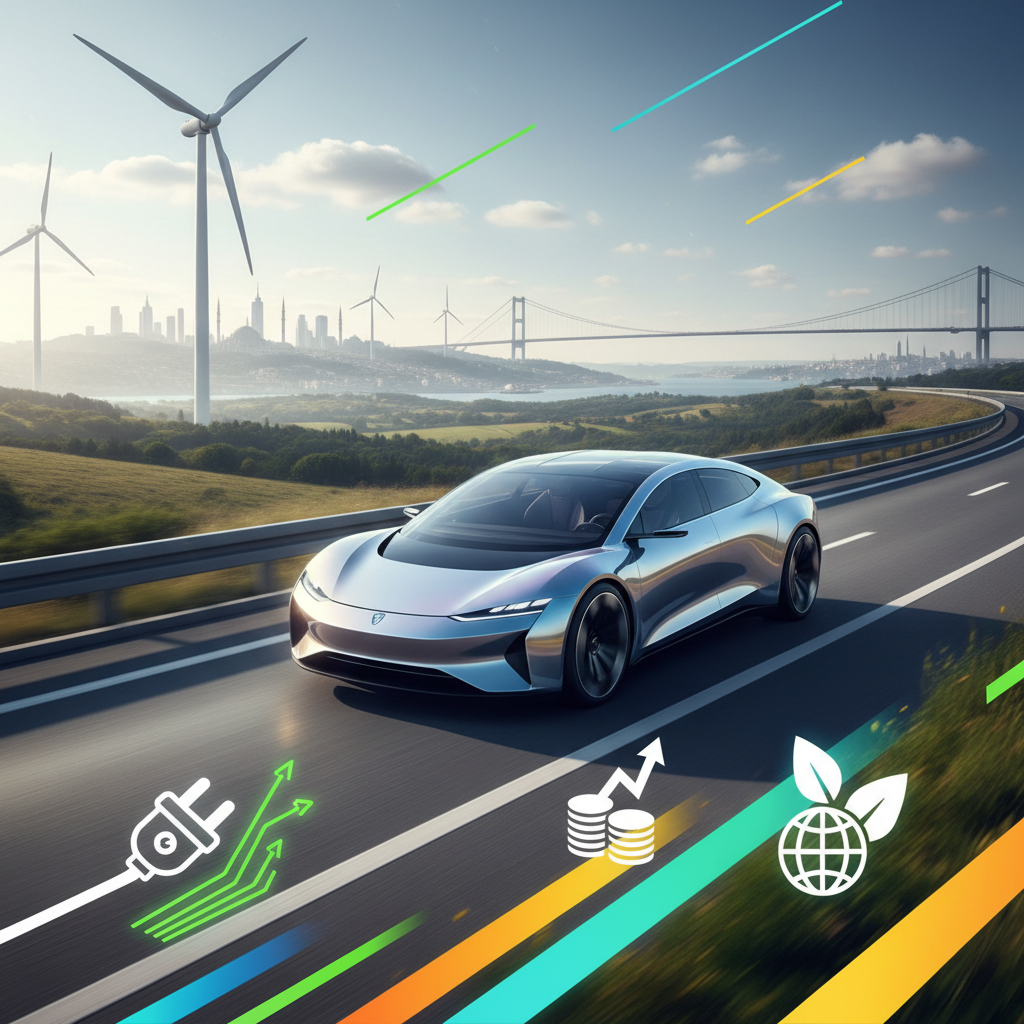
Step by Step Towards an Electric Future: EV Ownership in Turkey in 2026
Electric vehicles (EVs) are no longer just a vision for the future; by 2026, they have become an indispensable part of Turkey's roads. With rapid technological advancements, increasing environmental awareness, and the impact of government incentives, electric vehicles offer an attractive alternative. So, what does it mean to consider owning an electric vehicle in 2026? Let's thoroughly examine the costs, charging infrastructure, and environmental impact.
In this guide, we will evaluate all aspects of electric vehicle ownership in Turkey from a 2026 perspective, helping you make an informed decision with practical tips and concrete suggestions. EVs, which are now not just a "luxury" but also a "smart" choice, are opening the doors to sustainable living.
Overview of the Turkish Electric Vehicle Market in 2026
By 2026, the Turkish electric vehicle market has reached significant maturity. This transformation, pioneered by the domestic production of Togg, gained momentum with global brands also entering the market with various models. Developments in battery technologies have increased vehicle ranges while shortening charging times. At the same time, the second-hand electric vehicle market has also gained vitality, beginning to offer more affordable options. It is now possible to find an electric car appealing to buyers from every segment and budget.
Electric Vehicle Cost Analysis: 2026 Perspective
When considering buying an electric vehicle, one of the most curious topics is, of course, the cost. In 2026, the cost of electric vehicles has become much more competitive compared to previous years.
Purchase Cost and Incentives
- Initial Investment: The decrease in battery production costs and increased competition have brought the list prices of electric vehicles closer to their gasoline or diesel counterparts. Efficient urban models, in particular, are now much more accessible.
- Tax Advantages: In Turkey, the Special Consumption Tax (ÖTV) rates applied to electric vehicles are still lower than those for traditional vehicles based on engine displacement or carbon emissions. These tax advantages are expected to continue, and even expand, in 2026. Furthermore, the annual Motor Vehicle Tax (MTV) is also kept at lower levels for electric vehicles.
- Government Subsidies: Support such as grants and low-interest loans offered to encourage environmentally friendly technologies can make the initial investment cost even more attractive. It is important to keep track of these current incentives.
Operating Costs: The Difference in Your Pocket
The point where electric vehicles truly make a difference is the total cost of ownership (TCO). Let's compare operating expenses:
- Fuel Cost (Electricity): In 2026, electricity unit prices are still quite economical compared to gasoline and diesel prices. Especially when charging at home during off-peak hours, costs per kilometer are significantly lower compared to internal combustion engine vehicles. Thanks to smart charging systems, your ability to charge at the most favorable rate according to grid demand has also increased.
- Maintenance Costs: Electric vehicles do not have parts specific to internal combustion engines such as engine oil, spark plugs, or timing belts. This significantly reduces maintenance needs and costs. Regular service only covers standard checks like the brake system, tires, and software updates.
- Insurance Costs: Although electric vehicle insurance might initially be slightly higher, with the maturation of the market and an increase in accident data, these costs are also expected to decrease to competitive levels by 2026.
Charging Infrastructure: Status and Future in Turkey
One of the most critical components of electric vehicle ownership is the charging infrastructure. By 2026, Turkey has made significant progress in this area.
Home Charging Solutions: Comfort and Economy
Home charging is the primary and most economical charging method for electric vehicle owners. By installing a wallbox (wall-mounted charging unit), you can charge your vehicle overnight and start your day with a full battery. In 2026, smart charging units, with advanced features like integration with solar panels, V2G (Vehicle-to-Grid), and V2H (Vehicle-to-Home), can interact with the electricity grid to optimize the most suitable charging times and energy sources.
Public Charging Stations: Expansion and Speed
Across Turkey, especially in major cities and on main arteries, the network of charging stations has significantly expanded. With Togg's contributions and private sector investments, the number of DC (fast charging) stations has increased. In 2026, mobile applications make route planning much easier and more efficient by instantly showing the occupancy rates, pricing, and locations of charging stations. Roaming agreements between different charging operators also provide great convenience, allowing users to utilize many stations with a single app or card.
Carbon Footprint: Is It Really More Environmentally Friendly?
It is widely accepted that electric vehicles are environmentally friendly. However, examining this topic in more depth from a life cycle analysis (LCA) perspective is important.
Production and Lifecycle Impact
The production of electric vehicle batteries initially leaves a certain carbon footprint due to the extraction and processing of minerals like lithium and cobalt. However, by 2026, this impact is decreasing with increased efficiency in battery technologies and the development of recycling processes. The real difference emerges over the vehicle's lifespan:
- Zero Tailpipe Emissions: Electric vehicles emit zero tailpipe emissions during driving, significantly reducing air pollution and especially improving urban quality of life.
- Electricity Generation Source: The most critical factor determining an electric vehicle's carbon footprint is the source from which electricity is generated. As Turkey has increased its investments in renewable energy sources (solar, wind, hydroelectric) by 2026, the carbon intensity of the electricity used to charge electric vehicles is decreasing, further strengthening the environmental benefits of EVs.
- Battery Recycling: Advanced recycling facilities and second-life battery projects (e.g., energy storage systems) minimize the environmental impact of batteries at the end of their lifespan and allow for the reuse of valuable metals.
In summary, when a life cycle analysis is performed, electric vehicles have a much lower carbon footprint than internal combustion engine vehicles and are key to sustainable transportation.
Additional Advantages and Practical Tips for 2026 and Beyond
Electric vehicle ownership is not just about cost and being environmentally friendly; it also offers many conveniences in daily life:
- Driving Comfort: A quiet motor, instant torque, and smooth acceleration enhance the driving pleasure of electric vehicles.
- Lower Taxes and Tolls: In some cities, electric vehicles may be offered parking discounts, advantages, or free passage on bridges and highways.
- Technological Integration: Smartphone integration, remote control, navigation, and updates make your interaction with your vehicle even smarter.
Tips for Smart Decisions
- Conduct a Needs Analysis: What is your daily range requirement? Where will you typically charge? These questions help you choose the right model and battery capacity.
- Plan Your Charging Habits: If you have the option to charge at home, this is a significant advantage. For long journeys, identify fast charging stations along your route beforehand.
- Monitor Incentives: Research current incentives and support from the government and local authorities. This can significantly reduce the purchase cost.
- Take a Test Drive: By test-driving different brands and models, you can gather information about driving comfort, technological features, and the overall experience.
Conclusion: A Conscious Step Towards an Electric Future
Buying an electric vehicle in 2026 is more than just a transportation choice; it's an investment in sustainable living, economical driving, and the future. Given Turkey's developing charging infrastructure, competitive costs, and environmental benefits, electric vehicles are now an accessible and sensible option for a broad audience. By making an informed choice, both in terms of costs and environmental impact, you can protect both your budget and our planet. Welcome to the electric future!
Comments (0)
To comment, please login or register.
No comments yet. Be the first to comment!