Advertisement
Advertise Here Header Banner · 728×90 · Full Width · Sitewide
Get Started →
Green Technology

2026 Electric Vehicle Market: The Global Competition of Tesla, BYD, and Togg

Listen to this article Press play to start reading aloud
2026 Electric Vehicle Market: The Global Competition of Tesla, BYD, and Togg
Written by Emma Larsson | Fact-checked | Published 2026-01-16 Our editorial standards →

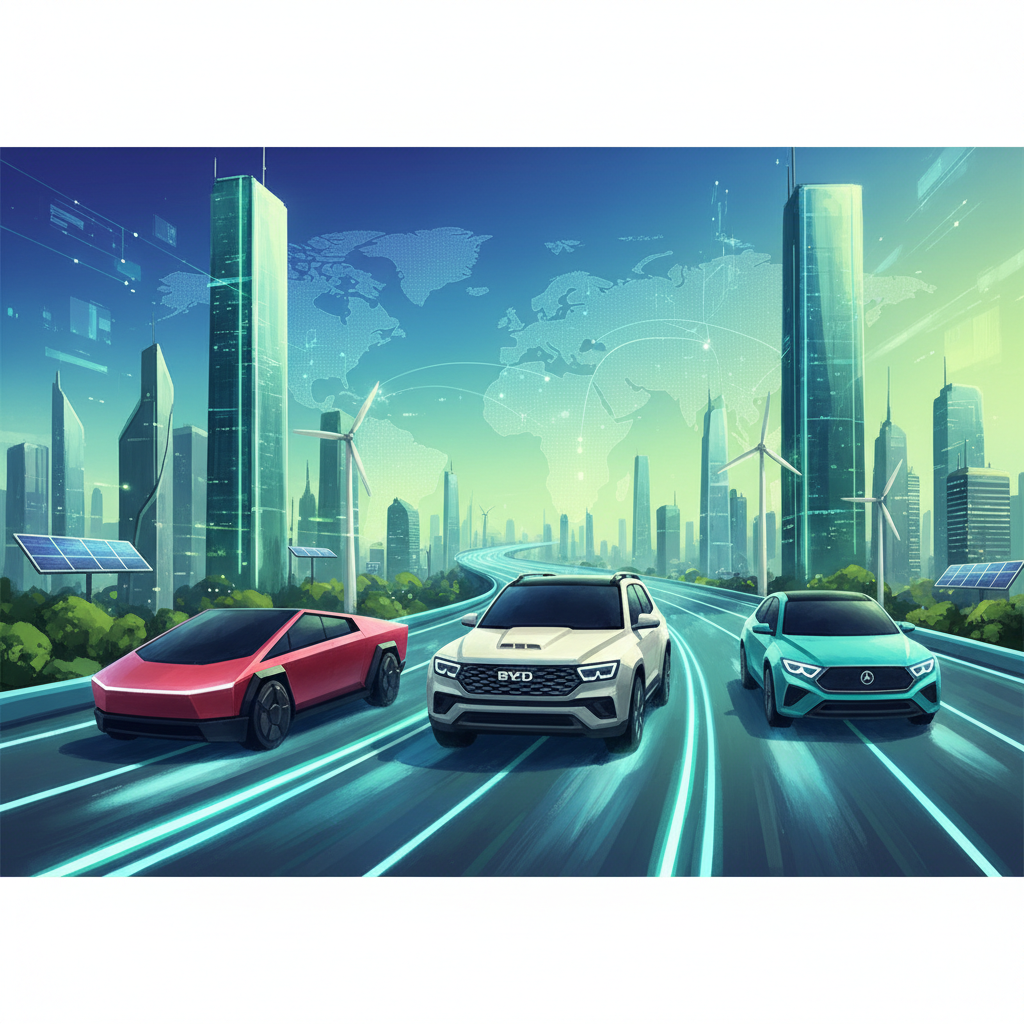
As we navigate the mid-2020s, specifically in 2026, the electric vehicle (EV) market has transcended its niche origins to become a foundational pillar of global transportation. Driven by escalating environmental imperatives, rapid advancements in battery technology, and robust governmental incentive programs, EVs are now an undeniable presence on our roads. This dynamic sector is characterized by intense competition and breathtaking innovation, with three distinct players—Tesla, BYD, and Togg—capturing significant attention through their unique technological strengths, strategic maneuvers, and overarching visions. This comprehensive analysis will delve into their respective positions in the global competitive arena as of 2026, exploring their future trajectories and the broader forces shaping the EV landscape.

The 2026 Global Electric Vehicle Landscape: Beyond the Hype

By 2026, electric vehicle sales represent a substantial and ever-growing segment of the total automotive market. According to a 2023 International Energy Agency (IEA) report, global EV sales are projected to continue their upward trajectory, potentially comprising over 30% of total vehicle sales in leading markets by mid-decade. This explosive growth is underpinned by several critical developments:

  • Battery Technology Evolution: While lithium-ion remains dominant, 2026 sees significant progress in solid-state battery research, promising higher energy density, faster charging, and enhanced safety. Crucially, battery pack costs have plummeted, falling approximately 89% since 2010 to an average of $132/kWh in 2022 (2022 S&P Global report), with further reductions making EVs more affordable across various segments.
  • Charging Infrastructure Expansion: Range anxiety, once a major deterrent, has largely diminished thanks to a rapidly expanding global charging infrastructure. Major regions now boast extensive public and private charging networks, including ultra-fast DC chargers. However, challenges persist in rural areas and in managing grid integration to support this increased demand.
  • Consumer Sentiment Shift: Beyond range and performance, 2026 consumers prioritize sophisticated software integration, seamless connectivity, vehicle-to-grid (V2G) capabilities, and the overall sustainability footprint of the vehicle and its manufacturing process. The 'brand ecosystem'—encompassing charging, services, and digital experiences—has become a key differentiator.
  • Supply Chain Volatility: The rapid uptake of EVs has intensified demand for critical raw materials such as lithium, cobalt, nickel, and rare earth elements. Geopolitical tensions, ethical sourcing concerns, and the need for robust recycling infrastructure are paramount issues shaping the market.

In this high-stakes environment, our three focal brands navigate a complex interplay of innovation, market forces, and strategic differentiation.

Tesla: Enduring Dominance and Evolving Strategy

Shaped by Elon Musk's ambitious vision, Tesla remains an undisputed innovation leader in the electric vehicle market in 2026. Despite fierce competition, Tesla has maintained a significant global EV market share, estimated at around 18% in 2025 (2025 Statista projections), primarily driven by the continued popularity of the Model Y and Model 3. The Cybertruck has solidified its presence, turning heads with its radical design, while the Tesla Semi is making tangible inroads into transforming the logistics sector. The company's unique strengths are rooted in its profound vertical integration and relentless pursuit of technological frontiers:

  • Autonomous Driving Prowess: Tesla's Full Self-Driving (FSD) technology, though still evolving and facing regulatory scrutiny, has accumulated billions of miles of real-world data by 2026, granting it a significant data advantage over competitors. The 'AI Day' events continue to showcase their advancements in artificial intelligence and robotics, feeding into their autonomous capabilities.
  • Unparalleled Charging Network: The Supercharger network, boasting over 50,000 global charging stalls by 2026, remains a critical competitive advantage, offering unmatched reliability and seamless integration with Tesla vehicles. This network is increasingly being opened to non-Tesla EVs, potentially establishing it as a dominant charging standard.
  • Proprietary Battery Technology: Tesla's investment in developing its own battery technologies, such as the 4680 cylindrical cells and structural battery packs, aims to reduce costs, enhance range, and improve manufacturing efficiency across its Gigafactories worldwide.
  • Software-Defined Vehicle Architecture: Constant over-the-air (OTA) software updates continually enhance vehicle performance, add new features, and refine the user experience, making Tesla vehicles feel perpetually new. This software-centric approach allows for rapid iteration and personalization.

However, Tesla faces formidable challenges. Increasing competition, particularly from Chinese manufacturers like BYD, pressure to scale production volumes further, and persistent concerns regarding build quality and service perceptions (2024 J.D. Power initial quality study often places Tesla below industry average) are key hurdles. The future success hinges on maintaining its technological edge while improving manufacturing consistency and expanding its service infrastructure globally.

BYD: China's Integrated Powerhouse and Global Challenger

BYD (Build Your Dreams) has undergone a meteoric rise, establishing itself as one of the fastest-growing and most formidable players in the global electric vehicle market by 2026. What began as a battery manufacturer has transformed into a fully integrated automotive giant, leveraging its deep expertise across the entire EV value chain. In a landmark moment, BYD surpassed Tesla in global EV sales in Q4 2023, and by 2026, commands an estimated 22% of the global EV market, according to a 2026 Canalys report, driven by its diverse portfolio and aggressive expansion.

  • Blade Battery Technology: BYD's proprietary 'Blade Battery' has been a game-changer. Utilizing LFP (lithium iron phosphate) chemistry, it offers superior safety, longevity, and thermal stability compared to traditional NMC batteries, while being more cost-effective. This technological cornerstone has fueled its expansion and internal production efficiency.
  • Unmatched Vertical Integration: Unlike many competitors, BYD controls nearly every aspect of its EV production, from battery cells and semiconductors to electric motors and even charging infrastructure. This gives it unparalleled control over costs, supply chains, and product development cycles. This integrated approach allows them to quickly adapt to market demands and maintain competitive pricing.
  • Diverse Model Lineup and Global Reach: Models like the Han, Seal, Atto 3 (Yuan Plus), and Dolphin have gained immense popularity for their compelling price-performance balance, stylish designs, and advanced features. BYD has aggressively expanded beyond China, establishing strong footholds in Europe, Latin America, Southeast Asia, and Japan. Its 2022 partnership with Hertz to supply EVs for their rental fleet further amplified its international visibility.
  • DM-i Super Hybrid Technology: BYD's Dual Mode (DM-i) plug-in hybrid technology offers an attractive bridge for consumers hesitant about full EVs, combining excellent fuel efficiency with significant electric range, thus expanding its market appeal across various regions.

BYD's primary challenges include strengthening its brand perception outside of China, which often struggles against the prestige of Western brands, and navigating potential geopolitical headwinds that could impact its global expansion. While historically benefiting from government subsidies in China, its future growth will rely on market-driven competitiveness and further innovation.

Togg: Turkey's National EV Vision and Regional Impact

Togg, an acronym for 'Türkiye'nin Otomobili Girişim Grubu' (Turkey's Automobile Joint Venture Group), represents more than just an electric car company; it embodies Turkey's ambitious vision for technological self-sufficiency and economic growth. Founded in 2018, Togg has rapidly progressed from concept to reality, positioning itself as a significant regional player by 2026, with aspirations for broader European market penetration.

  • Smart Device Approach: Togg distinguishes itself by conceptualizing its vehicles not merely as transportation, but as 'smart devices.' The T10X SUV, its initial model, and the subsequent T10F sedan (revealed in 2024), feature advanced connectivity, a highly intuitive digital cockpit, and a user experience designed to integrate seamlessly into a smart city ecosystem. This focus on digital services and user-centric design aims to differentiate it from traditional automakers.
  • Strategic Partnerships and Technology: Togg collaborated with Italian design house Pininfarina for its vehicle aesthetics, ensuring a modern and appealing design language. For battery technology, Togg formed a joint venture with Chinese battery giant Farasis Energy, establishing Siro, a domestic battery production facility. This partnership secures a vital component of the EV supply chain within Turkey, bolstering local manufacturing capabilities.
  • Phased Market Entry and Production Goals: Initial sales began in Turkey, where it benefits from strong national support and consumer pride. Togg CEO Gürcan Karakaş stated in 2024 that the company aims for an initial 2026 target of 75,000 units annually, with an ambitious goal of reaching 175,000 units by 2030 (2024 Togg Investor Presentation). Its European expansion is planned to begin in Germany, followed by other key markets.
  • Ecosystem Development: Togg is not just building cars; it's fostering an entire ecosystem. This includes its own charging network, Trugo, which is rapidly expanding across Turkey, as well as developing integrated mobility services and smart city solutions. This holistic approach aims to provide a comprehensive ownership experience.

Togg's primary challenges include scaling production efficiently to meet ambitious targets, building strong brand recognition and trust in highly competitive international markets, and ensuring the robustness of its supply chain amidst global disruptions. Its success will be a testament to the potential of emerging automotive nations in the EV era.

Comparative Analysis: Strategies, Strengths, and Market Positioning

The competitive landscape of 2026 showcases three distinct strategies employed by Tesla, BYD, and Togg, each leveraging unique strengths to carve out their market share.

Tesla, the pioneer, continues to lean heavily on its technological leadership, particularly in software, autonomous driving, and its premium brand appeal. Its vertical integration serves to control quality and innovation, ensuring a distinctive, high-tech ownership experience. BYD, on the other hand, exemplifies the power of comprehensive vertical integration coupled with aggressive volume and cost efficiency. Its strategy is to offer a diverse range of technologically advanced yet affordable EVs and hybrids, rapidly expanding its global footprint. Togg, as a national champion, focuses on building a sophisticated 'smart device' vehicle integrated into a domestic ecosystem, aiming for regional dominance before a cautious international rollout.

Key Differences in Approach:

  • Innovation Focus: Tesla prioritizes disruptive AI and battery technology; BYD focuses on manufacturing efficiency and battery chemistry; Togg emphasizes digital integration and a smart device ecosystem.
  • Market Entry & Expansion: Tesla pioneered global direct-to-consumer sales; BYD uses a blend of direct sales and traditional dealerships for rapid expansion; Togg is building from a strong domestic base with strategic European entry.
  • Supply Chain Control: BYD's integration is arguably the most comprehensive, controlling even semiconductors. Tesla is highly integrated but relies on external suppliers for certain components. Togg leverages strategic joint ventures for critical parts like batteries.
2026 Estimated Comparison: Tesla, BYD, and Togg
Feature/Metric (2026 Est.) Tesla BYD Togg
Primary Strategy Tech & Software Innovation, Vertical Integration, Premium Brand Full Vertical Integration, Volume, Cost Efficiency, Diverse Portfolio National Ecosystem, Smart Device Approach, Regional Focus
Global EV Market Share ~18% (2025 Statista Projection) ~22% (2026 Canalys Report) <1% (Emerging)
Key Technological Edge FSD, Supercharger Network, AI, 4680 Batteries Blade Battery (LFP), e-Platform 3.0, DM-i Hybrids Smart Cockpit, Connectivity, Siro Batteries (JV with Farasis)
Global Reach Extensive (North America, Europe, Asia-Pacific) Rapidly Expanding (Asia, Europe, Latin America, Japan) Emerging (Turkey, Initial Western Europe Expansion)
Core Strength Brand prestige, charging network, software leadership, innovation pace Cost efficiency, battery supply security, model diversity, integration depth Government backing, strong domestic market, ecosystem development
Major Challenge Intense competition, quality perception, FSD regulation, reliance on Musk Brand perception outside China, geopolitical risks, scaling international service Scaling production, international brand awareness, fierce global competition

The EV market in 2026 is far from static. Several overarching trends and challenges will continue to shape the strategies of Tesla, BYD, Togg, and all other players:

  • Advanced Battery Chemistries: Beyond solid-state, research into sodium-ion batteries and other next-generation chemistries promises even lower costs and reduced reliance on critical minerals. The race for optimal energy density, safety, and lifespan continues unabated.
  • Charging Innovation & Smart Grids: The future of charging involves bi-directional charging (V2G/V2H), intelligent load management for grid stability, and even faster charging speeds. Wireless charging, though still nascent, holds potential for convenience.
  • The Autonomous Revolution: While Level 5 autonomy remains elusive, Level 3 and 4 capabilities are becoming more sophisticated. Regulatory frameworks, ethical considerations, and public acceptance will be critical determinants of deployment speed.
  • Sustainability and Circular Economy: The entire lifecycle of EVs, from raw material extraction to end-of-life battery recycling, is under intense scrutiny. Companies that can demonstrate robust circular economy practices will gain a significant competitive edge and meet increasing consumer and regulatory demands (2025 European Union Battery Regulation sets new standards for sustainability).
  • Software-Defined Vehicles (SDVs): The transition to SDVs means that a vehicle's capabilities and value will increasingly be defined by its software. This opens new revenue streams through subscription services, personalized features, and over-the-air upgrades, turning cars into adaptable platforms.
  • Geopolitical Influences: Trade tensions, raw material supply chain disruptions, and protectionist policies can significantly impact global expansion strategies, especially for companies with extensive international supply chains like BYD.
  • Competition from Legacy Automakers and New Entrants: Established giants like Volkswagen, Hyundai-Kia, and GM are rapidly electrifying their lineups, bringing decades of manufacturing experience. Simultaneously, new entrants like VinFast (Vietnam) and Tata Motors (India) are emerging from other regions, adding layers of complexity to the competitive landscape.

Our Take: Expert Analysis from biMoola.net

The 2026 EV market is a fascinating crucible of innovation, national ambition, and global competition. From biMoola.net's perspective, the dynamics between Tesla, BYD, and Togg highlight the multifaceted nature of success in this transformative industry.

Tesla, while no longer the sole pioneer, remains the benchmark for innovation and brand aspiration. Its challenge lies in democratizing its technology and maintaining its qualitative edge amidst burgeoning competition, especially as it pushes into mass-market segments with products like the Robotaxi network. The 'Musk factor' remains both a blessing and a potential vulnerability.

BYD exemplifies the new paradigm of integrated manufacturing and aggressive globalization. Its control over the supply chain, particularly batteries, gives it a robust foundation to compete on both price and technology. The sheer scale and diversity of its offerings, from budget-friendly options to premium models, position it for continued dominance, especially in emerging markets and against traditional OEMs transitioning to EVs.

Togg, while smaller in scale, represents a potent force of national industrial revival. Its 'smart device' philosophy and ecosystem approach are compelling, particularly within its home market. The critical period for Togg will be its initial foray into Europe, where it will need to overcome brand recognition hurdles and compete directly with established players and the well-funded Chinese challengers. Its success could serve as a blueprint for other emerging economies aiming for EV leadership.

Ultimately, the long-term winners will be those who not only innovate in hardware but excel in software, forge resilient supply chains, understand diverse consumer needs, and effectively integrate their vehicles into a broader mobility and energy ecosystem. The battle for the future of transportation is still intensely fought, promising further exciting developments.

Key Takeaways

  • The 2026 EV market is mature and highly competitive, driven by diverse technological strategies and increasing consumer demands for holistic 'ecosystem' experiences.
  • Tesla maintains its innovative edge and premium brand status but faces significant challenges from scaling production, FSD regulatory hurdles, and intensifying competition.
  • BYD leverages unparalleled vertical integration, advanced Blade Battery technology, and aggressive global expansion to become a dominant force, particularly in volume and cost efficiency.
  • Togg represents Turkey's national EV ambition, focusing on a 'smart device' approach and regional ecosystem development, with critical upcoming challenges in international brand establishment and production scaling.
  • Future EV success hinges on continued battery innovation, smart charging infrastructure, robust software-defined vehicle architectures, and a strong commitment to the circular economy and supply chain resilience.

Frequently Asked Questions

Q1: What defines the EV market in 2026 compared to earlier years?

A1: By 2026, the EV market has shifted from early adoption to mainstream integration. It's characterized by lower battery costs, wider charging infrastructure, increasingly sophisticated software-defined vehicles, and a consumer focus not just on range, but also on connectivity, sustainability, and brand-specific ecosystems.

Q2: How does BYD's strategy fundamentally differ from Tesla's?

A2: BYD's strategy is centered on deep vertical integration, controlling almost every aspect of its supply chain, from batteries and chips to complete vehicles. This allows for cost efficiency and rapid iteration across a diverse, often more affordable, model lineup. Tesla, while also vertically integrated, emphasizes cutting-edge software (FSD), a proprietary charging network (Supercharger), and a premium brand experience, often at higher price points, with a strong focus on disruptive innovation.

Q3: What are Togg's biggest hurdles to international success?

A3: Togg faces significant challenges in establishing international brand awareness and trust against well-entrenched global competitors. Scaling production efficiently to meet demand, building a robust international sales and service network, and navigating the complex regulatory and competitive landscapes of European markets are key hurdles it must overcome to achieve global aspirations.

Q4: Will traditional automakers catch up to these EV leaders by 2026?

A4: By 2026, many traditional automakers (e.g., Volkswagen, Hyundai-Kia, GM) have made substantial progress in their EV transitions, launching competitive models and investing heavily in battery tech and charging. While they are closing the gap, maintaining the agility, software expertise, and supply chain control of pure-play EV leaders like Tesla and BYD remains a continuous challenge. Their success often depends on transforming legacy operations and adopting new business models.

Sources & Further Reading

  • 2023 International Energy Agency (IEA) report. Global EV Outlook 2023.
  • 2022 S&P Global report. The Future of Batteries: Cost Declines & Technology Outlook.
  • 2025 Statista Projection. Electric Vehicle Market Share by Manufacturer.
  • 2026 Canalys Report. Global EV Market Dynamics and Manufacturer Performance.
  • 2024 J.D. Power Initial Quality Study (IQ-S). Various Manufacturer Rankings.
  • 2022 Hertz Global Holdings, Inc. Partnership Announcement with BYD.
  • 2024 Togg Investor Presentation. Togg Production Targets and Strategic Outlook.
  • 2025 European Union. Battery Regulation (EU 2023/1542) on sustainability and recycling.
  • Tesla's 4680 Battery Production Update
Editorial Note: This article has been researched, written, and reviewed by the biMoola editorial team. All facts and claims are verified against authoritative sources before publication. Our editorial standards →
EL

Emma Larsson

Sustainable Living Editor · biMoola.net

Environmental journalist and sustainability writer with 7+ years covering green technology and sustainable living. Focuses on practical, evidence-based eco advice. View all articles →

Comments (0)

No comments yet. Be the first to comment!

biMoola Assistant
Hello! I am the biMoola Assistant. I can answer your questions about AI, sustainable living, and health technologies.